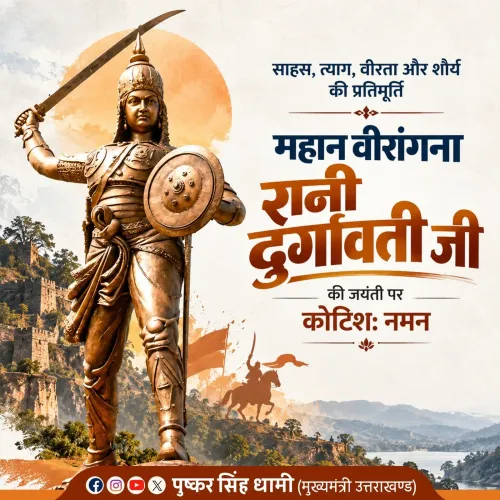
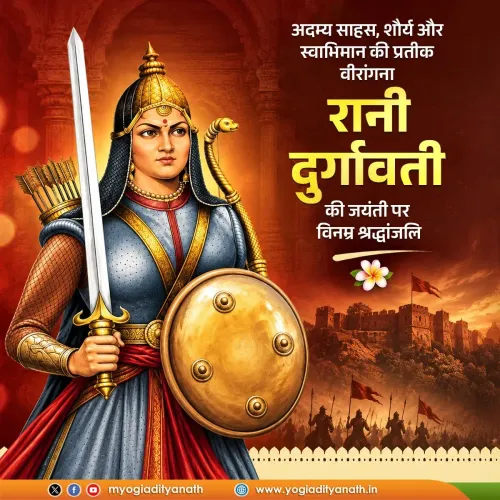
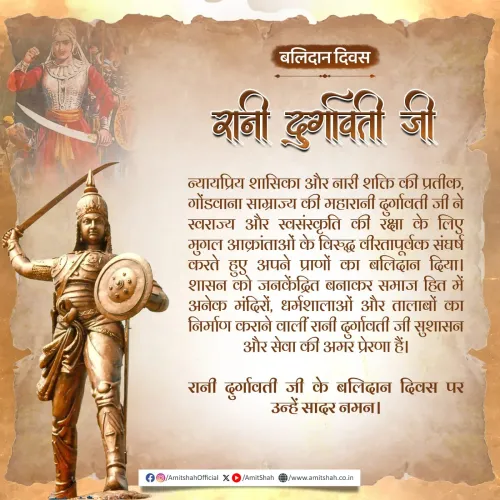
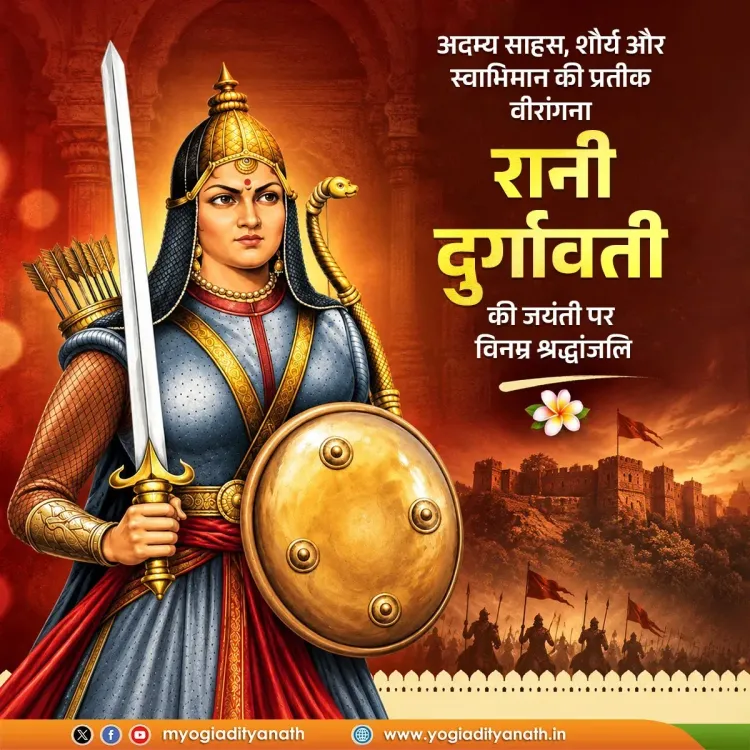
CM Yogi pays tribute to Rani Durgavati on her birth anniversary
Synopsis
On Rani Durgavati's birth anniversary, UP CM Yogi Adityanath saluted the 16th-century Chandela-born Gond queen, calling her bravery and sacrifice a symbol of extraordinary feminine strength and an inspiration for all Indians.
Key Takeaways
CM Yogi Adityanath posted a tribute to Rani Durgavati on her birth anniversary on October 5, 2026 .
Rani Durgavati was a descendant of the Chandela dynasty and queen of the Gondwana kingdom in present-day Madhya Pradesh.
She ruled as regent for nearly fifteen years after her husband Dalpat Shah's early death.
In 1564 , she personally led her army against Mughal commander Asaf Khan and chose death on the battlefield over surrender.
CM Yogi described her legacy as a symbol of matrishakti — the extraordinary power of womanhood — and a source of national inspiration.
Rani Durgavati University in Jabalpur is named in her honour.
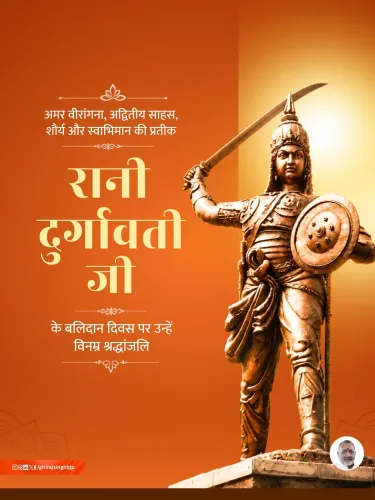
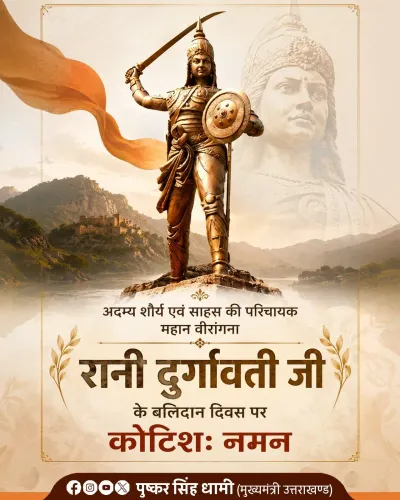
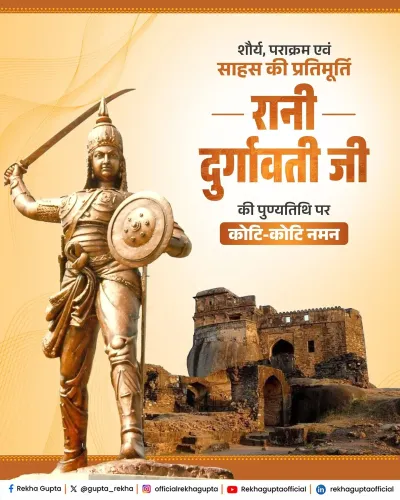
A warrior queen who chose death over surrender — Uttar Pradesh Chief Minister Yogi Adityanath on Monday, October 5, 2026, offered a humble tribute to Rani Durgavati on her birth anniversary, honouring the 16th-century Gond queen who remains one of India's most celebrated symbols of feminine valour and sacrifice.
In his post, CM Yogi wrote: 'अपने अदम्य साहस, पराक्रम और राष्ट्रनिष्ठा से मातृभूमि की रक्षा के लिए सर्वस्व न्योछावर करने वाली...' — 'A humble salute to the great warrior Rani Durgavati, descendant of the Chandela dynasty, who sacrificed everything for the protection of the motherland with her indomitable courage, valour, and patriotism. Her bravery and sacrifice are a symbol of the extraordinary strength of matrishakti [the power of womanhood], and an inspiration to all of us.'
The Chandela heir who ruled the Gondwana kingdom
Rani Durgavati was born into the Chandela Rajput dynasty — the same royal lineage that built the famous temples at Khajuraho — before marrying Dalpat Shah, the ruler of the Gond kingdom of Gondwana, in present-day Madhya Pradesh. When her husband died young, she became regent for her minor son and governed the kingdom with remarkable administrative and military skill for nearly fifteen years.
Her legend reached its peak in 1564, when Mughal commander Asaf Khan — acting on orders from Emperor Akbar — marched his forces into Gondwana. Durgavati personally led her army into battle twice. Wounded and refusing capture, she took her own life on the battlefield rather than surrender. The date of that battle, June 24, is observed as Balidan Diwas — Martyrdom Day — in her memory.
Why Durgavati's legacy carries political and cultural weight today
The queen's story sits at the intersection of regional pride, tribal identity, and the broader national discourse on women's courage. Her memory is particularly significant in Madhya Pradesh and among Gond Adivasi communities, where she is revered as a protector-queen. The Rani Durgavati University in Jabalpur — the heartland of her former kingdom — bears her name.
CM Yogi's invocation of matrishakti — a term that frames feminine strength as a civilisational force — reflects a recurring theme in the BJP's political and cultural vocabulary, linking historical women warriors to contemporary narratives of women's empowerment.
For a Chief Minister whose state borders Madhya Pradesh and whose government frequently draws on India's martial and devotional heritage, saluting Rani Durgavati is both a cultural act and a political affirmation: that history's bravest voices deserve to be heard across centuries.
Point of View
The Chief Minister links historical sacrifice to his party's contemporary women's empowerment messaging — a framing that resonates especially among voters in the Bundelkhand and Vindhya regions bordering Madhya Pradesh, where Durgavati holds deep local significance. The tribute also signals BJP's continued outreach toward Adivasi and Gond communities ahead of any electoral cycle. Such commemorations, while ceremonial in form, function as deliberate acts of political and cultural identity-setting.
NationPress
5 Oct 2026
Frequently Asked Questions
Why is Rani Durgavati famous?
Rani Durgavati was a 16th-century queen of the Gondwana kingdom who fought the Mughal army under commander Asaf Khan in 1564, and chose death over surrender — making her one of India's most celebrated warrior queens.
Which dynasty did Rani Durgavati belong to?
Rani Durgavati was born into the Chandela Rajput dynasty — the lineage famous for building the Khajuraho temples — before marrying into the Gond royal family of Gondwana.
When is Rani Durgavati Jayanti celebrated?
Rani Durgavati Jayanti marks her birth anniversary and is observed on October 5, while June 24 is commemorated as Balidan Diwas — her martyrdom day.
What is matrishakti, as mentioned by CM Yogi?
Matrishakti is a term meaning 'the power of womanhood' or 'feminine strength,' widely used in Indian cultural and political discourse to honour women's courage, leadership, and sacrifice.
Which university is named after Rani Durgavati?
Rani Durgavati University in Jabalpur, Madhya Pradesh — located in the heart of her former kingdom — is named in her honour.