CM Yogi Backs ODOP Gifts This Diwali, Cites 50% Export Share
Synopsis
On Diwali 2026, UP CM Yogi Adityanath urged citizens to gift ODOP products, highlighting their ~50% share in state exports, 81 GI tags, and PM Modi's Vocal for Local campaign as the backbone of an Atmanirbhar Uttar Pradesh vision.
Key Takeaways
CM Yogi Adityanath posted a Diwali appeal on 5 November 2026 urging citizens to choose ODOP products as gifts.
He cited ODOP goods contributing approximately 50 percent of Uttar Pradesh's total exports.
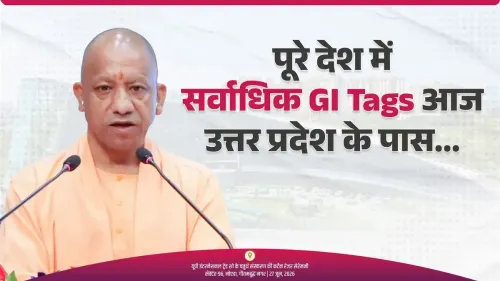
Uttar Pradesh holds 81 Geographical Indication (GI) tags , among the highest for any Indian state.
The ODOP scheme was launched by the UP government in 2018 to promote one signature craft product per district.
CM Yogi linked the appeal to PM Modi's Vocal for Local campaign, launched nationally in 2020 under Atmanirbhar Bharat.
The appeal targets artisans, craftspeople, and local entrepreneurs as the direct beneficiaries of festival-season consumer choices.
This Diwali, Uttar Pradesh Chief Minister Yogi Adityanath is making the gifting choice political — and economic. On Thursday, 5 November 2026, he called on citizens to skip generic presents and reach instead for products born from the state's centuries-old craft traditions, channelling the festival's spirit of goodwill into a direct boost for local artisans.
What CM Yogi asked citizens to do this Diwali
In his post, written in Hindi, CM Yogi framed the ask in cultural terms: 'Diwali ka parv aatmiyata, ullas aur lokmangal ki bhavana ka utsav hai' — 'The festival of Diwali is a celebration of affection, joy, and the spirit of public good.' From that premise, he pivoted to the economic: while giving gifts to loved ones, remember also the 'skilled hands whose dedication has given Uttar Pradesh's art and craft its distinctive identity.'
The appeal was not soft sentiment. CM Yogi cited a concrete number — that ODOP products now account for approximately 50 percent of the state's total exports — and pointed to 81 Geographical Indication (GI) tags as proof that UP's traditional product traditions are establishing themselves on the global stage.
ODOP: from a 2018 district-level scheme to an export engine
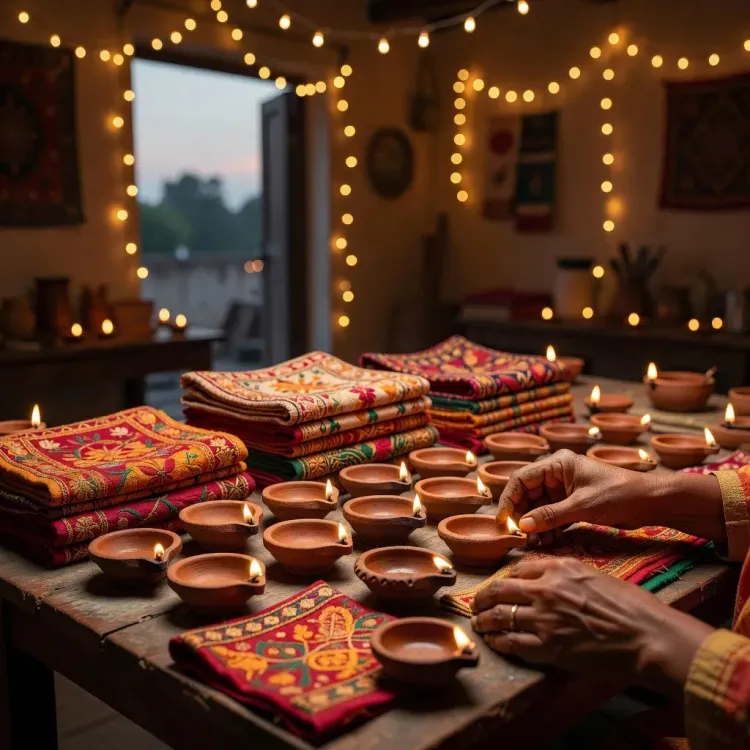
The One District One Product (ODOP) scheme, launched by the Uttar Pradesh government in 2018, was designed with a straightforward logic: identify the single most distinctive traditional product in each of the state's 75 districts, give it institutional support, and plug it into formal supply chains and export markets. Chikankari embroidery from Lucknow, Banarasi silk from Varanasi, leather goods from Agra, wooden toys from Varanasi — each district's craftspeople gained a structured pipeline to buyers far beyond the local weekly market.
GI tags have been the credentialing mechanism running in parallel. A GI tag legally certifies a product's geographic origin and unique character, protecting it from imitation and commanding premium pricing in international markets. With 81 registered GI tags, Uttar Pradesh holds one of the largest portfolios of any Indian state — a figure CM Yogi pointed to as evidence that the scheme has delivered not just domestic visibility but global recognition.
Modi's 'Vocal for Local' — the national scaffolding
CM Yogi's post explicitly invoked Prime Minister Narendra Modi's 'Vocal for Local' call, which Modi launched in 2020 as a core pillar of the Atmanirbhar Bharat (Self-Reliant India) economic package. The slogan asked Indians to consciously prefer domestically-made goods — a behavioural shift that, at scale, would reduce import dependence and funnel consumer spending back into local production ecosystems.
By framing ODOP gifting as an expression of that larger call, CM Yogi positioned Uttar Pradesh's state-level scheme as a live demonstration of national policy — 'Atmanirbhar Uttar Pradesh' as a building block of Atmanirbhar Bharat. It is a rhetorical alignment the CM has deployed before, binding state governance achievements to the Prime Minister's brand architecture.
The artisans at the centre of the message
Behind the export statistics are hundreds of thousands of craftspeople — weavers, potters, metalworkers, embroiderers — whose livelihoods depend on whether formal markets actually absorb their output. ODOP's promise was to close the gap between village workshop and commercial shelf. CM Yogi's Diwali appeal is, at one level, a direct-to-consumer nudge: every ODOP purchase made in lieu of a mass-market gift is a vote cast with a wallet for the scheme's continued relevance.
Diwali is India's single largest gifting season, making the timing of the message deliberate. If even a fraction of the festival's enormous gift economy shifts toward GI-tagged, district-specific craft goods, the downstream effect on artisan incomes and export volumes would be measurable — and politically legible ahead of any review of the scheme's impact.
The challenge, as always, is converting a Chief Minister's post into a purchasing decision. The artisans have done their part; the festival season will show whether the market listens.
Point of View
While Diwali's gifting peak provides the highest-reach consumer moment of the year. The 50-percent export-share claim, if it holds to scrutiny, would represent a significant structural shift in UP's trade composition since 2018. Politically, the message reinforces the UP government's post-2017 positioning as a manufacturing and heritage-industry reformer at scale — an identity the state has deployed aggressively in investor summits and policy forums. Whether consumer behaviour actually shifts enough to be measurable will determine how long this narrative sustains.
NationPress
5 Nov 2026
Frequently Asked Questions
What is the ODOP scheme in Uttar Pradesh?
The One District One Product (ODOP) scheme, launched by the Uttar Pradesh government in 2018, identifies and promotes one traditional or unique product per district to boost local manufacturing, artisan livelihoods, and export volumes.
Why did CM Yogi ask people to buy ODOP products on Diwali?
CM Yogi used the Diwali gifting season to encourage citizens to support local artisans and craftspeople, citing that ODOP products account for approximately 50 percent of UP's total exports and that 81 GI tags protect the state's craft heritage globally.
How many GI tags does Uttar Pradesh have?
According to CM Yogi's post on 5 November 2026, Uttar Pradesh holds 81 Geographical Indication (GI) tags, covering a wide range of district-specific traditional crafts and products.
What is the Vocal for Local campaign and who started it?
Vocal for Local was launched by Prime Minister Narendra Modi in 2020 as part of the Atmanirbhar Bharat (Self-Reliant India) package, urging Indians to prefer domestically produced goods to strengthen local industries and reduce import dependence.
What is Atmanirbhar Uttar Pradesh?
Atmanirbhar Uttar Pradesh is a state-level adaptation of PM Modi's Atmanirbhar Bharat vision, emphasising self-reliance through promotion of local crafts, ODOP products, and district-based manufacturing ecosystems.