CM Yogi shares Sanskrit shloka honouring mothers
Synopsis
Uttar Pradesh CM Yogi Adityanath posted a classical Sanskrit shloka on 21 November 2026 honouring mothers as the supreme source of shelter, refuge, and love — reflecting his consistent pattern of cultural and devotional messaging rooted in his role as head of the Gorakhnath Math.
Key Takeaways
CM Yogi Adityanath posted a Sanskrit shloka on 21 November 2026 celebrating the sanctity of motherhood.
The verse translates: 'There is no shade, refuge, protection, or beloved equal to a mother.' The shloka is drawn from classical Sanskrit literary and Dharmashastra tradition.
The post reflects Yogi Adityanath's consistent pattern of sharing devotional content linked to his role as head of the Gorakhnath Math, Gorakhpur .
No specific occasion or policy event was indicated alongside the post.
A timeless Sanskrit verse on the irreplaceable bond of motherhood arrived on social media on Saturday, 21 November 2026, posted by Uttar Pradesh Chief Minister Yogi Adityanath — a reminder that some truths need no policy brief, only four lines of ancient verse.
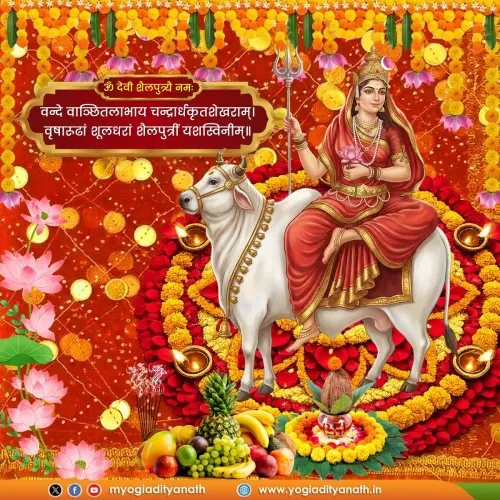
The shloka, drawn from classical Sanskrit literature, reads: 'Nasti matrisamaa chhaaya, nasti matrisamaa gatihi; Nasti matrisamam traanam, nasti matrisamaa priyaa' — 'There is no shade like a mother, no refuge like a mother; there is no protection like a mother, no beloved like a mother.' The verse is a well-known distillation of maternal devotion found across ancient Indian texts.
A shloka rooted in classical tradition
The verse belongs to a body of Sanskrit aphorisms that celebrate the mother as the supreme source of shelter, guidance, and love — concepts central to the Dharmashastra tradition. By sharing it with a folded-hands emoji, CM Yogi offered a devotional salutation rather than a political statement, consistent with his public identity as head of the Gorakhnath Math in Gorakhpur.
Cultural messaging as a recurring thread
Yogi Adityanath regularly punctuates his social media presence with Sanskrit shlokas, devotional verses, and reflections on classical Hindu philosophy — a pattern that runs parallel to his governance announcements and reflects his decades-long role as a religious leader. These posts are distinct from policy communication; they are, in essence, the voice of the Math speaking through the Chief Minister's handle.
In a political landscape where cultural identity and governance are increasingly intertwined, such verses function as a form of soft outreach — reminding followers of a worldview that predates electoral cycles. Whether the occasion was a personal observance or simply a morning reflection, the sentiment the verse carries is universal enough to need no further explanation.
Some truths, after all, have already been said — in Sanskrit, several thousand years ago.
Point of View
Reinforcing a brand of governance that frames itself within classical Hindu values. This kind of cultural messaging operates on a separate register from policy announcements but serves a complementary political purpose: it deepens the perception of authenticity among a base that prizes civilisational continuity. The choice of a verse on maternal devotion — universally resonant and politically uncontroversial — is also strategically safe, broadening rather than dividing his audience. Over time, these posts collectively build a cultural archive that outlasts any single news cycle.
NationPress
21 Nov 2026
Frequently Asked Questions
What is the Sanskrit shloka posted by Yogi Adityanath about mothers?
The shloka reads: 'Nasti matrisamaa chhaaya, nasti matrisamaa gatihi; Nasti matrisamam traanam, nasti matrisamaa priyaa' — meaning there is no shade, no path, no protection, and no beloved equal to a mother.
Why does Yogi Adityanath frequently post Sanskrit shlokas?
As the head of the Gorakhnath Math in Gorakhpur, Yogi Adityanath has a long background in Hindu religious tradition, and sharing Sanskrit verses is a consistent part of his public cultural messaging on social media.
Where does the 'Nasti matrisamaa' shloka come from?
The verse belongs to the broader corpus of classical Sanskrit literature and aphoristic texts that celebrate the mother as the highest source of shelter, guidance, and love in Indian philosophical tradition.
What does 'Nasti matrisamaa chhaaya' mean in English?
'Nasti matrisamaa chhaaya' translates to 'There is no shade equal to a mother' — the full shloka extends this to say no refuge, no protection, and no beloved compares to one's mother.
Was this post tied to a specific occasion or event?
No specific occasion was mentioned in the post. It appears to be a devotional reflection consistent with CM Yogi's regular pattern of sharing cultural and spiritual content on social media.