CM Sukhu: Centre's RDG cut threw HP budget into crisis
Synopsis
Himachal Pradesh CM Sukhvinder Singh Sukhu says the Centre's withdrawal of the Revenue Deficit Grant — worth Rs 8,000-10,000 crore annually and provided for 75 years — plunged the state into fiscal crisis, but his government kept all salaries and pensions intact and is clearing arrears.
Key Takeaways
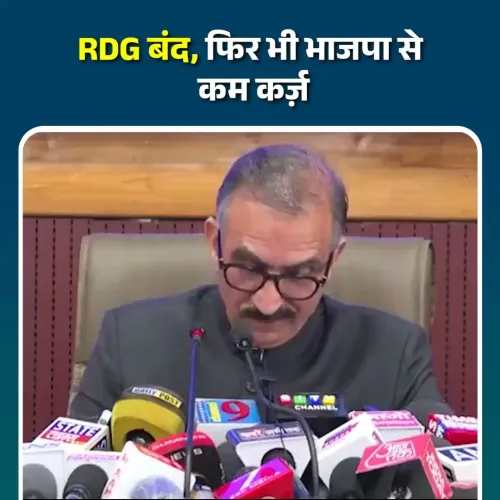
CM Sukhu claims the Centre cut and discontinued the Revenue Deficit Grant (RDG) that Himachal Pradesh had received for 75 years .
The state government characterises the loss at Rs 8,000–10,000 crore annually, comparing it to a family losing 40% of its monthly income.
Despite the fiscal shock, Sukhu says no employee salary was stopped and no pension was withheld .
The government is actively clearing pension arrears , according to the CM.
Himachal Pradesh holds special category status and is historically dependent on central grants due to its terrain and limited revenue base.
The 16th Finance Commission 's forthcoming recommendations will be critical for the state's medium-term fiscal outlook.
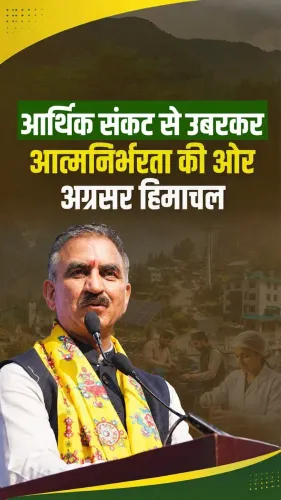
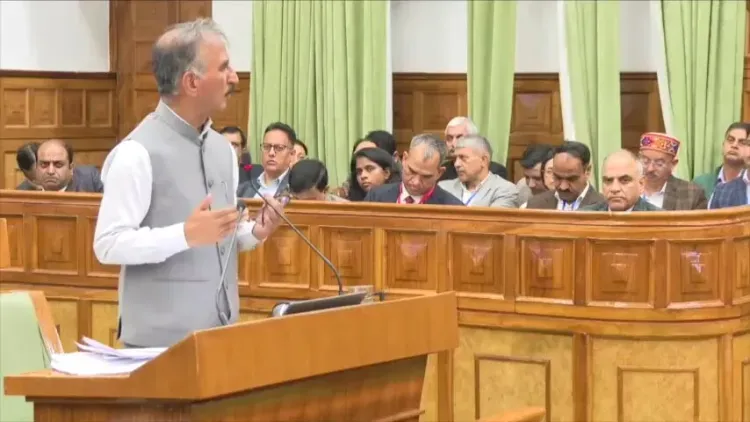
When the central government discontinued a grant that Himachal Pradesh had received for 75 years, Chief Minister Sukhvinder Singh Sukhu says the state's finances took a hit equivalent to a household losing 40 percent of its monthly income overnight — and he is now making the case that his government held the line without stopping a single salary or pension.
The household analogy that frames a fiscal crisis
In a post on X on Saturday, 21 November 2026, CM Sukhu drew a deliberately simple comparison to explain a complex fiscal shock. 'अगर किसी आम परिवार की 10,000 रुपये महीने की आमदनी में से 4,000 रुपये कम हो जाएँ, तो पूरा बजट गड़बड़ा जाता है' — 'If a family earning Rs 10,000 a month suddenly loses Rs 4,000, the entire budget falls apart.' That, he argued, is precisely what happened to Himachal Pradesh when the Centre cut and then discontinued the Revenue Deficit Grant (RDG), which the state had relied upon for 75 years.
The analogy is pointed. Sukhu positioned himself not just as chief minister but as the mukhiya — the head — of every family in the state, signalling that the fiscal pain was not an abstract government problem but a lived reality for ordinary households dependent on state salaries and pensions.
What the RDG cut meant for Himachal Pradesh
Himachal Pradesh holds special category status among Indian states — a recognition of its difficult hilly terrain, sparse population, and limited capacity to generate its own revenues. For decades, the Revenue Deficit Grant bridged the gap between what the state could earn and what it needed to spend on basic services. CM Sukhu's post claims the Centre withdrew Rs 8,000–10,000 crore annually through this cut, a figure the state government has put forward as the core of its fiscal distress argument. (Note: the specific RDG figures cited in the post are the state government's own characterisation and could not be independently verified.)
The 15th Finance Commission, which set grant formulas for 2021–2026, revised revenue deficit support for several states. Opposition-governed states across India have periodically raised concerns about such revisions, framing them as a squeeze on state autonomy and service delivery. Himachal Pradesh, with its high dependence on central transfers, has been among the most vocal.
Salaries paid, pensions cleared — Sukhu's fiscal defence
The political core of Sukhu's message is a record of continuity under pressure. He states that despite the grant withdrawal, his government did not defer or cancel any employee salary, did not halt any pension, and is actively clearing pension arrears. For a state workforce that is one of the largest relative to population in India, that is a significant administrative claim.
The assertion serves a dual purpose: it rebuts opposition narratives of fiscal mismanagement under the Congress government, and it pre-empts anxiety among the state's large community of government employees and retirees — a politically decisive constituency in Himachal Pradesh.
What the 16th Finance Commission could change
The immediate future of Himachal Pradesh's finances will be shaped significantly by the recommendations of the 16th Finance Commission, which will set devolution and grant formulas for the next five-year cycle. Whether special category states receive enhanced revenue deficit support — or whether the current framework persists — will determine how much fiscal room Shimla has to manoeuvre. CM Sukhu's public framing of the current crisis is, in part, a political argument directed at that process.
A state that kept its payroll running through a multi-thousand-crore grant shock is making a case not just to its voters, but to the commission that will decide its financial future.
Point of View
He simultaneously defends his government's record and builds a political case ahead of the 16th Finance Commission's deliberations. The emphasis on uninterrupted salaries and pension payments targets Himachal Pradesh's large government-employee constituency — a group whose loyalty is electorally decisive in the state. Whether the Centre's grant revision was a structural reform or a fiscal squeeze on an opposition state will remain contested, but Sukhu has clearly chosen to fight that argument in public and early.
NationPress
21 Nov 2026
Frequently Asked Questions
What is the Revenue Deficit Grant (RDG) that Himachal Pradesh lost?
The Revenue Deficit Grant is a central government transfer recommended by the Finance Commission to help states whose expenditure on basic services exceeds their revenue receipts. Himachal Pradesh, as a special category state with limited own-revenue capacity, had received this grant for decades to bridge its fiscal gap.
How much RDG did Himachal Pradesh lose according to CM Sukhu?
CM Sukhu's post states the Centre cut Rs 8,000–10,000 crore annually by discontinuing the RDG. This figure represents the state government's own characterisation of the loss and has not been independently verified.
Did Himachal Pradesh stop paying government salaries or pensions due to the fiscal crisis?
According to CM Sukhu, the state government did not stop or defer any employee salary or pension despite the fiscal pressure. He also states that pension arrears are being cleared.
What is Himachal Pradesh's special category state status?
Special category status recognises states with geographic, demographic, or economic disadvantages — such as hilly terrain, low population density, or strategic border locations — making them eligible for higher central assistance and more favourable fiscal terms.
What is the 16th Finance Commission and why does it matter for Himachal Pradesh?
The 16th Finance Commission is the constitutional body that will set tax devolution and grant formulas for Indian states for the next five-year cycle. Its recommendations on revenue deficit support will be critical in determining how much central financial assistance Himachal Pradesh receives going forward.