CM Yogi Reviews Varanasi Development, Jal Jeevan Mission Progress
Synopsis
Chief Minister Yogi Adityanath reviewed development and law-and-order in Varanasi on 7 July 2026, directing officials to accelerate Jal Jeevan Mission work, repair pipeline-dug roads, and complete the ropeway, Unity Mall, and integrated divisional office within stipulated deadlines.
Key Takeaways
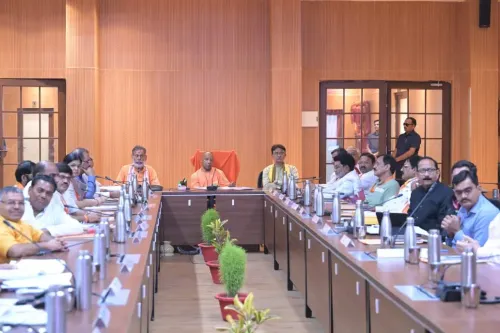
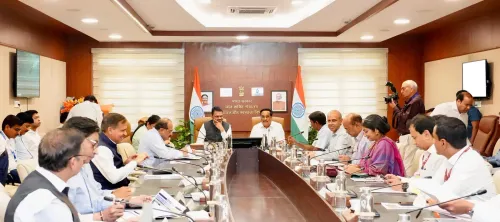
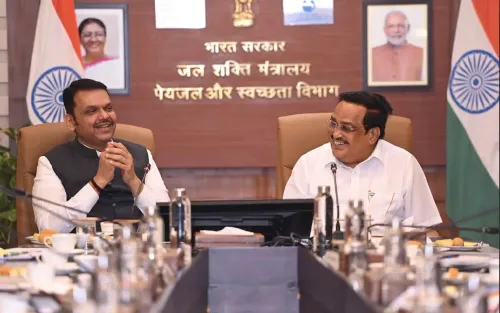
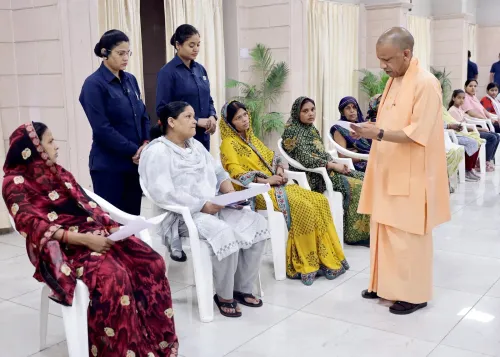
CM Yogi Adityanath held a review meeting in Varanasi on 7 July 2026 with elected representatives and senior officials.
He directed that Jal Jeevan Mission drinking-water pipeline work be completed at speed across the district.
Roads dug up during pipeline laying must be repaired simultaneously to avoid inconvenience to the public.
The ropeway , Unity Mall , and integrated divisional office projects were directed to be completed within their stipulated deadlines.
The review also covered law-and-order conditions in the division.
Varanasi , PM Modi's parliamentary constituency, has been a recurring focus of high-level administrative reviews under the Yogi government since 2017.
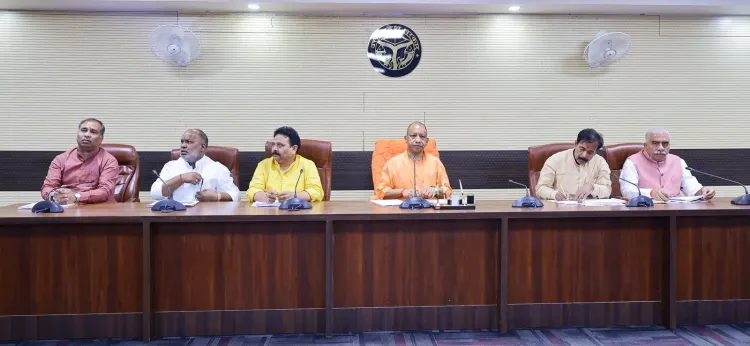
The Chief Minister's Office of Uttar Pradesh announced on Tuesday, 7 July 2026 that Chief Minister Yogi Adityanath conducted a comprehensive review of development works and law-and-order in Varanasi, meeting with elected representatives and senior officials to assess ground-level progress on key infrastructure projects.
What the Review Covered
In the meeting, CM Yogi issued specific directives covering drinking water infrastructure, road restoration, and the timely completion of several ambitious city projects. The Chief Minister's Office stated that he instructed officials to ensure the Jal Jeevan Mission work is completed 'at speed' (तेजी से पूर्ण कराया जाय). He also directed that roads dug up during the laying of drinking-water pipelines must be repaired without fail, 'so that the general public faces no inconvenience of any kind' (ताकि आमजन को किसी प्रकार की असुविधा न हो).
Beyond water infrastructure, the Chief Minister directed officials to complete the ropeway, the integrated divisional office complex, and the Unity Mall — along with other ambitious projects — within their stipulated deadlines.
Context
The Jal Jeevan Mission is a central government scheme launched in 2019 to provide functional household tap connections across rural India. States, including Uttar Pradesh, are responsible for on-ground implementation, and the programme has faced varying degrees of execution pace across districts. The directive to simultaneously restore dug-up roads reflects a recurring concern in state-level reviews: that pipeline-laying work leaves roads in disrepair for extended periods, burdening daily commuters.
Varanasi, the ancient city in eastern Uttar Pradesh and the parliamentary constituency of Prime Minister Narendra Modi, has been a focal point of targeted urban and infrastructure investment since 2017. Projects such as the ropeway and the Unity Mall are part of the state government's broader push to modernise urban mobility and commercial infrastructure in divisional headquarters.
Policy Backdrop
The Unity Mall initiative is an Uttar Pradesh government project to develop modern commercial complexes at divisional headquarters, aimed at boosting local retail economies. The ropeway project in Varanasi is part of urban mobility planning that has been under consideration since the post-2017 administrative modernisation drive. An integrated divisional office complex would consolidate government departments under one roof, streamlining citizen services.
The pattern of high-level periodic reviews at divisional centres — where the Chief Minister personally monitors timelines — has been a consistent feature of the Yogi administration since 2017. Such reviews are typically followed by district-level follow-up meetings and, in some cases, budget reallocations within the state financial cycle.
Stakeholders and Impact
The most immediate beneficiaries of the directives are Varanasi residents, particularly those in localities where pipeline work has left roads in poor condition. Timely road repair directly affects daily commuters, traders, and residents dependent on those stretches. Completion of the Jal Jeevan Mission connections would extend clean tap water access to households that currently rely on other sources.
Local contractors and implementing agencies are under renewed pressure following the Chief Minister's deadline-focused instructions. The ropeway and Unity Mall projects, once complete, are expected to affect tourism, commercial activity, and urban mobility for a broader cross-section of the city's population.
What's Next
Officials in Varanasi will be expected to submit progress reports on the ropeway, Unity Mall, and integrated divisional office ahead of their respective deadlines. The state government's emphasis on simultaneous pipeline laying and road restoration suggests monitoring mechanisms may be tightened at the district level. Any significant slippage on these projects is likely to trigger further review meetings, given Varanasi's political and administrative prominence within the state's development agenda.
Point of View
Not just project completion, is being tracked at the Chief Minister level. Taken together, the instructions suggest the state is preparing to showcase tangible urban outcomes in Varanasi ahead of the next political cycle.
NationPress
8 Jul 2026
Frequently Asked Questions
What did CM Yogi Adityanath review in Varanasi on 7 July 2026?
CM Yogi Adityanath reviewed the progress of development works and the law-and-order situation in Varanasi, meeting with elected representatives and senior officials to assess timelines and ground-level implementation.
What is the Jal Jeevan Mission and why is it important for Varanasi?
The Jal Jeevan Mission is a central government scheme launched in 2019 to provide functional household tap water connections across rural India. In Varanasi, CM Yogi directed that this work be accelerated and that roads dug up during pipeline laying be repaired promptly.
What is the Unity Mall project in Uttar Pradesh?
The Unity Mall is a Uttar Pradesh government initiative to develop modern commercial complexes at divisional headquarters, aimed at boosting local retail economies. CM Yogi directed its completion within the stipulated deadline during the Varanasi review.
What is the Varanasi ropeway project?
The Varanasi ropeway is an urban mobility project that has been in planning and development since the Yogi government's push for infrastructure modernisation after 2017. CM Yogi directed officials to ensure it is completed on schedule.
Why does the UP government hold frequent review meetings in Varanasi?
Varanasi is both an ancient religious city and the parliamentary constituency of Prime Minister Narendra Modi, giving it significant political and administrative priority. The Yogi government has held periodic high-level reviews there since 2017 to monitor infrastructure timelines and public-service delivery.