CM Yogi shares VP Radhakrishnan's praise for Ayodhya's global rise
Synopsis
Vice President C.P. Radhakrishnan praised PM Modi and CM Yogi Adityanath for making Ayodhya an international city. CM Yogi shared the tribute on X, spotlighting the city's post-Ram Mandir transformation through infrastructure and heritage tourism investment.
Key Takeaways
Radhakrishnan credited both PM Narendra Modi and CM Yogi Adityanath for elevating Ayodhya to international city status.
CM Yogi shared the Vice President's remarks via a video post on X on 7 November 2026 .
The Ram Mandir inauguration in January 2024 marked the pivotal moment in Ayodhya's modern reinvention.
Key infrastructure upgrades include the Ayodhya International Airport , heritage corridors, and expanded pilgrim facilities.
Ayodhya's redevelopment follows a broader pattern seen in Varanasi and other temple towns under the same administration.
Additional tourism infrastructure and international events in Ayodhya remain in the pipeline.
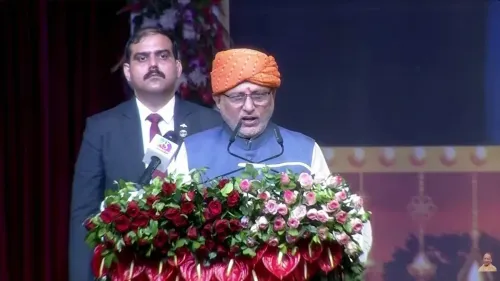
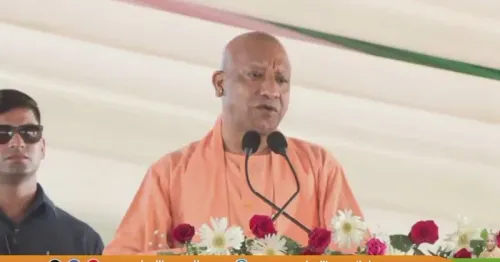
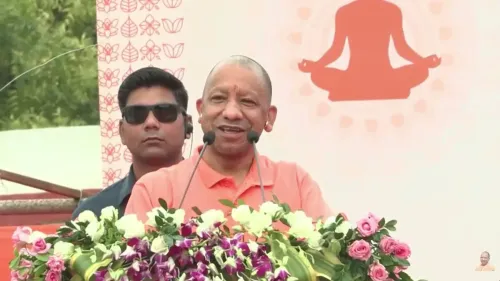
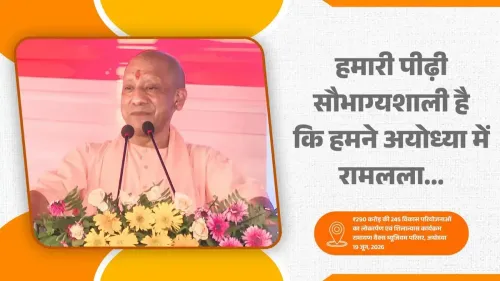
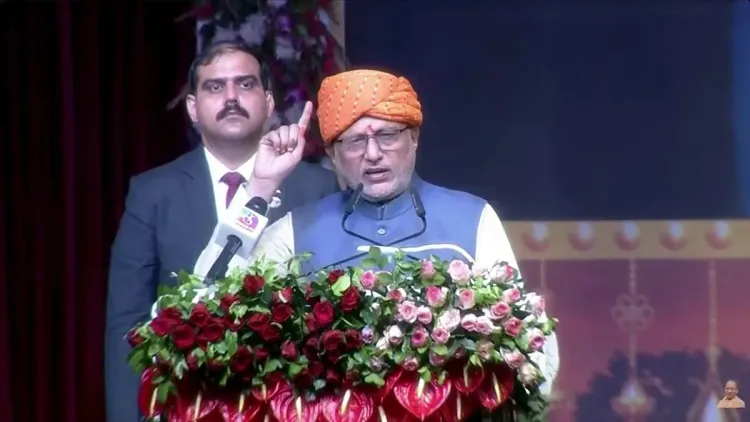
Ayodhya has travelled far — from a contested heritage site to what India's Vice President is now calling an international city. On Saturday, 7 November 2026, Uttar Pradesh Chief Minister Yogi Adityanath shared remarks by Vice President C.P. Radhakrishnan on the transformed skyline and stature of the ancient pilgrimage town, amplifying the tribute on X with a video clip.
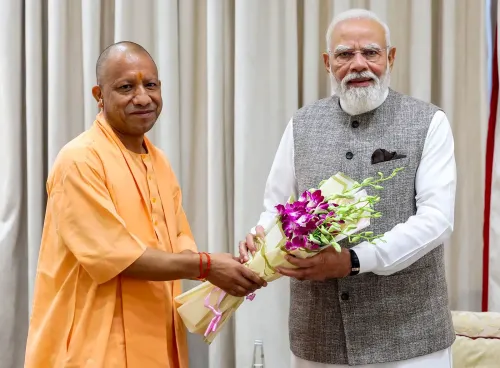
Quoting the Vice President directly, CM Yogi's post reads: 'Both our Prime Minister and Chief Minister have made Ayodhya an international city.' The remark credits both Prime Minister Narendra Modi and Chief Minister Yogi Adityanath for steering the city's dramatic makeover — a joint attribution that underscores how centrally the Ayodhya project has been framed as a shared political and cultural mission between New Delhi and Lucknow.
From Supreme Court verdict to international ambition
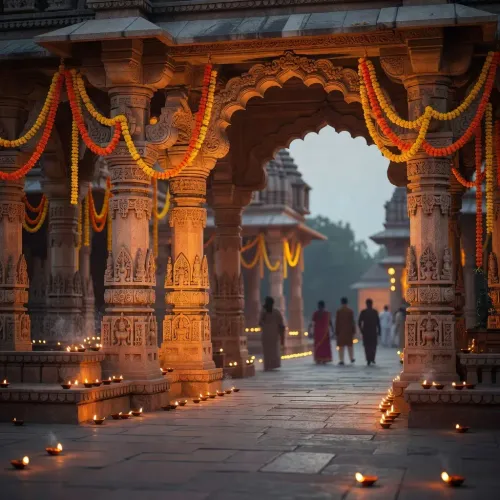
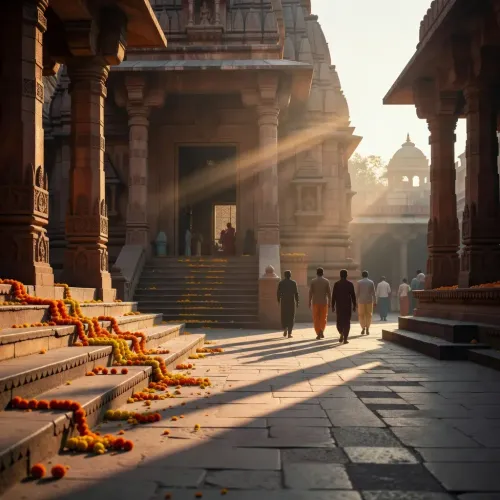
The transformation VP Radhakrishnan references did not happen overnight. The Ram Mandir inauguration in January 2024 — performed by PM Modi following a landmark Supreme Court verdict — was the event that formally announced Ayodhya's reinvention to the world. What followed was a cascade of infrastructure investment: a new Ayodhya International Airport, widened ghats, a redesigned pilgrim town centre, and upgraded road and rail connectivity meant to handle tens of millions of annual visitors.
The Uttar Pradesh government under CM Yogi had simultaneously pushed forward urban redevelopment plans — lighting, landscaping, heritage corridors — that recast the city not merely as a religious destination but as a cultural and tourism hub comparable to what Varanasi experienced under the same political administration. The Ayodhya model, in many ways, is a continuation of that playbook, scaled up further.
Why VP Radhakrishnan's words land the way they do
The Vice President occupies a largely ceremonial but constitutionally significant office, and his public praise carries the weight of institutional endorsement. By sharing the clip, CM Yogi is doing something deliberate: placing Ayodhya's transformation inside a national narrative — not a state project, not a party achievement alone, but a civilisational milestone acknowledged at the very top of the republic's hierarchy.
The broader pattern is consistent. Central and state governments have prioritised redevelopment of major religious sites — Ayodhya, Varanasi, Kedarnath — as anchors for heritage tourism and soft-power projection. Each city is being positioned as a living cultural brand, drawing pilgrims, tourists, and international attention simultaneously.
With more tourism infrastructure in the pipeline and Ayodhya increasingly on the itineraries of diaspora visitors and foreign delegations, the question is no longer whether the city has changed — it's how wide the circle of that change will grow.
Point of View
Not just urban policy. By attributing Ayodhya's transformation jointly to the Prime Minister and the Chief Minister, the framing reinforces Centre-state unity on a flagship cultural project ahead of any future electoral cycle. The move also signals that Ayodhya's story is being consciously elevated from a domestic achievement to an international brand — a soft-power narrative the government clearly wants heard beyond Indian borders.
NationPress
7 Nov 2026
Frequently Asked Questions
What did VP C.P. Radhakrishnan say about Ayodhya?
VP C.P. Radhakrishnan praised both PM Narendra Modi and CM Yogi Adityanath for transforming Ayodhya into an international city, remarks that CM Yogi shared on X on 7 November 2026.
How has Ayodhya been developed as an international city?
Major developments include the inauguration of the Ram Mandir in January 2024, the construction of Ayodhya International Airport, heritage corridor upgrades, improved road and rail connectivity, and large-scale urban beautification projects.
What is CM Yogi Adityanath's role in Ayodhya's transformation?
As Chief Minister of Uttar Pradesh, Yogi Adityanath has directed state-level urban redevelopment, lighting, landscaping, and tourism infrastructure projects that have reshaped Ayodhya's cityscape since 2017.
When was the Ram Mandir in Ayodhya inaugurated?
The Ram Mandir in Ayodhya was inaugurated by Prime Minister Narendra Modi in January 2024, following a landmark Supreme Court verdict.
Is Ayodhya now an officially designated international city?
VP Radhakrishnan's remarks use the phrase 'international city' to describe Ayodhya's global cultural and tourism profile; a formal government designation carrying that specific title has not been independently verified.