CM Yogi Slams Pre-2017 PDS Corruption, Hails Kotedaar Turnaround
Synopsis
CM Yogi Adityanath recalled how the word 'kotedaar' once symbolised PDS corruption in Uttar Pradesh before 2017, where dealers profited while genuine beneficiaries suffered — positioning his government's tenure as the turning point in fixing the state's ration delivery system.
Key Takeaways
CM Yogi Adityanath posted on 17 August 2026 recalling public anger toward ration-shop dealers ( kotedaars ) in Uttar Pradesh before 2017 .
He described a system where wrongdoing and suffering fell on entirely different people — the dealer gained, the beneficiary lost.
The post frames 2017 — the year the BJP government took charge in Lucknow — as the inflection point for PDS reform in the state.
Uttar Pradesh runs one of India's largest Public Distribution System networks, making its reform record nationally significant.
The post is part of a recurring BJP narrative that contrasts governance before and after March 2017 to claim welfare delivery improvements.
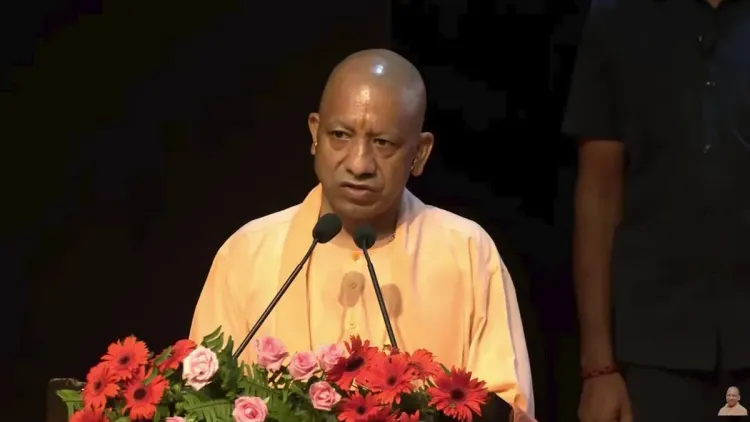
Before 2017, the very word kotedaar — the local ration-shop dealer — was enough to make ordinary people bristle with anger. The sin was committed by one, and the suffering was borne by another entirely. Uttar Pradesh Chief Minister Yogi Adityanath invoked that bitter memory on Monday, 17 August 2026, drawing a sharp before-and-after line around the state's public distribution system.
In his post on X, CM Yogi wrote: 'वर्ष 2017 के पहले 'कोटेदार' शब्द से ही लोगों को चिढ़ सी हो गई थी। पाप कोई और करता था, भुक्तभोगी कोई और होता था...' — 'Before 2017, the very word 'kotedaar' used to irritate people. Someone else committed the wrongdoing, and someone else bore the consequences.'
The Kotedaar Problem That Defined an Era
The kotedaar — the government-appointed dealer who runs a fair-price shop under the Public Distribution System (PDS) — was for decades a symbol of leakage and exploitation in Uttar Pradesh. Grain meant for the poor was routinely siphoned off, ghost beneficiaries padded registers, and the actual hungry family at the end of the queue was left short-changed. The dealer profited; the beneficiary suffered. That was the system's open secret.
CM Yogi's framing is pointed: the wrongdoer and the victim were never the same person. It was structural impunity — and it was the norm before his government took charge in March 2017.
2017 as the Inflection Point
The BJP government's arrival in Lucknow coincided with a nationwide push to plug PDS leakages through technology — Aadhaar-linked biometric authentication, electronic point-of-sale machines at ration shops, and the portability of ration entitlements across districts. Uttar Pradesh, as India's most populous state with one of the largest PDS networks in the world, was the highest-stakes test of that reform agenda. CM Yogi's post implicitly claims that test has been passed: the kotedaar is no longer a byword for corruption.
The ellipsis at the end of his post — 'भुक्तभोगी कोई और होता था...' — is deliberate. It signals a story with a second chapter, one his government is positioning itself as the author of.
Political Arithmetic Behind the Message
Invoking 2017 is a recurring rhetorical device for the BJP in Uttar Pradesh — a year that serves as both a political origin point and a moral contrast. By anchoring the PDS narrative to that date, CM Yogi ties welfare delivery directly to governance change, framing food security not as a bureaucratic outcome but as a political achievement. With state politics in constant motion, reminding voters of what the ration queue once looked like is as much electoral groundwork as it is administrative record-keeping.
The real test of the claim lies in the numbers — beneficiary satisfaction, diversion rates, and coverage gaps — details the post does not provide. But the message is clear: in Uttar Pradesh's political vocabulary, the kotedaar has been rehabilitated. Whether that rehabilitation is complete is the question the data will eventually answer.
Point of View
He is making a quiet but consequential claim: that the state's welfare machinery has shifted from extraction to delivery. The ellipsis is rhetorically loaded, inviting the reader to complete the contrast themselves. Ahead of any electoral cycle, anchoring food security to political change is a durable strategy — but it also raises the bar for the administration's own accountability on PDS outcomes.
NationPress
17 Aug 2026
Frequently Asked Questions
What is a kotedaar in Uttar Pradesh?
A kotedaar is a government-appointed fair-price shop dealer under the Public Distribution System (PDS) who distributes subsidised food grains to eligible beneficiaries in Uttar Pradesh.
Why were kotedaars controversial before 2017 in UP?
Before 2017, ration-shop dealers in Uttar Pradesh were widely associated with corruption — diverting subsidised grain meant for the poor, maintaining ghost beneficiary records, and leaving genuine recipients short-changed.
What PDS reforms did the Yogi government introduce after 2017?
The Yogi government, alongside national policy, pushed Aadhaar-linked biometric authentication and electronic point-of-sale machines at ration shops to reduce leakage and improve targeting in Uttar Pradesh's PDS.
Why did CM Yogi post about kotedaars on 17 August 2026?
CM Yogi used the post to contrast the pre-2017 era of PDS corruption with his government's record, framing the ration-dealer system's improvement as a core governance achievement of the BJP in Uttar Pradesh.
What does 'paap koi aur karta tha, bhuktabhogi koi aur hota tha' mean?
The Hindi phrase translates to 'someone else committed the sin, and someone else bore the consequences' — CM Yogi used it to describe how ration-shop dealers profited from corruption while poor beneficiaries suffered the losses.