CM Yogi Targets SP Over No Dalit Candidate in Rajya Sabha Polls
Synopsis
CM Yogi Adityanath has attacked the Samajwadi Party for fielding no Dalit candidates in the Rajya Sabha election, alleging one seat went to Akhilesh Yadav's uncle and another to a wealthy businessman, rebranding SP's 'PDA' as 'Parivar Development Authority.'
Key Takeaways
CM Yogi Adityanath posted on October 10, 2026 attacking the SP's Rajya Sabha candidate choices.
He alleged the SP fielded zero Dalit candidates in the recently concluded Rajya Sabha election in UP.
One seat allegedly went to Akhilesh Yadav's uncle , the other to a wealthy businessman ('dhanna seth').
Yogi rebranded SP's 'PDA' (Pichhda, Dalit, Alpasankhyak) as 'Parivar Development Authority' — a dynastic jibe.
The attack targets the SP's core electoral messaging that positions it as the champion of Dalits and marginalised communities.
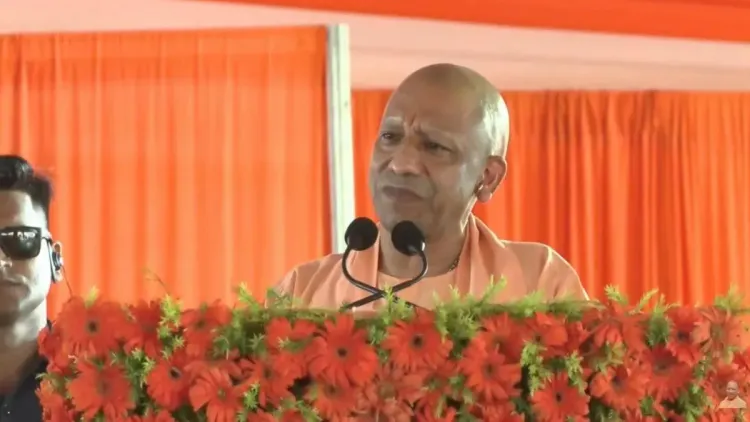
A Rajya Sabha election just concluded in Uttar Pradesh — and Uttar Pradesh Chief Minister Yogi Adityanath is using the results to land a sharp political blow against the Samajwadi Party, accusing it of shutting out Dalits entirely from its candidate list while reserving seats for family and money.
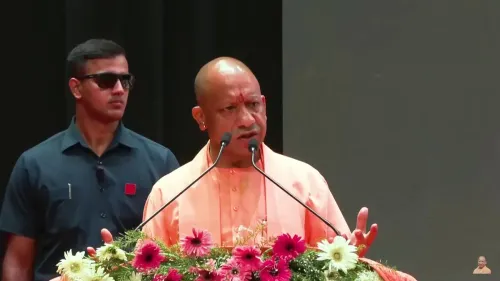
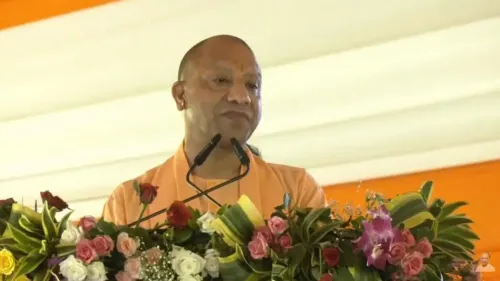
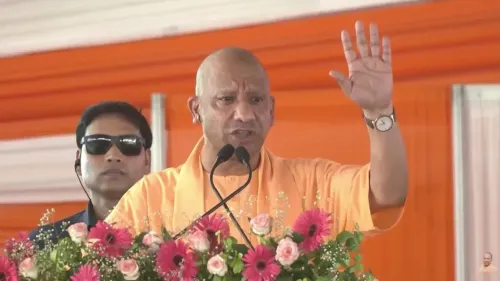
Posting on X on Saturday, October 10, 2026, CM Yogi wrote that the Samajwadi Party did not field a single Dalit candidate in the Rajya Sabha election. He alleged that one seat went to SP chief Akhilesh Yadav's uncle, and the second seat was, in his words, 'sold to a wealthy businessman' — a dhanna seth (wealthy moneybag). He then delivered the punchline: the SP's much-touted 'PDA' coalition stands not for its stated alliance of backwards, Dalits, and minorities, but for 'Parivar Development Authority' — family development authority.
The PDA Acronym War
The SP's 'PDA' framing — Pichhda, Dalit, Alpasankhyak (Backwards, Dalits, Minorities) — has been a central plank of Akhilesh Yadav's political messaging, positioning the party as the natural home for marginalised communities against the BJP. CM Yogi's counter-acronym, 'Parivar Development Authority,' is a direct attempt to puncture that narrative by pointing to concrete candidate choices rather than slogans. If the SP could not give a single Rajya Sabha ticket to a Dalit when seats were available, the argument goes, the PDA label is electoral branding, not political conviction.
The 'Uncle' Seat and the 'Dhanna Seth' Seat
Yogi's post specifically alleges that one of the two SP-backed Rajya Sabha seats went to a family member of Akhilesh Yadav — a pointed reference to dynastic politics that the BJP has long weaponised against the Yadav-led party. The second seat, he claims, went to a wealthy figure, implying the ticket was effectively purchased. Together, the two allegations paint a picture of a party that, when power and resources are on the table, prioritises clan and capital over the communities it claims to champion.
The attack is calibrated: it does not require a policy debate or a budget figure. It asks a simple, uncomfortable question — where were the Dalit names on the SP's Rajya Sabha list? That question, if it sticks, has the potential to erode the very voter bloc the SP needs most heading into the next electoral cycle in Uttar Pradesh.
In Indian politics, Rajya Sabha nominations are rarely random — they are a ledger of who a party truly values. CM Yogi just read that ledger out loud.
Point of View
He points to a single, verifiable act — the Rajya Sabha candidate list — to undermine the SP's entire PDA coalition-building project. The 'Parivar Development Authority' coinage is designed to travel fast on social media, converting a complex caste-politics debate into a memorable slogan. For the BJP, peeling even a fraction of Dalit voters away from the SP's PDA umbrella in Uttar Pradesh could prove decisive in future assembly and Lok Sabha contests. The SP will need to respond with more than rhetoric — it will need to point to concrete representation to neutralise the charge.
NationPress
10 Oct 2026
Frequently Asked Questions
What did CM Yogi say about the SP and Rajya Sabha elections?
CM Yogi Adityanath alleged that the Samajwadi Party did not field a single Dalit candidate in the Rajya Sabha election, with one seat going to Akhilesh Yadav's uncle and the other to a wealthy businessman.
What does PDA stand for in UP politics?
The SP uses 'PDA' to mean Pichhda, Dalit, Alpasankhyak (Backwards, Dalits, Minorities), a coalition framing by Akhilesh Yadav. CM Yogi has mockingly redefined it as 'Parivar Development Authority,' highlighting alleged dynastic and money-driven candidate selection.
Who is Akhilesh Yadav's uncle referred to in CM Yogi's post?
CM Yogi's post refers to a family member of SP chief Akhilesh Yadav who allegedly received one of the party's Rajya Sabha nominations. The specific identity was not named in the post, and NationPress has not independently verified this claim.
Why does Dalit representation in Rajya Sabha nominations matter politically?
Rajya Sabha nominations are seen as a direct signal of which communities a party truly values. For the SP, whose PDA strategy depends on Dalit support, failing to nominate a Dalit candidate hands opponents a concrete counter-argument to the party's inclusivity claims.
What is the BJP's broader strategy against SP's PDA narrative?
The BJP has consistently tried to expose gaps between the SP's stated commitment to Dalits and its actual power-sharing decisions, arguing that the Yadav family dominates the party at the expense of other communities the SP claims to represent.