Jitendra Singh urges Indian industry to boost innovation for Viksit Bharat 2047
Synopsis
At PHDCCI's 121st Annual Session, Minister Dr Jitendra Singh laid out a pointed challenge to Indian industry: stop importing solutions and start building them. With the quantum mission already halfway to its 2,000-km target in three years and the bioeconomy eyeing USD 300 billion by 2030, the government is signalling that 2047 ambitions are no longer aspirational — they are operational.
Key Takeaways
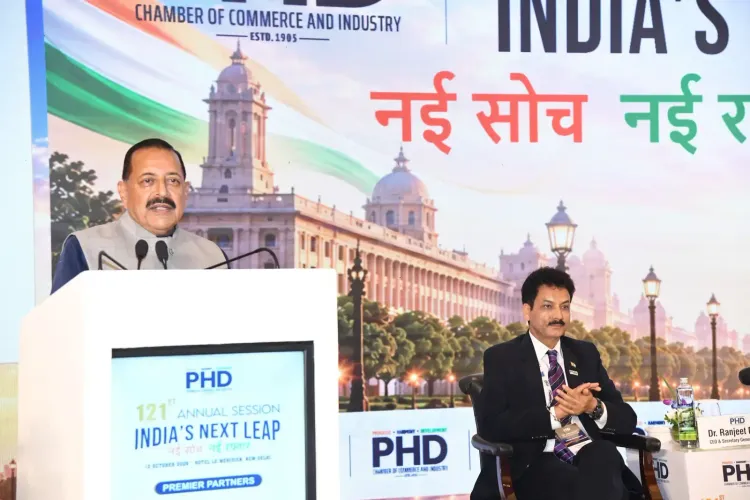
Dr Jitendra Singh addressed the 121st Annual Session of PHDCCI in New Delhi on 10 October , urging industry to accelerate innovation for Viksit Bharat 2047 .
India's National Quantum Mission has achieved 1,000 km of quantum-secure communication in three years against an eight-year target of 2,000 km .
India's bioeconomy grew from approximately USD 10 billion in 2014 to around USD 196 billion , with a target of USD 300 billion by 2030 .
The minister called for industry engagement to begin at the inception of research projects , not after discoveries are made.
Greater private-sector participation in R&D under the government's Research, Development and Innovation (RDI) initiative was flagged as essential.
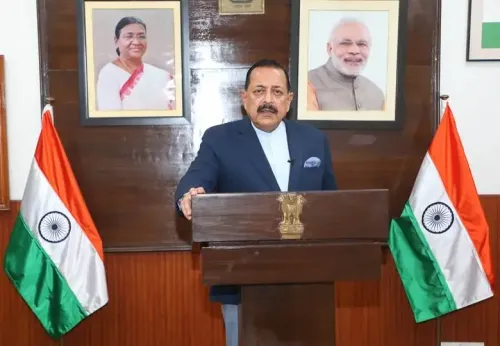
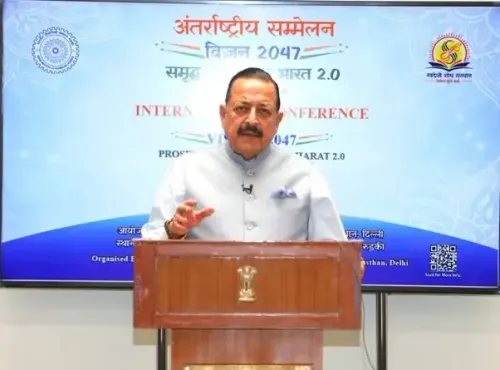
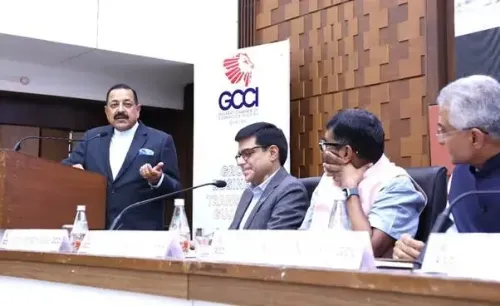
Union Minister of State Dr Jitendra Singh on Saturday, 10 October called on India's industrial sector to urgently accelerate innovation, convert scientific research into commercially viable ventures, and scale up the country's technological capabilities to meet the national goals set under the Viksit Bharat 2047 vision. Speaking at the 121st Annual Session of the PHD Chamber of Commerce and Industry (PHDCCI) in New Delhi, the minister stressed that achieving these ambitions would also require strengthening India's strategic sovereignty.
Key Developments at PHDCCI Session
Addressing industry leaders, Dr Singh emphasised the imperative of building a unified ecosystem that brings together government, industry, academia, research institutions, and start-ups. He argued that only through such convergence can India convert its scientific capabilities into indigenous technologies, commercially viable enterprises, and globally competitive solutions.
The minister underscored that India's next phase of technological growth must move decisively beyond merely adopting technologies developed elsewhere. 'The expansion of the space ecosystem following policy reforms, alongside greater private-sector participation in strategic technology areas, demonstrates the opportunities that emerge when scientific capabilities are supported by an enabling policy environment and entrepreneurial initiative,' he said.
Quantum Mission and Bioeconomy Milestones
Citing concrete progress, Dr Singh pointed to the National Quantum Mission, under which India had set an eight-year target of achieving 2,000 kilometres of quantum-secure communication. Notably, the country had already crossed the 1,000-kilometre milestone within just three years — a pace that signals significant momentum in deep-tech execution.
He also highlighted the remarkable growth of India's bioeconomy, which expanded from approximately USD 10 billion in 2014 to around USD 196 billion, with an ambition to reach USD 300 billion by 2030. The minister cited the expansion of the biotechnology start-up ecosystem as evidence of the economic value that scientific innovation can generate in life sciences and advanced research.
Industry Engagement Must Begin at Research Stage
Dr Singh stressed that industry engagement should not be an afterthought — it must begin at the very inception of research projects. This, he argued, would enable scientists to understand real market requirements and develop solutions with a clear pathway to commercial deployment, rather than discoveries that remain confined to laboratories.
Referring to the government's Research, Development and Innovation (RDI) initiative, the minister said greater private-sector participation in R&D was essential to accelerate the translation of scientific discoveries into commercial applications. This comes amid a broader policy push by the Centre to increase India's R&D spending, which currently lags behind global peers as a share of GDP.
What Happens Next
The PHDCCI session signals growing institutional momentum behind India's technology-led growth agenda as the 2047 deadline draws closer. Industry bodies are expected to formalise engagement frameworks with government-backed research institutions in the coming months. Whether private-sector R&D investment rises to match the ambition remains the central question.
Point of View
And that structural gap is what makes Dr Singh's call significant — and difficult. Bridging it requires more than ministerial exhortation; it demands tax incentives, IP frameworks, and procurement policies that make private R&D financially rational. The quantum and bioeconomy milestones are genuine achievements, but they are government-led. The harder task — pulling private capital into frontier research at scale — is precisely where past policy cycles have stalled. The 2047 clock is ticking, and the distance between ambition and institutional readiness remains wider than the headline numbers suggest.
NationPress
10 Oct 2026
Frequently Asked Questions
What did Dr Jitendra Singh say at the PHDCCI Annual Session?
Dr Jitendra Singh urged Indian industry to accelerate innovation, translate scientific research into commercial ventures, and build indigenous technologies to meet the Viksit Bharat 2047 objectives. He spoke at the 121st Annual Session of PHDCCI in New Delhi on 10 October.
What is the National Quantum Mission milestone India has achieved?
Under the National Quantum Mission, India set an eight-year target of 2,000 kilometres of quantum-secure communication and achieved the 1,000-kilometre milestone within just three years, according to Dr Singh.
How has India's bioeconomy grown in recent years?
India's bioeconomy grew from approximately USD 10 billion in 2014 to around USD 196 billion, with the government targeting USD 300 billion by 2030. The expansion of the biotechnology start-up ecosystem has been cited as a key driver of this growth.
Why does Dr Singh want industry involved from the start of research projects?
The minister argued that early industry engagement allows scientists to understand real market requirements and develop solutions with a clear commercial deployment pathway, reducing the risk of discoveries remaining confined to laboratories without practical application.
What is the government's Research, Development and Innovation initiative?
The Research, Development and Innovation (RDI) initiative is a government programme aimed at boosting private-sector participation in R&D to accelerate the translation of scientific discoveries into commercial applications, which Dr Singh described as essential for India's 2047 technology goals.