CM Yogi: UP Has Changed — No More Identity or Jobs Crisis
Synopsis
CM Yogi Adityanath declared that Uttar Pradesh has fundamentally changed, asserting that crises of identity, employment, and jobs are now a thing of the past — a sweeping governance claim with major political stakes.
Key Takeaways
CM Yogi Adityanath posted on X on 6 October 2026 claiming UP has undergone a fundamental transformation.
He specifically cited three resolved crises: identity (pehchaan), employment (rozgaar), and jobs (naukri) .
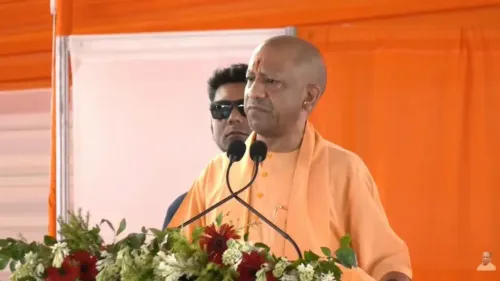
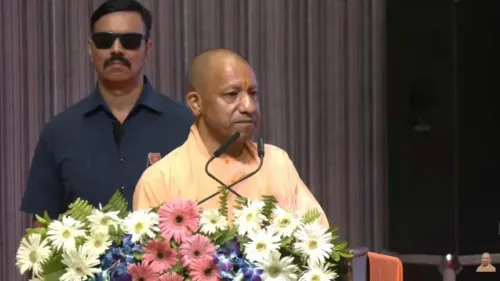
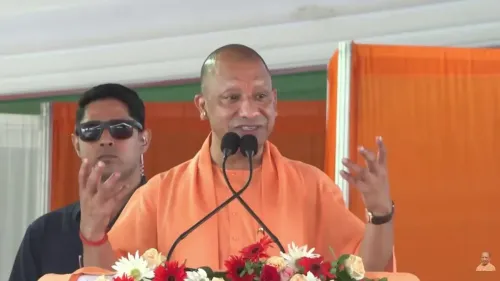
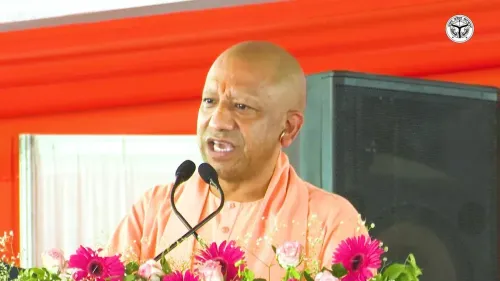
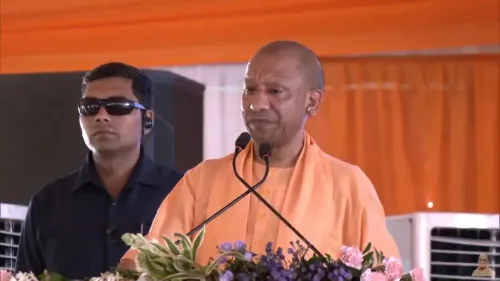
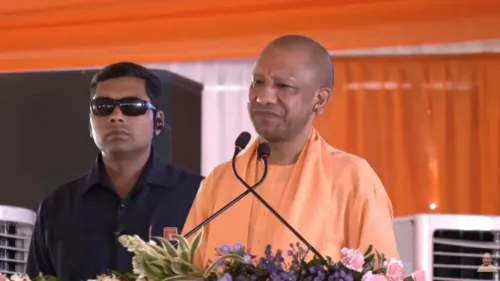
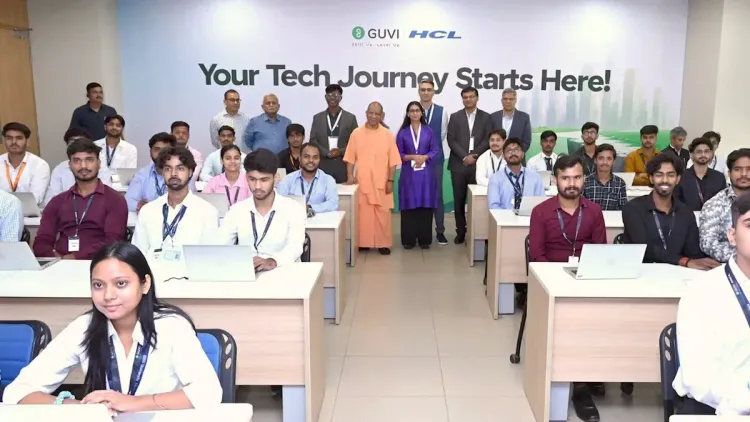
The post was accompanied by a video , suggesting the remarks stem from a public address or event.
Placing 'identity' first in the list signals a cultural and social claim alongside an economic one.
The declaration sets a before-and-after benchmark that invites direct electoral and policy scrutiny.
CM Yogi governs from Lucknow and is also head of the Gorakhnath Math in Gorakhpur.
Uttar Pradesh Chief Minister Yogi Adityanath declared on Tuesday, 6 October 2026 that the state has undergone a fundamental transformation — one where the old crises of identity, employment, and livelihoods no longer define daily life for its people.
Posting on X, CM Yogi stated in Hindi: 'आज यूपी बदल चुका है। अब पहचान, रोजगार और नौकरी का संकट नहीं है…' — translated: 'Today UP has changed. There is no longer a crisis of identity, employment, or jobs…'
A State Reframed: From Crisis to Confidence
The assertion is striking in its breadth. By naming three distinct fault lines — identity, employment, and jobs — the Chief Minister signalled that Uttar Pradesh, India's most populous state and long among its most politically volatile, has crossed a threshold. The framing is deliberate: these were precisely the grievances that defined UP's political discourse for decades, and claiming their resolution is a direct challenge to the opposition's core narrative.
The post accompanied a video, suggesting the remarks may be drawn from a public address or campaign-style event — a format CM Yogi has used consistently to project governance milestones to a mass audience.
Why 'Identity' Comes First in the List
Placing pehchaan (identity) ahead of jobs is a pointed political choice. In UP's complex social landscape — one shaped by caste hierarchies, communal fault lines, and a long history of marginalised communities demanding recognition — declaring the identity crisis resolved is as much a cultural claim as a governance one. It tells voters that the state now 'sees' them.
The employment angle carries equal weight. Uttar Pradesh has historically struggled with youth unemployment and a dependence on migrant labour. Any credible shift on that front would be among the most consequential governance achievements in the state's recent history — and the basis for a powerful electoral argument ahead of future assembly cycles.
The Bigger Political Bet
Statements of this kind are not merely descriptive — they are declaratory. CM Yogi is effectively asking voters to measure the state against a before-and-after benchmark he himself is setting. That is a high-stakes move: it invites scrutiny and comparison as much as it invites applause. The Chief Minister, who leads both the state government and the influential Gorakhnath Math in Gorakhpur, has increasingly used such sweeping formulations to anchor his political identity around delivery rather than aspiration.
Whether the data ultimately validates the claim — on unemployment rates, law-and-order, or social equity — will determine how this moment is remembered. For now, the signal is unambiguous: UP's government believes it is operating from a position of strength.
Point of View
He ties social dignity to governance outcomes, a framing that resonates deeply in a state defined by caste and communal fault lines. This is the language of a leader preparing a definitive electoral argument, not merely marking a milestone. The real test will be whether ground-level data — on unemployment, social equity, and law-and-order — sustains the narrative long enough to matter at the ballot box.
NationPress
6 Oct 2026
Frequently Asked Questions
What did CM Yogi Adityanath say about Uttar Pradesh's transformation?
CM Yogi declared on 6 October 2026 that UP has fundamentally changed and that the crises of identity, employment, and jobs no longer exist in the state.
What does 'pehchaan ka sankat' mean in the context of UP politics?
In UP's political context, 'identity crisis' refers to the long-standing struggle of marginalised communities — across caste and communal lines — for recognition and equal standing, which CM Yogi claims has been resolved under his government.
Is Uttar Pradesh's unemployment problem actually solved?
CM Yogi has claimed so, but this is a political assertion. UP has historically struggled with high youth unemployment and reliance on migrant labour; independent verification requires comparison with official employment data.
What is the Gorakhnath Math and how is it connected to CM Yogi?
The Gorakhnath Math is a prominent Hindu religious institution in Gorakhpur, Uttar Pradesh. CM Yogi Adityanath is its head (Mahant), a role that gives him significant religious and social authority alongside his political position.
Why is CM Yogi making this claim in October 2026?
While the immediate trigger is not specified in the post, such sweeping governance declarations are typically made ahead of electoral cycles or major political events to set the narrative benchmark for voters.