CM Yogi: UP triples GSDP, per capita income in 9.5 years
Synopsis
The Chief Minister's Office of Uttar Pradesh claims the state has tripled its GSDP, per capita income, and budget in 9.5 years under CM Yogi Adityanath, declaring it has moved from BIMARU status to a revenue surplus state.
Key Takeaways
Uttar Pradesh claims to have tripled its GSDP , per capita income , and budget over the past 9.5 years .
The state declares itself a revenue surplus state , meaning regular revenue receipts now exceed revenue expenditure.
CM Yogi Adityanath has led the state government since March 2017 , anchoring his pitch around law-and-order and investor summits.
Uttar Pradesh was historically classified a BIMARU state — a tag signifying chronic fiscal and developmental underperformance.
Verified figures for the tripling claims are yet to be cross-checked against official state economic surveys and budget documents.
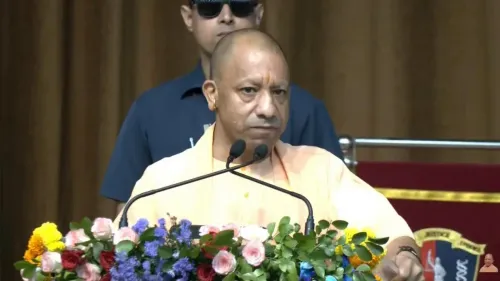
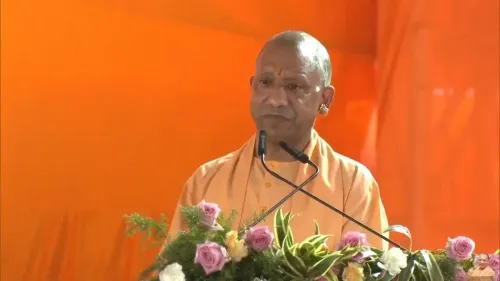
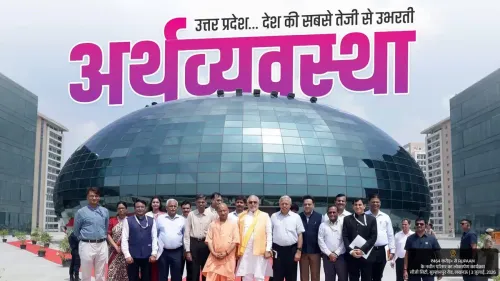
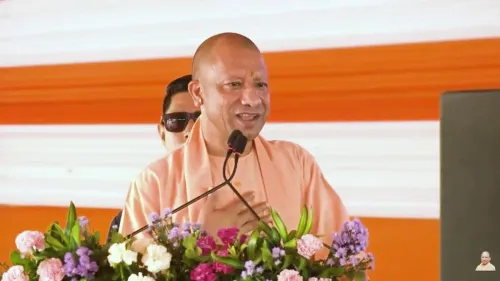
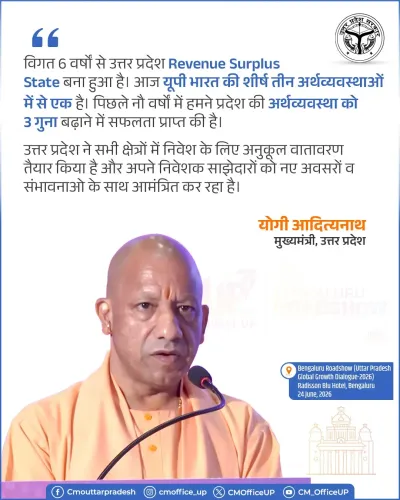
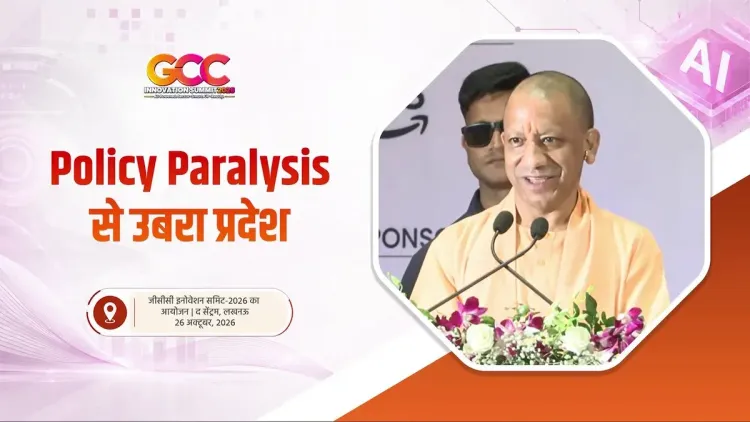
A state once written off as economically moribund has, according to its own government, rewritten its story — and Chief Minister Yogi Adityanath is now putting numbers to that transformation. On Monday, October 26, 2026, the Chief Minister's Office of Uttar Pradesh posted a pointed claim on X: in 9.5 years, the state has tripled its GSDP, per capita income, and budget size — and crossed over into revenue surplus territory.
Posting in Hindi, the CMO quoted Chief Minister Yogi Adityanath directly: 'विगत साढ़े 9 वर्षों में उत्तर प्रदेश ने अपनी GSDP, Per Capita Income और बजट को तीन गुना करने में सफलता प्राप्त की है' — ('In the last nine and a half years, Uttar Pradesh has succeeded in tripling its GSDP, per capita income, and budget'). The punchline: 'आज उत्तर प्रदेश बीमारू राज्य नहीं, बल्कि Revenue Surplus State बन चुका है' — ('Today, Uttar Pradesh is no longer a BIMARU state, but has become a revenue surplus state').From BIMARU to Boardrooms: What the Shift Means
The word 'BIMARU' — an acronym coined in the 1980s for Bihar, Madhya Pradesh, Rajasthan, and Uttar Pradesh — became shorthand for chronic underdevelopment: low literacy, weak fiscal health, poor infrastructure. For Uttar Pradesh, India's most populous state with over 240 million people, shedding that label carries enormous symbolic and political weight.
A 'revenue surplus state' means the government's regular revenue receipts exceed its revenue expenditure — it is not borrowing to pay salaries or run day-to-day operations. That is a structurally significant fiscal position, and one historically out of reach for a state long dependent on central transfers to balance its books.
The Policy Engine Behind the Numbers
When Yogi Adityanath took office in March 2017, Uttar Pradesh was not a destination investors circled on maps. The government moved quickly to change that calculus. It launched successive investor summits — the Invest UP platform — and made law-and-order stability a centrepiece of its pitch to industry. Infrastructure spending on expressways, logistics hubs, and the Purvanchal and Bundelkhand expressways followed.
The broader pattern fits a national trend: several large Indian states have improved their own-tax revenue mobilisation since the mid-2010s, helped by GST compliance gains and buoyant economic activity. Uttar Pradesh's sheer scale means even incremental improvements translate into large absolute rupee gains — and, by extension, large GSDP and budget numbers.
What the Next Budget Cycle Will Reveal
The state's claims of tripling GSDP, per capita income, and budget over 9.5 years are significant — and will face scrutiny when the next state economic survey and budget documents land. Revenue surplus status, if sustained across multiple fiscal years rather than a single good cycle, would be a genuine structural achievement for a state of this size and complexity. The numbers, in short, need to hold up in the ledger — not just in the post.
For now, Yogi Adityanath is framing his government's economic record as a clean break from history. Whether Uttar Pradesh's fiscal transformation proves durable — or whether the surplus reflects a particular budget cycle — will be the defining question as the state heads toward its next financial year.
Point of View
With an eye on both state pride and national optics. The 'revenue surplus' claim, if independently verified across consecutive fiscal years, would represent a structurally meaningful milestone for a state of UP's scale and complexity. However, the timing of such pronouncements — ahead of budget cycles and political seasons — invites scrutiny of whether the surplus reflects sustained fiscal reform or a favourable single-year revenue windfall. The broader signal: state-level fiscal credibility is increasingly becoming a political asset in India, not just a technocratic benchmark.
NationPress
26 Oct 2026
Frequently Asked Questions
Has Uttar Pradesh really become a revenue surplus state?
The Chief Minister's Office of Uttar Pradesh has claimed revenue surplus status as of 2026, but independent verification against official state budget documents is pending. A revenue surplus means the state's regular receipts exceed its day-to-day expenditure, excluding capital borrowings.
What does BIMARU state mean and why was UP classified as one?
BIMARU is an acronym coined in the 1980s for Bihar, Madhya Pradesh, Rajasthan, and Uttar Pradesh, referring to states with historically low economic growth, poor governance, and weak fiscal health. UP was included due to its large population relative to its economic output and chronic revenue deficits.
When did Yogi Adityanath become Chief Minister of Uttar Pradesh?
Yogi Adityanath became Chief Minister of Uttar Pradesh in March 2017 , heading a BJP government. He was re-elected in 2022 and has continued to lead the state.
What policies drove Uttar Pradesh's claimed economic growth?
The Yogi Adityanath government launched investor summits under the Invest UP platform, prioritised law-and-order stability as an investment draw, and invested in expressway infrastructure including the Purvanchal and Bundelkhand expressways, all aimed at attracting industry and boosting own-tax revenue.
How has UP's GSDP changed under Yogi Adityanath?
The UP government claims the state's GSDP has tripled over the past 9.5 years. The precise figures require verification from the next state economic survey, but the broader trend of improved fiscal health in select Indian states since the mid-2010s aligns with national patterns of stronger GST compliance and industrial activity.