CM Yogi: UP's First Pharma Park to Come Up in Lalitpur
Synopsis
Uttar Pradesh Chief Minister Yogi Adityanath announced on 20 June 2026 that the state's first Pharma Park will come up in Lalitpur district, Bundelkhand, with the promise of thousands of jobs for local youth and a boost to UP's pharmaceutical manufacturing ambitions.
Key Takeaways
Uttar Pradesh Chief Minister Yogi Adityanath announced the state's first Pharma Park on 20 June 2026 .
The park will be located in Lalitpur district , part of the historically under-industrialised Bundelkhand region.
The announcement promises thousands of jobs for young people in the region.
The project aligns with the central government's Production Linked Incentive (PLI) scheme for pharmaceuticals, launched in 2020 .
Key next steps include a detailed project report, land acquisition, and cabinet or budget approvals from the state government.
The move is part of Uttar Pradesh's broader strategy to achieve regionally balanced industrial growth and reduce youth out-migration from Bundelkhand.
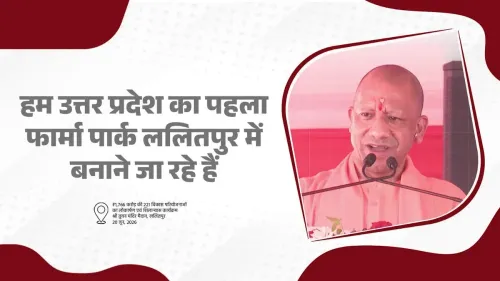
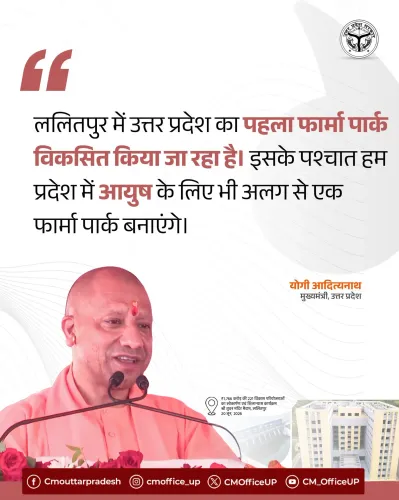
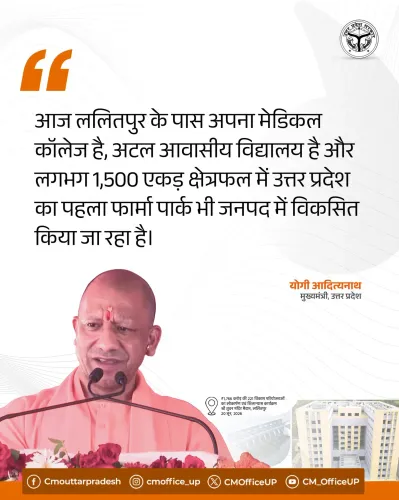
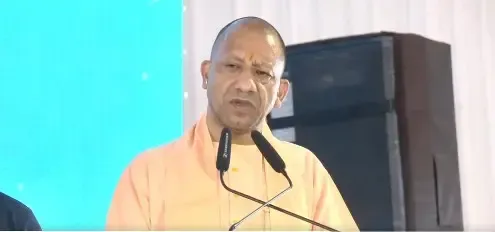
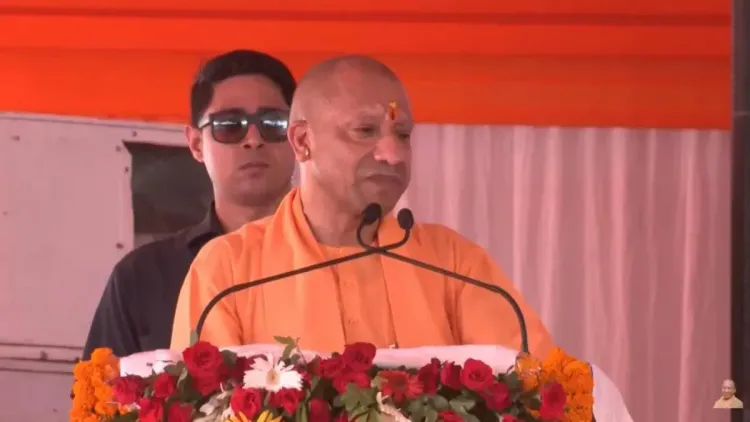
Uttar Pradesh Chief Minister Yogi Adityanath announced on Saturday, 20 June 2026 that the state's first Pharma Park will be established in Lalitpur district, promising thousands of jobs for young people in the region. The announcement was made via a post on X, signalling a significant push for pharmaceutical manufacturing infrastructure in one of the state's less industrialised districts.
In his post, the Chief Minister wrote: 'उत्तर प्रदेश का पहला Pharma Park ललितपुर जनपद में बनने जा रहा है... हजारों नौजवानों को नौकरी मिलेगी...' — ('Uttar Pradesh's first Pharma Park is going to be built in Lalitpur district... thousands of youth will get jobs...'). The statement underscores the Yogi government's focus on employment generation through industrial investment in underserved regions.
Context
Lalitpur is located in the Bundelkhand region of Uttar Pradesh, an area historically characterised by agrarian distress, limited industrial activity, and high rates of out-migration among working-age youth. The selection of Lalitpur for the state's first Pharma Park represents a deliberate effort to direct industrial development toward regions that have long lagged behind the state's western and central districts. The announcement positions Bundelkhand as a potential pharmaceutical manufacturing hub rather than solely an agricultural zone.
Policy Backdrop
The proposal aligns with the central government's Production Linked Incentive (PLI) scheme for pharmaceuticals, launched in 2020, which aims to boost domestic bulk drug and formulation manufacturing and reduce India's dependence on imports. Uttar Pradesh has also operated under its own Industrial Investment and Employment Promotion Policy, first notified in 2017 and subsequently updated, to attract investment into manufacturing clusters across the state. A dedicated Pharma Park fits squarely within both frameworks, potentially enabling investors to draw on central PLI incentives while benefiting from state-level land and infrastructure support.
The broader national push under Atmanirbhar Bharat has placed pharmaceutical self-reliance at the centre of industrial policy since 2020, and states with available land and lower operating costs — such as Uttar Pradesh — have been positioned as natural candidates for new manufacturing clusters to complement established hubs in Gujarat, Telangana, and Himachal Pradesh.
Stakeholders and Impact
The primary beneficiaries of the proposed Pharma Park are unemployed youth in Lalitpur and the wider Bundelkhand region, where limited local employment options have historically driven migration to cities such as Delhi, Surat, and Pune. If realised, the park would also attract pharmaceutical investors seeking cost-effective manufacturing locations with government-backed infrastructure. Lalitpur residents stand to gain from ancillary economic activity — logistics, packaging, and services — that typically develops around large industrial clusters.
Pharma companies, particularly those looking to expand domestic capacity under PLI incentives, are among the key stakeholders who will be watching for the release of a detailed project report and formal investment invitation from the state government.
What's Next
The immediate milestones to watch include the release of a detailed project report, the status of land acquisition in Lalitpur, and formal investment proposals from private pharmaceutical firms. Cabinet approval and state budget allocations earmarked for the park's development will be critical indicators of how quickly the project moves from announcement to ground-breaking. The Yogi administration's track record of hosting large-scale investor summits — including the Global Investors Summit — suggests that formal investment commitments could be solicited through an organised outreach to the pharma sector in the months ahead.
Point of View
The gap between announcement and operational reality in greenfield industrial projects in this region has historically been wide, making land acquisition timelines and private investor commitment the true tests of this initiative. The announcement also fits a national pattern in which state governments are competing to position themselves as pharmaceutical manufacturing destinations in the post-pandemic Atmanirbhar Bharat landscape.
NationPress
20 Jun 2026
Frequently Asked Questions
Where will UP's first Pharma Park be built?
Uttar Pradesh's first Pharma Park will be built in Lalitpur district , located in the Bundelkhand region of the state, as announced by Chief Minister Yogi Adityanath on 20 June 2026.
How many jobs will the Lalitpur Pharma Park create?
Chief Minister Yogi Adityanath stated that thousands of jobs will be created for youth through the proposed Pharma Park in Lalitpur, though an exact figure was not specified in the announcement.
What is a Pharma Park and how does it work?
A Pharma Park is a dedicated industrial zone providing shared infrastructure — such as utilities, effluent treatment, and logistics — to pharmaceutical manufacturers, reducing setup costs and enabling clusters of companies to operate efficiently in one location.
Is the UP Pharma Park linked to the central PLI scheme?
The Lalitpur Pharma Park aligns with the central government's Production Linked Incentive (PLI) scheme for pharmaceuticals , launched in 2020 to promote domestic drug manufacturing; investors in the park could potentially benefit from both central PLI incentives and state-level support under UP's industrial policy.
Why was Lalitpur chosen for UP's first Pharma Park?
Lalitpur is in the Bundelkhand region, which has historically had limited industrial activity and high youth unemployment. The selection reflects the Yogi government's stated goal of achieving regionally balanced industrial development and reducing out-migration from underserved districts.