CMO Chhattisgarh Greets State on Hareli Tihar, First Folk Festival
Synopsis
The Chief Minister's Office of Chhattisgarh marked Hareli Tihar on 12 August 2026, greeting all state residents on the first festival of Chhattisgarhi folk culture — a nature-worship tradition tied to the monsoon farming season and the state's Adivasi identity.
Key Takeaways
The Chief Minister's Office of Chhattisgarh posted Hareli Tihar greetings on 12 August 2026 .
Hareli Tihar is recognised as the first festival of the Chhattisgarhi folk calendar, observed on the Shravan new moon.
The festival centres on worship of agricultural implements and nature rituals, reflecting the state's farming and forest heritage.
Chhattisgarh has promoted Hareli as a marker of distinct regional identity since statehood in 2000 .
CM Vishnu Deo Sai , in office since December 2023 , continues the BJP government's tradition of official cultural outreach on folk festivals.
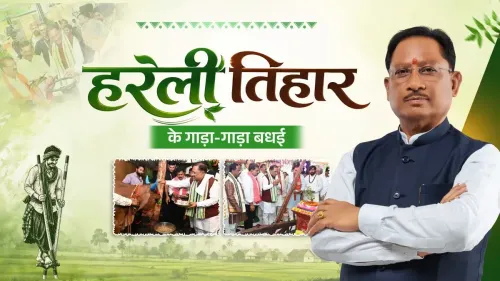
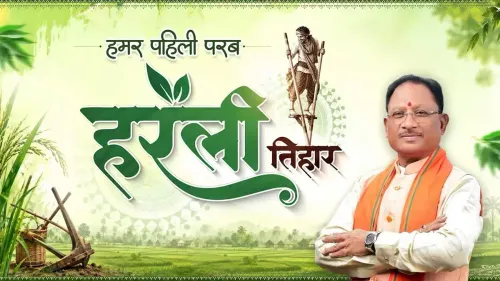
Before the harvest season fully turns, Chhattisgarh pauses to honour its oldest folk calendar marker — and this year the state's official voice led the celebration. The Chief Minister's Office of Chhattisgarh extended heartfelt greetings to all residents of the state on the occasion of Hareli Tihar on Wednesday, 12 August 2026, calling it the first festival of Chhattisgarhi folk culture.
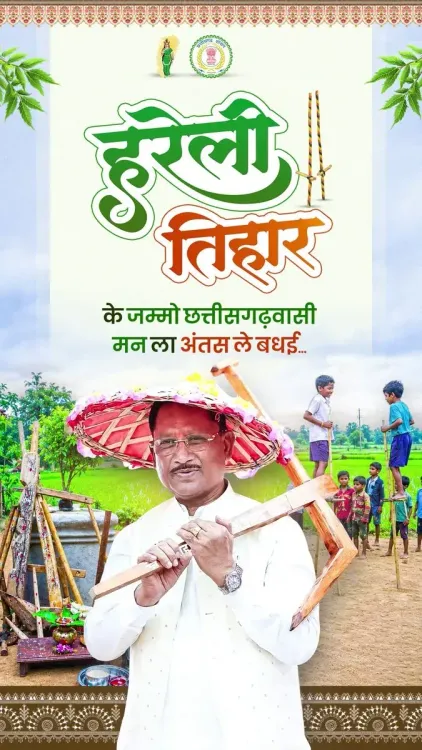
The post, shared in Chhattisgarhi, reads: 'Chhattisgarhi lok sanskriti ke pahili parab Hareli Tihar ke jammo Chhattisgarh-wasi man la antas le badhai' — 'Heartfelt greetings to all residents of Chhattisgarh on Hareli Tihar, the first festival of Chhattisgarhi folk culture.'What Hareli Tihar means to the state
Hareli — the name derives from the word for 'green' — falls on the new moon of the Shravan month and marks the moment the monsoon has taken hold and the fields have turned lush. Communities across Chhattisgarh worship agricultural implements, offer fresh green leaves, and perform rituals rooted in nature reverence. For a state where farming and forest livelihoods remain central, it is not a ceremonial footnote — it is the opening note of the festive year.
A tradition the state has amplified since 2000
Since Chhattisgarh was carved out as a separate state in 2000, successive governments have used Hareli as a public moment to affirm the region's distinct cultural identity — separate from the broader Madhya Pradesh traditions it once sat within. The state's large Adivasi population gives these folk observances particular weight; Chhattisgarh is also home to the globally recognised Bastar Dussehra, one of the longest tribal festivals in the world. Chief Minister Vishnu Deo Sai, who took office in December 2023 leading the BJP government, has continued this practice of official cultural outreach.
District-level fairs, community rituals, and state-organised programmes typically follow the official greeting across Chhattisgarh's regions in the days around Hareli — a pattern that positions the festival as both a living tradition and a marker of state pride.
Point of View
The BJP government under Vishnu Deo Sai signals continuity with the state's Adivasi and agrarian base, a constituency that proved decisive in the 2023 assembly elections. The pattern mirrors a wider BJP playbook of amplifying regional folk traditions to build sub-national pride alongside national narratives. Whether this cultural visibility translates into substantive policy for tribal communities remains the sharper question to watch.
NationPress
12 Aug 2026
Frequently Asked Questions
What is Hareli Tihar and why is it celebrated?
Hareli Tihar is the first festival of the Chhattisgarhi folk calendar, observed on the new moon of the Shravan month. Communities worship agricultural implements and offer fresh green leaves as part of nature-reverence rituals tied to the monsoon farming season.
When is Hareli Tihar in 2026?
In 2026, the Chief Minister's Office of Chhattisgarh posted Hareli greetings on 12 August 2026 , indicating the festival falls on or around that date.
Who is the Chief Minister of Chhattisgarh in 2026?
Vishnu Deo Sai is the Chief Minister of Chhattisgarh, having assumed office in December 2023 after the BJP's victory in the state assembly elections.
How does Chhattisgarh celebrate Hareli Tihar officially?
The Chief Minister's Office issues public greetings, and district-level fairs and community rituals are typically held across the state. Chhattisgarh governments have marked Hareli publicly since statehood in 2000.
What is the significance of Hareli for Chhattisgarh's tribal communities?
For Chhattisgarh's large Adivasi population, Hareli is a living tradition rooted in agrarian and forest livelihoods. It is one of several folk festivals — alongside Bastar Dussehra — that define the state's distinct cultural identity.