Uttarakhand CMO: Tehsil Divas held at Shama in Bageshwar district

Synopsis
The Chief Minister's Office of Uttarakhand highlighted a Tehsil Divas at sub-tehsil Shama in Bageshwar, where villagers and officials held a direct dialogue on civic and revenue issues. The camp is part of the state's long-running push to take grievance redressal to remote Kumaon hill communities.
Key Takeaways
The Uttarakhand CMO posted on 3 June 2026 about a Tehsil Divas at sub-tehsil Shama in Bageshwar district.
The event featured direct dialogue between villagers and the local administration.
Shama lies in the Kumaon division, where remote terrain makes access to tehsil offices difficult.
Tehsil Divas camps bring revenue, welfare and line-department officials to a single village venue.
The format has been used across successive Uttarakhand governments since the early 2010s.
Follow-up grievance disposal will be the key metric of the camp's effectiveness.
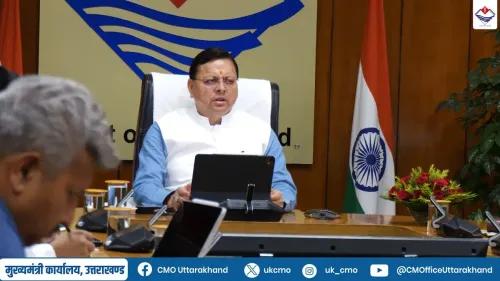
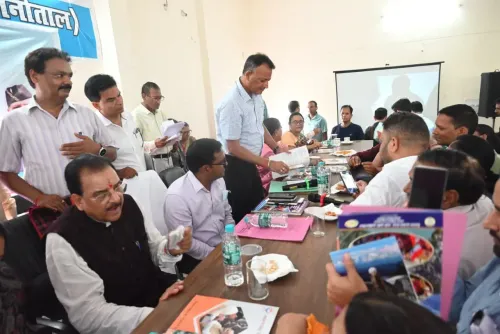
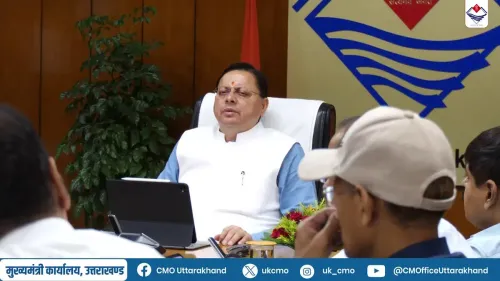
The Chief Minister's Office of Uttarakhand on Wednesday, 3 June 2026 highlighted a Tehsil Divas held at sub-tehsil Shama in Bageshwar district, where villagers and the local administration engaged in a direct dialogue on civic and revenue matters. The post, accompanied by a video clip, framed the camp as part of the state's continuing push to take governance to the doorstep of remote hill communities in the Kumaon region.
'A direct dialogue took place between villagers and the administration at the Tehsil Divas organised in sub-tehsil Shama of Bageshwar district,' the CMO said in its post, originally written in Hindi as 'बागेश्वर जनपद की उप तहसील शामा में आयोजित तहसील दिवस में ग्रामीणों और प्रशासन के बीच हुआ सीधा संवाद'. The message was tagged with #Bageshwar and #Uttarakhand.
Context
Shama is a sub-tehsil in Bageshwar, a district in Uttarakhand's Kumaon division known for its scattered hill villages, difficult road connectivity and large rural population dependent on agriculture, horticulture and seasonal migration. Reaching a tehsil headquarters for routine paperwork — land records, certificates, pension verification or grievance submission — often involves a full day's travel for residents of the upper catchments.
A Tehsil Divas is a periodic camp where revenue, police, supply, electricity, health and panchayati raj officials converge at a single venue on a fixed day. Citizens can lodge complaints, submit applications and receive on-the-spot decisions where possible, with pending matters logged for time-bound disposal.
Policy backdrop
Successive Uttarakhand governments have run Tehsil Divas and similar on-site outreach camps since at least the early 2010s, treating them as a standard instrument of decentralised grievance redressal in the Himalayan state. The format predates the current administration and has continued across changes in political leadership, reflecting a settled administrative consensus rather than a new scheme launch.
The model fits a broader pattern in Uttarakhand of routing public services through camps, mobile counters and district-level review meetings to overcome geographic barriers. It complements parallel initiatives such as the state's CM Helpline and online land-record portals, which together aim to compress the distance between a hill village and the district secretariat.
Stakeholders and impact
The immediate beneficiaries are rural villagers in and around Shama, for whom a single-day camp can substitute for multiple trips to the tehsil or district headquarters at Bageshwar. Grievances typically raised at such events range from mutation of land records and caste or income certificates to pension delays, ration card corrections, road repair, drinking water supply and wildlife conflict.
For the district administration, the format offers a structured way to map citizen concerns geographically and to push line departments to coordinate. The presence of senior officials at the venue is intended to enable cross-departmental decisions that are otherwise stuck between offices.
By choosing to spotlight the Shama camp on its official handle, the CMO is also signalling political ownership of routine field-level administration — a recurring theme in the state's communications around governance in remote blocks.
What's next
The test of the Shama Tehsil Divas, like others before it, will lie in follow-up: how many of the applications filed are disposed of within the stipulated window, and how many are escalated to the district or state level. Tracking grievance disposal rates from such camps is the standard metric officials cite when assessing impact.
Observers will also watch whether the format is replicated more frequently in other remote sub-tehsils across Bageshwar, Pithoragarh, Chamoli and Uttarkashi in the run-up to the next administrative review cycle. For residents of the upper Kumaon hills, the more consequential question is whether the dialogue at Shama translates into measurable changes on the ground in the weeks that follow.
Point of View
Tehsil Divas remains a low-cost, high-visibility instrument that cuts across party lines. The CMO's decision to amplify a sub-tehsil event signals an emphasis on routine delivery in remote blocks. The credibility of such messaging will hinge on transparent data about grievance disposal in the weeks that follow.
NationPress
17 Oct 2026
Frequently Asked Questions
What is a Tehsil Divas in Uttarakhand?
A Tehsil Divas is a periodic camp at which revenue and line-department officials gather at a tehsil or sub-tehsil venue to receive citizen grievances and applications on the spot. It is used in Uttarakhand to bring services closer to remote hill communities.
Where is Shama located?
Shama is a sub-tehsil in Bageshwar district, part of Uttarakhand's Kumaon division. It serves a cluster of remote hill villages that otherwise depend on the Bageshwar district headquarters for revenue and welfare services.
What kinds of issues do villagers raise at such camps?
Villagers typically raise land record mutations, certificate issuance, pension delays, ration card corrections, road and water supply complaints and wildlife conflict cases. Officials attempt on-the-spot disposal where possible and log the rest for time-bound action.
Is Tehsil Divas a new initiative?
No. Tehsil Divas and similar outreach camps have been held in Uttarakhand since at least the early 2010s and have continued across successive state governments as a routine good-governance practice.
How is the success of a Tehsil Divas measured?
Success is generally measured by the grievance disposal rate — how many applications filed at the camp are resolved within stipulated timelines — and by the share escalated to district or state authorities for further action.