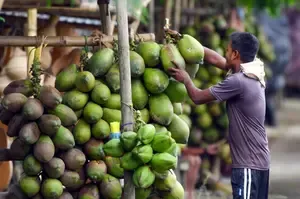
Coconut farming costs surge in Coimbatore as labour shortage bites
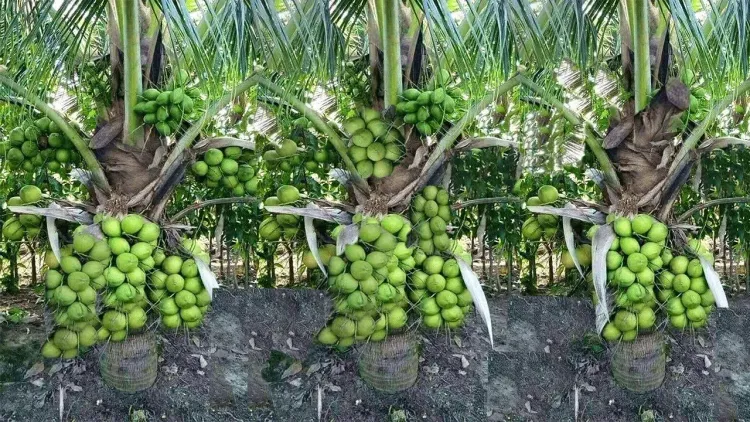
Synopsis
A labour crunch in Coimbatore and Tiruppur has pushed coconut de-husking costs up 50% in just two months, with harvesting charges also spiking. Post-election migrant worker outflows and a structural decline in skilled tree climbers are compounding the crisis — and the coir industry downstream is next in line to feel the pressure.
Key Takeaways
Coconut de-husking costs have risen from ₹1 to ₹1.50 per nut — a 50% increase — in Coimbatore and Tiruppur over two months.
Harvesting charges have climbed from approximately ₹2.25 to ₹3 per coconut in recent weeks.
Many migrant workers who left during the election period reportedly did not return, worsening the labour shortage.
The number of skilled coconut tree climbers is declining as older workers retire and younger generations avoid the occupation.
Small and marginal farmers are most exposed, lacking bargaining power and facing higher hired-labour rates than bulk traders.
Disruptions in husk supply could ripple into the coir and coir-pith industries , affecting rural livelihoods across the region.
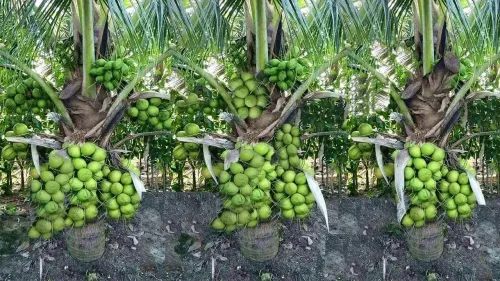
Coconut farmers in Coimbatore and Tiruppur districts of western Tamil Nadu are grappling with sharply rising production costs, driven by a severe labour shortage that has pushed up wages for both de-husking and harvesting operations. The crisis, which has deepened over the past two months, is squeezing margins for small and marginal growers already under pressure from volatile market prices and climbing input costs.
De-husking and Harvesting Costs Climb Steeply
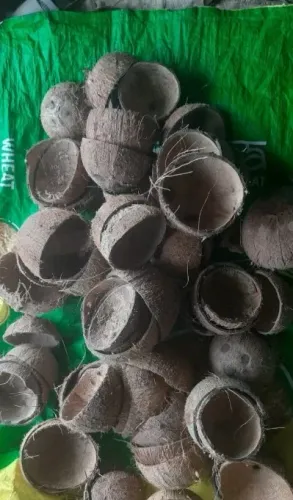
The charge for de-husking coconuts has risen from ₹1 to ₹1.50 per nut — a 50% jump — over the past two months, according to farmers in the region. Harvesting costs have similarly surged, with charges for climbing coconut trees and collecting nuts increasing from approximately ₹2.25 to ₹3 per coconut in recent weeks. Together, these two cost heads are materially eroding farm-gate profitability.
Why the Labour Crunch Happened
Farmers attribute the shortage to a confluence of factors. A significant number of migrant workers who left for their home states during the recent election period reportedly did not return to Coimbatore and Tiruppur after polling concluded. According to farmers, a section of this workforce appears to have found alternative employment elsewhere or settled in their native regions, reducing the pool available for agricultural operations in western Tamil Nadu.
Compounding the problem is a structural decline in the number of skilled coconut tree climbers. Older workers in this physically demanding trade are retiring, while younger workers are showing little interest in taking up the occupation — a trend that experts say has been building for years and shows no sign of reversing.
Small Farmers Bear the Brunt
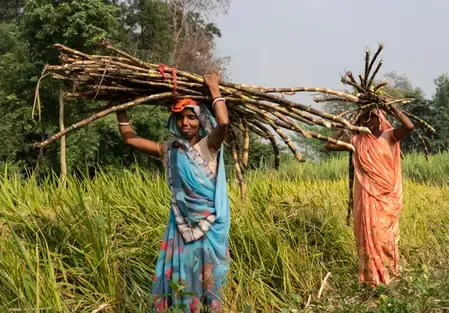
The burden is falling disproportionately on small and marginal farmers, who depend entirely on hired labour for periodic farm operations and lack the bargaining power to negotiate lower rates. Larger traders who procure coconuts in bulk have comparatively easier access to workers, widening the cost disadvantage for individual growers.
Industry representatives have warned that the higher labour costs are likely to feed through to retail coconut prices in the coming weeks. This comes amid already elevated input costs across Tamil Nadu's agricultural sector, leaving little room for growers to absorb additional expenses.
Mechanisation Remains Out of Reach for Most
Experts note that mechanised alternatives exist for both harvesting and de-husking operations. However, adoption remains limited, particularly among small-scale farmers, due to high upfront investment costs and practical constraints. Harvesting equipment is also reported to be less effective in plantations with very tall coconut trees, which are common in the region.
Ripple Effects on Coir and Allied Industries
The labour shortage is not confined to the farm. Coconut husks are a critical raw material for the coir and coir-pith industries, which depend on a steady supply from growers and traders. Any sustained disruption in husk availability or rise in processing costs risks cascading into these downstream sectors, threatening rural livelihoods linked to coconut cultivation and allied industries across western Tamil Nadu.
With labour availability showing little sign of improvement, farmers fear production costs will continue to climb in the months ahead, further straining one of Tamil Nadu's most important agricultural sectors.
Point of View
And a generational exit from skilled farm trades like tree climbing. Mechanisation is the obvious answer, but the economics only work at scale, which small and marginal farmers — the majority in this belt — cannot achieve. The coir industry's downstream exposure adds a second layer of risk that policy discussions on farm-labour shortages routinely ignore. Unless Tamil Nadu's agricultural labour policy addresses both the structural skill gap and the affordability of mechanisation for sub-two-hectare holdings, rising coconut prices may be the least of the sector's problems.
NationPress
21 Sept 2026
Frequently Asked Questions
Why are coconut farming costs rising in Coimbatore and Tiruppur?
A severe labour shortage has driven up wages for de-husking and harvesting operations, pushing de-husking costs up 50% and harvesting charges sharply higher over the past two months. The shortage is linked to migrant workers not returning after the election period and a long-term decline in skilled coconut tree climbers.
By how much have coconut de-husking costs increased?
De-husking costs have risen from ₹1 to ₹1.50 per nut — a 50% increase — over the past two months in Coimbatore and Tiruppur districts. Harvesting charges have also climbed from around ₹2.25 to ₹3 per coconut.
Who is most affected by the coconut labour shortage in Tamil Nadu?
Small and marginal farmers are bearing the brunt, as they rely entirely on hired labour and have limited bargaining power to negotiate lower rates. Larger traders who buy in bulk have comparatively easier access to workers.
Will coconut prices rise because of this labour shortage?
Industry representatives have warned that higher labour costs are likely to translate into increased coconut prices in the market. With no immediate improvement in labour availability expected, further cost escalation in the coming months appears likely.
Are there mechanised alternatives to manual coconut harvesting and de-husking?
Mechanised solutions exist for both operations, but adoption remains limited among small-scale farmers due to high investment costs and practical constraints. Harvesting equipment is also reported to be less effective in plantations with very tall coconut trees, which are common in the region.