Black-headed caterpillar infestation hits Coimbatore coconut farms in Sulur taluk
Synopsis
A black-headed caterpillar outbreak is tearing through coconut plantations in Coimbatore's Sulur taluk, spreading from Mopperipalayam to multiple neighbouring villages on the back of northerly winds. With yields falling and fronds drying up, farmers are racing against the pest's advance — and the horticulture department's IPM playbook may be their best line of defence.
Key Takeaways
A black-headed caterpillar ( Opisina arenosella ) outbreak has hit coconut farms in Sulur taluk , Coimbatore , Tamil Nadu .
The infestation began in Mopperipalayam and has spread to Kaduvettipalayam , Kittampalayam , and Paduvampalli , aided by northerly and easterly winds.
Larvae scrape chlorophyll from frond undersides, impairing photosynthesis and causing significant yield loss.
The horticulture department has recommended an integrated pest management strategy including frond pruning, release of Bracon parasitic wasps, and light traps ( one per acre, 7 pm–11 pm ).
Chemical sprays — Dichlorvos , Malathion , Quinalphos , or Phosphamidon — advised only for severe cases.
Farmers within a three-kilometre radius of affected villages urged to proactively release parasitoids as a precaution.
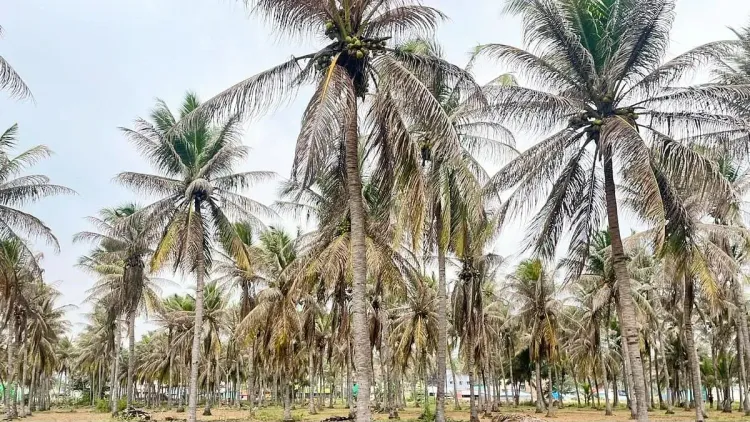
A severe outbreak of the black-headed caterpillar (Opisina arenosella) is threatening coconut plantations across several villages in the northern parts of Sulur taluk, Coimbatore, Tamil Nadu, with farmers reporting extensive crop damage and sharply falling yields. The infestation, first detected in Mopperipalayam, has since spread to neighbouring villages, prompting urgent appeals to the horticulture department for intervention.
How the Infestation Is Spreading
Growers in Mopperipalayam were among the first to raise the alarm, reporting that several coconut trees had suffered extensive damage. The pest has since advanced to Kaduvettipalayam, Kittampalayam, and Paduvampalli, reportedly aided by prevailing north and easterly winds. Farmers warn that without immediate action, the spread could become difficult to reverse.
Opisina arenosella is widely regarded as one of the most destructive pests affecting coconut palms in South India. The larvae feed on the underside of fronds, scraping away green chlorophyll tissue and severely impairing the tree's capacity for photosynthesis. As infested fronds dry up and leaf production declines, coconut yields fall significantly — translating into heavy financial losses for growers.
Visible signs of infestation reported by farmers include dried and discoloured fronds, insect excreta, and silken webs on the underside of leaves — all indicators of a widespread and active outbreak.
What the Horticulture Department Has Advised
Officials from the horticulture department have recommended an integrated pest management (IPM) strategy to contain the outbreak. Key steps advised include pruning and burning severely infested fronds to destroy larvae and pupae, and biological control through the release of parasitic wasps, particularly Bracon species, which naturally prey on the caterpillars.
Given the prevailing wind direction, officials have specifically recommended that parasitoids be released from the western side of plantations during cooler hours of the day to maximise their effectiveness. Farmers have also been advised to install one light trap per acre between 7 pm and 11 pm to attract and eliminate adult moths before they can lay eggs.
Chemical Control: A Last Resort
Chemical intervention has been recommended only in severe cases. Officials have advised targeted spraying on silken webs beneath the fronds using approved insecticides such as Dichlorvos, or formulations containing Malathion, Quinalphos, or Phosphamidon at prescribed dosages. Indiscriminate use of chemicals has been discouraged to protect beneficial insects, including the parasitoids being deployed for biological control.
Precautionary Steps for Nearby Farms
As a preventive measure, farmers with plantations located within a three-kilometre radius of the affected villages have been advised to proactively release parasitoids to reduce the risk of the infestation spreading further. The horticulture department has urged all growers in the region to monitor their plantations closely and report fresh signs of infestation at the earliest. With the pest still active and wind conditions favourable for its spread, officials and farmers alike stress that early action is critical to protecting the region's coconut crop.
Point of View
But its effectiveness depends on farmer adoption speed, which historically lags behind pest spread. The three-kilometre buffer advisory is prudent, but without a coordinated district-level response, individual farm-by-farm action may simply be too slow to contain a wind-assisted outbreak.
NationPress
13 Oct 2026
Frequently Asked Questions
What is the black-headed caterpillar and why is it dangerous to coconut trees?
The black-headed caterpillar (Opisina arenosella) is one of the most destructive pests of coconut palms. Its larvae feed on the underside of fronds, scraping away green chlorophyll tissue, which severely reduces the tree's ability to photosynthesise, causes fronds to dry up, and leads to sharp declines in coconut yield.
Which villages in Coimbatore are affected by the coconut pest outbreak?
The infestation was first reported in Mopperipalayam in Sulur taluk and has since spread to Kaduvettipalayam, Kittampalayam, and Paduvampalli, with northerly and easterly winds reportedly aiding its advance.
What measures has the horticulture department recommended to control the outbreak?
Officials have advised an integrated pest management approach: pruning and burning infested fronds, releasing Bracon parasitic wasps from the western side of plantations during cooler hours, and installing one light trap per acre between 7 pm and 11 pm. Chemical sprays using Dichlorvos, Malathion, Quinalphos, or Phosphamidon are recommended only in severe cases.
What can farmers near the affected villages do to protect their plantations?
Farmers within a three-kilometre radius of the affected villages have been advised to proactively release parasitoids as a preventive measure, even if no infestation signs are yet visible, to reduce the risk of the pest spreading further.
How can farmers identify a black-headed caterpillar infestation on their coconut trees?
Key signs include dried and discoloured fronds, insect excreta, and silken webs on the underside of leaves. A visible decline in new leaf production and overall tree vigour are also indicators of an active infestation.