Commonwealth, CDRI sign MoU to build disaster-resilient infrastructure
Synopsis
India-based CDRI and the Commonwealth Secretariat have signed a 3-year cooperation pact in London, targeting climate-resilient infrastructure for 56 member states — including 25 Small Island Developing States that are among the world's most climate-vulnerable. The deal, timed to London Climate Action Week, could reshape how technical and financial expertise flows to nations least equipped to handle the infrastructure cost of climate change.
Key Takeaways
The Commonwealth Secretariat and CDRI signed an MoU on 17 June 2025 in London to cooperate on disaster-resilient infrastructure.
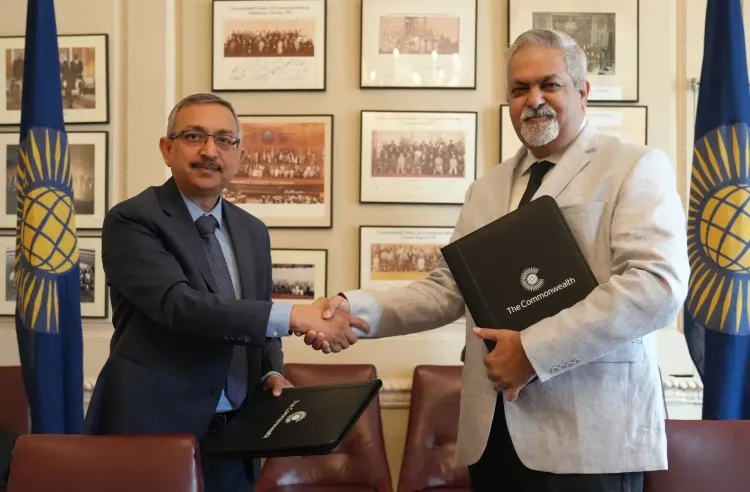
The agreement was signed by Tanmaya Lal (Commonwealth) and Amit Prothi (CDRI) at Marlborough House .
The MoU is valid for an initial three-year period and operates as a non-financial framework.
It covers capacity building, training, nature-based solutions, and technical exchanges aligned with the SDGs , Paris Agreement , and Sendai Framework .
The Commonwealth includes 25 Small Island Developing States (SIDS) — among the world's most climate-vulnerable nations.
CDRI has 69 members including national governments, international organisations, and businesses.
The Commonwealth Secretariat and the New Delhi-headquartered Coalition for Disaster Resilient Infrastructure (CDRI) signed a memorandum of understanding (MoU) on Wednesday, 17 June 2025, to deepen cooperation on climate- and disaster-resilient infrastructure across Commonwealth member states. The agreement was formalised ahead of London Climate Action Week (LCAW), scheduled from 20–28 June, at Marlborough House, the Commonwealth Headquarters in London.
What the MoU Covers
The agreement was signed by Tanmaya Lal, Commonwealth Deputy Secretary-General (Programmes), and Amit Prothi, CDRI Director-General. It establishes a flexible, non-financial cooperation framework that will remain in effect for an initial period of three years.
Specific areas of collaboration include capacity building, training, thought leadership on nature-based solutions for resilient infrastructure, technical exchanges, and engagement through expert groups and knowledge-sharing platforms. The MoU aligns with the global Sustainable Development Goals (SDGs), the Paris Agreement, and the Sendai Framework for Disaster Risk Reduction.
Why Small Island Developing States Are Central
The Commonwealth counts 25 Small Island Developing States (SIDS) among its members — many of them ranked among the world's most climate-vulnerable nations. These states face compounding risks from extreme weather events, sea-level rise, and other climate-related threats, making resilient public infrastructure a matter of economic survival rather than policy preference.
This is the context in which the MoU carries particular weight. The agreement also supports the objectives of the Commonwealth Strategic Plan 2025–2030, particularly its priorities on environmental resilience.
What the Signatories Said
Tanmaya Lal said the Commonwealth was 'joining hands with the CDRI to leverage our respective capabilities in supporting our member states, especially SIDS and more vulnerable states, to strengthen their capacities to build resilient and inclusive infrastructure.' He added that 'such infrastructure is mainly public goods that help societies and economies manage the growing threats faced from climate change and related natural disasters.'
Amit Prothi described the partnership as a 'strategic opportunity to advance infrastructure resilience through knowledge sharing, capacity building, partnerships, and innovation.' He said the MoU 'establishes a robust platform for practical cooperation, ranging from technical exchanges and training programmes to nature-based solutions and risk-informed infrastructure planning.'
About CDRI and the Commonwealth
CDRI is a global coalition with 69 members, comprising national governments, international organisations, and businesses. It focuses on sharing knowledge, conducting research, and investing in disaster-resilient infrastructure. The Commonwealth Secretariat will host several events at Marlborough House during London Climate Action Week, underscoring the timing and intent of the new partnership.
With climate risks intensifying across the Global South, the CDRI–Commonwealth collaboration signals a push to move beyond declarations toward structured, technical cooperation — one that will be tested by how swiftly it translates into on-the-ground infrastructure outcomes for vulnerable member states.
Point of View
Headquartered in New Delhi, has quietly become a vehicle for Indian soft power in climate forums, and a Commonwealth partnership amplifies that reach to 56 nations. The real accountability question is whether a non-binding, three-year knowledge-sharing framework translates into measurable infrastructure upgrades in SIDS — or remains a well-worded document timed to a climate conference week. Past multilateral resilience frameworks have struggled at the last mile precisely because capacity-building without capital rarely moves concrete.
NationPress
18 Sept 2026
Frequently Asked Questions
What is the MoU signed between the Commonwealth Secretariat and CDRI?
It is a three-year, non-financial cooperation agreement signed on 17 June 2025 at Marlborough House in London, aimed at advancing climate- and disaster-resilient infrastructure across Commonwealth member states. The MoU covers capacity building, training, technical exchanges, and nature-based solutions.
Who signed the Commonwealth–CDRI MoU?
The MoU was signed by Tanmaya Lal, Commonwealth Deputy Secretary-General (Programmes), and Amit Prothi, CDRI Director-General, at the Commonwealth Headquarters in London.
Why are Small Island Developing States a focus of this agreement?
The Commonwealth includes 25 Small Island Developing States (SIDS) that are among the world's most climate-vulnerable nations, facing rising risks from extreme weather, sea-level rise, and climate-related disasters. The MoU specifically aims to strengthen their capacity to build resilient infrastructure.
How does the MoU align with global climate frameworks?
The agreement is structured in line with the Sustainable Development Goals (SDGs), the Paris Agreement, and the Sendai Framework for Disaster Risk Reduction. It also supports the Commonwealth Strategic Plan 2025–2030, particularly its environmental resilience priorities.
What is CDRI and how many members does it have?
CDRI, the Coalition for Disaster Resilient Infrastructure, is a New Delhi-headquartered international organisation with 69 members, including national governments, international organisations, and businesses. It focuses on research, knowledge sharing, and investment in disaster-resilient infrastructure globally.