NHAI signs MoU with Norwegian Geotechnical Institute for tunnel engineering
Synopsis
India's highway authority has brought in one of the world's foremost geotechnical institutes to tackle its most persistent infrastructure problem: building and maintaining roads through unstable, landslide-prone mountain terrain. The NHAI-NGI MoU signals that India is looking beyond domestic expertise to solve the engineering challenges that have stalled and endangered Himalayan and Western Ghats highway projects.
Key Takeaways
NHAI signed a five-year MoU with Norwegian Geotechnical Institute (NGI) in Oslo on 22 May 2025 .
NGI will provide consultancy on tunnel construction , slope stability analysis , and safety audits of operational tunnels.
The partnership includes development of early warning systems for slopes and analysis of InSAR satellite data .
Capacity building through joint workshops, training programmes , and technical literature publication is a core component.
The MoU is non-exclusive and project-to-project , allowing both parties to work independently with other organisations.
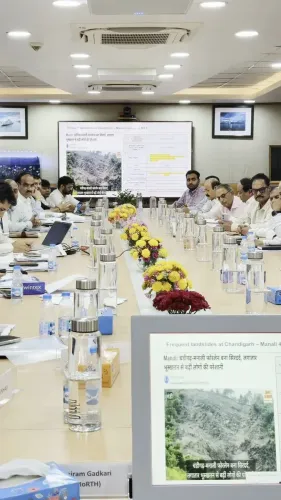
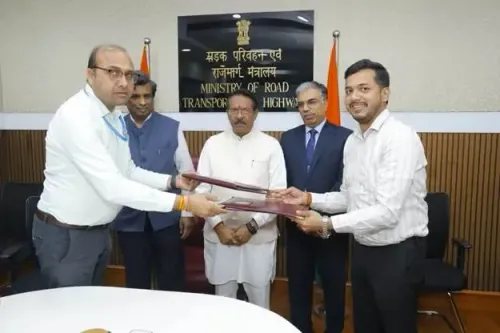
The National Highways Authority of India (NHAI) on 22 May 2025 signed a Memorandum of Understanding (MoU) with the Norwegian Geotechnical Institute (NGI) in Oslo, formalising a five-year technical partnership aimed at strengthening India's highway infrastructure capabilities in geologically challenging terrain. The agreement was confirmed in an official statement from the Ministry of Road Transport and Highways.
What the Partnership Covers
The collaboration draws on NGI's internationally recognised expertise in geotechnical engineering and natural hazard mitigation. Under the MoU, NGI will provide consultancy services spanning site characterisation for tunnel projects, preparation of feasibility studies, and Detailed Project Reports (DPRs) for upcoming tunnel developments.
The institute will also conduct structural assessments and safety audits of operational tunnels, and carry out advanced slope stability analyses to identify potential hazards and recommend mitigation measures. Notably, the partnership extends to the analysis and interpretation of InSAR (Interferometric Synthetic Aperture Radar) data for slopes — a satellite-based monitoring tool increasingly used in high-risk mountain corridors.
Early Warning Systems and Safety Infrastructure
A key deliverable of the MoU is the development of early warning systems for slopes, a critical need given India's expanding highway network through the Himalayas, the Western Ghats, and the Northeast. Landslides and slope failures have repeatedly disrupted national highway connectivity in these regions, causing both economic loss and casualties.
This comes amid an accelerated push by the Centre to develop mountain highways, including projects under Bharatmala Pariyojana, where tunnel construction and slope management are among the most technically demanding components.
Capacity Building and Knowledge Exchange
Institutional capacity building forms a central pillar of the arrangement. NHAI and NGI will jointly conduct workshops, seminars, and technical training programmes, and collaborate on the publication of specialised technical literature. Research and development initiatives focused on natural hazard reduction will also be undertaken jointly.
The MoU is structured on a non-exclusive, project-to-project basis, allowing both organisations the flexibility to independently engage with other partners as required, according to the official statement.
India-Norway Infrastructure Cooperation
The agreement reflects deepening bilateral cooperation between India and Norway in infrastructure development, technology exchange, and sustainable engineering. Norway has extensive experience building tunnels through complex geological formations — the country operates one of the world's densest road tunnel networks — making NGI a technically credible partner for India's mountain highway ambitions.
With the MoU valid for five years, the two organisations are expected to begin project-specific engagements in the near term, with outcomes likely to influence design standards for India's next generation of high-altitude tunnels.
Point of View
But the harder question is whether consultancy engagements on a project-to-project basis will produce lasting institutional change, or remain one-off interventions that do not reform the underlying procurement and design review processes.
NationPress
20 Sept 2026
Frequently Asked Questions
What is the NHAI-NGI MoU about?
It is a five-year agreement signed in Oslo on 22 May 2025 between the National Highways Authority of India and the Norwegian Geotechnical Institute, covering technical consultancy for tunnel construction, slope stability analysis, early warning systems, and capacity building for India's national highway infrastructure.
What will the Norwegian Geotechnical Institute do under this partnership?
NGI will provide site characterisation for tunnel projects, prepare feasibility studies and Detailed Project Reports, conduct safety audits of operational tunnels, perform slope stability assessments, analyse InSAR satellite data, and help develop early warning systems for landslide-prone areas.
Why does India need foreign geotechnical expertise for its highways?
India's expanding highway network traverses geologically complex zones including the Himalayas, Western Ghats, and the Northeast, where slope failures and tunnel challenges are frequent. NGI brings globally recognised expertise in exactly these conditions, supplementing domestic engineering capacity.
How long is the MoU valid and is it exclusive?
The MoU is valid for five years and is explicitly non-exclusive and project-to-project, meaning both NHAI and NGI retain the freedom to independently collaborate with other organisations as needed.
How does this fit into India's broader highway development plans?
The partnership aligns with the Centre's accelerated push under Bharatmala Pariyojana, which involves extensive tunnel and mountain highway construction. Improved geotechnical assessment and early warning systems are expected to influence design standards for India's next generation of high-altitude road infrastructure.