Ajit Doval in Beijing for 25th India-China border talks; Congress raises resolution vs management debate
Synopsis
NSA Ajit Doval is in Beijing for the 25th round of India-China Special Representatives' Talks — but the visit has reignited a pointed domestic debate. Congress argues the mechanism, designed for border resolution under Vajpayee, has been quietly downgraded to mere dispute management, with the 2020 Galwan statement cited as a turning point. The BJP insists India's global standing has never been stronger.
Key Takeaways
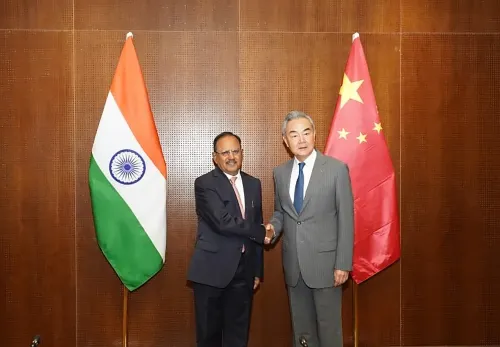
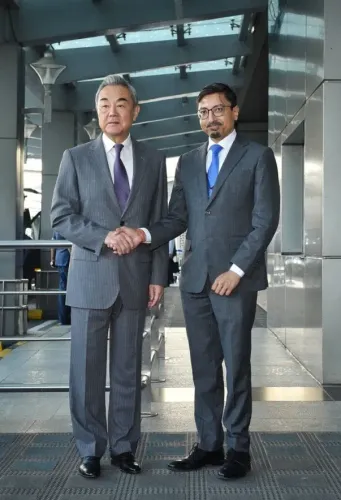
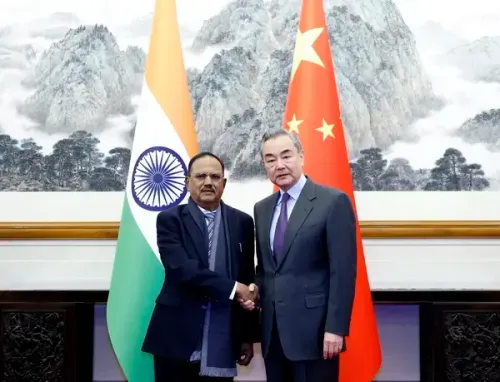
NSA Ajit Doval arrived in Beijing on 24 August for a two-day visit at the invitation of Chinese Foreign Minister Wang Yi .
The 25th round of Special Representatives' Talks on the India-China Boundary Question is scheduled for 25 August .
Doval is also set to meet Chinese Vice President Han Zheng during the visit.
Congress MP Pawan Khera accused the government of reducing the mechanism from border resolution to border management .
Khera cited PM Modi's 19 June 2020 statement on the Galwan clash as having conceded the narrative to China.
BJP MLA Ram Kadam defended the government, citing India's rise to the world's fourth-largest economy and Modi's global diplomatic outreach.
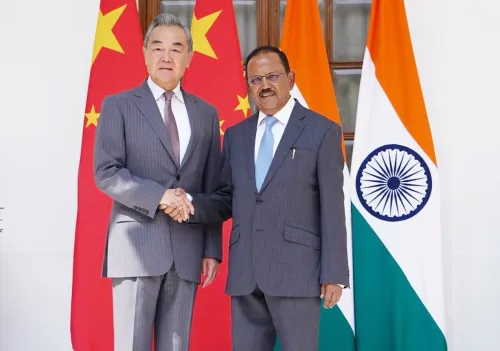
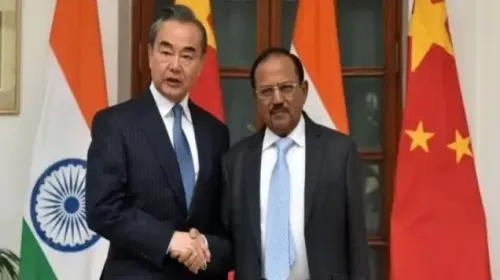
National Security Advisor Ajit Doval arrived in Beijing on 24 August for a two-day visit, ahead of the 25th round of Special Representatives' Talks on the India-China Boundary Question scheduled for 25 August. The visit, confirmed by the Ministry of External Affairs, comes at the invitation of Chinese Foreign Minister and Politburo member Wang Yi, who serves as China's Special Representative in the talks.
Doval is also expected to call on Chinese Vice President Han Zheng during his stay. The talks are expected to centre on the boundary question and measures to sustain peace and stability along the Line of Actual Control (LAC).
What the Talks Cover
The Special Representatives' mechanism was established during the tenure of former Prime Minister Atal Bihari Vajpayee as a structured diplomatic channel to work toward a lasting resolution of the India-China boundary dispute. Monday's arrival marks the lead-up to the 25th iteration of these talks — a figure that itself underscores how long-running the process has become without a definitive settlement.
According to the Ministry of External Affairs, the discussions will focus on the boundary question and efforts to maintain peace and stability along the border — language that has characterised official communiqués from both sides for several rounds.
Congress Challenges the Government's Approach
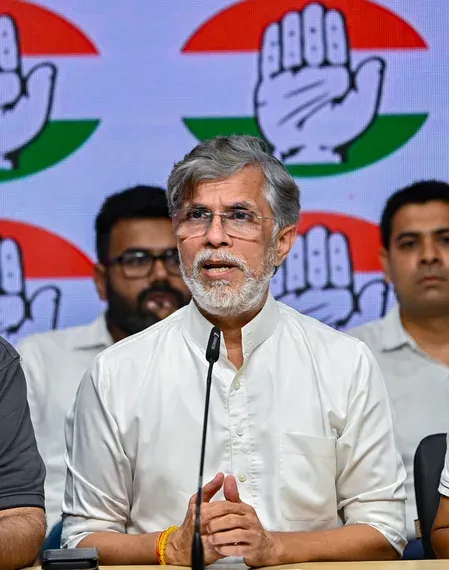
The opposition Indian National Congress used Doval's departure as an occasion to sharply question New Delhi's strategic posture on the boundary dispute. Party spokesperson and Member of Parliament Pawan Khera argued that the Special Representatives' mechanism has drifted from its founding purpose.
Khera said, 'The Special Representative mechanism created during Atal Bihari Vajpayee's tenure was meant for border resolution. Notice the word carefully: ‘resolution’. But over time, it has been reduced to border management — not solving the dispute, but merely managing it.'
Khera also invoked Prime Minister Narendra Modi's statement of 19 June 2020, made in the aftermath of the Galwan Valley clash, in which Modi said no one had entered Indian territory. The Congress MP argued that this statement effectively conceded the narrative to China.
He said, 'Following the Prime Minister's statement on June 19, 2020, claiming no one entered our territory, we effectively projected to China and the world that their troops had not crossed over, implying our soldiers went into their area, leading to the Galwan martyrdom.'
Khera further alleged that the government's posture in Ladakh amounted to capitulation, and drew attention to the situation in Arunachal Pradesh, saying, 'You bowed down on Ladakh, turned resolution into management; there's one more addition: the situation in Arunachal, by hoisting flag at district headquarters, they are showing China has not entered.'
BJP Defends India's Foreign Policy Record
In Mumbai, Bharatiya Janata Party (BJP) MLA Ram Kadam pushed back against the Congress critique, citing Prime Minister Modi's extensive diplomatic outreach over the past decade.
Kadam said, 'Over the past 12 years, the Prime Minister has visited countries around the world, including several nations that no Indian Prime Minister had visited for many years. He has consistently worked towards building good relations with all countries, and maintaining such relations is important.'
He also pointed to India's economic ascent as evidence of effective foreign policy, adding, 'Today, India, which was the world's 11th-largest economy in 2014, has become the fourth-largest and will soon become the third-largest. India's image as a global leader, or ‘Vishwaguru,’ is gradually emerging.'
Context: A Dispute Decades in the Making
The India-China boundary dispute spans approximately 3,488 kilometres and has remained unresolved since the 1962 war. The 2020 Galwan Valley standoff — the deadliest clash between the two armies in decades — severely strained bilateral ties and set back years of diplomatic progress. While both sides have since disengaged at several friction points, a comprehensive settlement remains elusive.
The outcome of the 25th round of talks will be closely watched to see whether the two sides can move beyond the management-versus-resolution impasse that critics, including the Congress, say has defined recent years of engagement.
Point of View
The absence of even a framework agreement is itself a data point. The Galwan episode exposed how domestic political messaging on a military confrontation can constrain diplomatic leverage — a tension that has not been fully resolved. Meanwhile, the BJP's pivot to economic rankings as a proxy for foreign policy success sidesteps the core territorial question entirely. What happens in Beijing on 25 August matters less for any single breakthrough than for whether both sides signal willingness to move the goalposts from 'stability' back to 'settlement.'
NationPress
24 Aug 2026
Frequently Asked Questions
What are the India-China Special Representatives' Talks?
The Special Representatives' Talks are a structured diplomatic mechanism established during the tenure of former Prime Minister Atal Bihari Vajpayee to work toward a resolution of the India-China boundary dispute. NSA Ajit Doval represents India, while Chinese Foreign Minister Wang Yi represents China in the 25th round scheduled for 25 August.
Why is NSA Ajit Doval visiting Beijing?
Doval arrived in Beijing on 24 August at the invitation of Chinese Foreign Minister Wang Yi for a two-day visit. The primary purpose is to hold the 25th round of Special Representatives' Talks on the India-China Boundary Question, with discussions expected to focus on the boundary dispute and maintaining peace along the LAC.
What is Congress's criticism of the government's India-China border policy?
Congress spokesperson Pawan Khera argued that the Special Representatives' mechanism, originally designed for border resolution, has been reduced to border management under the current government. He also cited PM Modi's 19 June 2020 statement following the Galwan clash as having effectively conceded the narrative that no Chinese troops had entered Indian territory.
What is the significance of the 25th round of talks?
The 25th round is significant because it comes after the 2020 Galwan Valley standoff — the deadliest India-China military clash in decades — and subsequent disengagement at several friction points. Critics note that after 25 rounds spanning over two decades, no framework agreement on the boundary has been reached.
Who will Doval meet during his Beijing visit?
According to the Ministry of External Affairs, Doval will hold formal talks with Chinese Special Representative and Foreign Minister Wang Yi on 25 August. He will also call on Chinese Vice President Han Zheng during the two-day visit.