Delimitation bill push 'assault on Constitution': Jairam Ramesh
Synopsis
Seven months after Parliament defeated the Delimitation Bills, the Centre is trying again, and the Congress says the timing is no accident. On Constitution Day, Jairam Ramesh accused the Modi government of spending '105 days of Operation Lotus' building a two-thirds majority, calling the special session plan an 'assault on the Constitution'.
Key Takeaways
Congress leader Jairam Ramesh called the Centre's special session plan on delimitation an “insult to and assault on the Constitution” on 26 November 2026 .
The Delimitation Bills were made public on 14 April 2026 (Ambedkar Jayanti) and defeated in Parliament on the night of 17 April 2026 .
Ramesh alleged 105 days of “Operation Lotus” aimed at securing a “super-tainted two-thirds majority”.
The Congress wants delimitation not to disadvantage southern states and seeks all-party consultations.
The government says delimitation, linked to expanding parliamentary strength and women's reservation, is necessary.
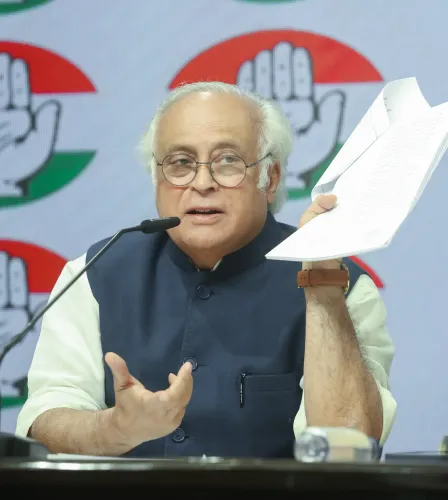
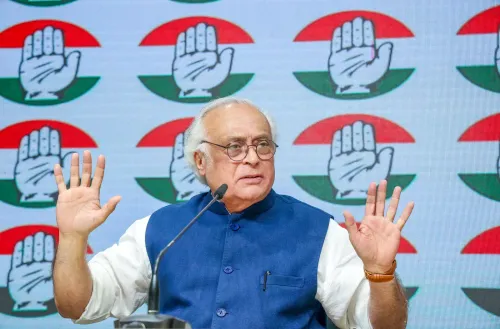
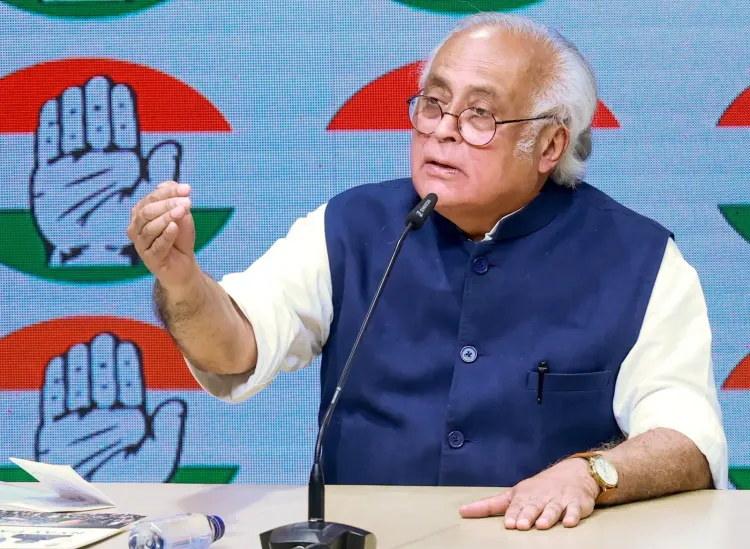
Senior Congress leader Jairam Ramesh on 26 November 2026, observed as Constitution Day, attacked the Centre over its plan to convene a special session of Parliament to pass a Constitution amendment bill on delimitation. He called the move an “insult to and assault on the Constitution.” The criticism, posted on his X handle in New Delhi, reopens a fight over a proposal Parliament defeated in April.
Key Developments
Ramesh traced the dispute back to 14 April 2026, Ambedkar Jayanti. He noted that the government of Prime Minister Narendra Modi made the Delimitation Bills public that evening, and that the legislation was defeated in Parliament on the night of 17 April 2026.
“On the evening of Ambedkar Jayanti on April 14, 2026, the Modi Govt had made the Delimitation Bills public that met their well-deserved fate on the night of April 17, 2026,” he wrote. According to Ramesh, the Bills failed to win consensus and did not clear the required constitutional threshold.
The Congress Allegation
Ramesh accused the ruling dispensation of spending 105 days on what he called “Operation Lotus” after that defeat. The phrase is a term opposition parties often use to allege attempts by the Bharatiya Janata Party (BJP) to engineer defections. He alleged that the government is now calling a special session in the hope of securing what he described as a “super-tainted two-thirds majority.”
“Now on Constitution Day, after 105 days of Operation Lotus, the Modi Govt announces a special session, hoping that it will get its super-tainted two-thirds majority to pass a Constitution amendment bill,” Ramesh wrote.
He also questioned the timing of the renewed push. “Can there be a great insult to and assault on the Constitution?” he asked in the post.
Why the Two-Thirds Threshold Matters
Amending the Constitution requires a special majority in both Houses of Parliament. This means a majority of each House's total membership plus two-thirds of members present and voting. The April defeat showed that the government did not then have those numbers for the delimitation package.
The Congress charge rests on this arithmetic. If the numbers have changed since April, the opposition argues, the change reflects political engineering rather than fresh consensus. The government has not publicly responded to these specific allegations.
The Southern States Debate
The Indian National Congress has repeatedly argued that delimitation must not disadvantage states, particularly in southern India. It has demanded transparent consultations with all political parties before any fresh proposal is introduced.
The government maintains that delimitation and related constitutional provisions are necessary. In public debate, these provisions have been linked to expanding parliamentary strength and rolling out women's reservation. The Centre has also sought to reassure southern states about their representation.
What Happens Next
The special session will test whether the government has built the numbers it lacked in April. It will also show whether the opposition can again block the amendment. The outcome is likely to shape representation in Parliament for decades.
Point of View
More than the opposition's rhetoric. Delimitation will redraw the balance of power between India's north and south for a generation, and the southern states' concerns need a negotiated answer, not just a numerical one. If the amendment passes on reworked arithmetic rather than broader consensus, its legitimacy will be contested long after the vote.
NationPress
26 Nov 2026
Frequently Asked Questions
What did Jairam Ramesh say about the delimitation special session?
Jairam Ramesh called the Centre's plan to convene a special session to pass a delimitation amendment bill an “insult to and assault on the Constitution.” He made the remarks on Constitution Day, 26 November 2026, in a post on X.
What happened to the Delimitation Bills in April 2026?
The Delimitation Bills were made public on 14 April 2026 and defeated in Parliament on the night of 17 April 2026. According to Ramesh, they failed to command consensus and did not meet the required constitutional threshold.
What is the 'Operation Lotus' allegation by the Congress?
Ramesh alleged that the government spent 105 days on 'Operation Lotus' after the April defeat to secure a two-thirds majority. Opposition parties commonly use the term to allege attempts to engineer defections.
Why does a delimitation amendment need a two-thirds majority?
Constitution amendment bills require a special majority in both Houses of Parliament. This means a majority of each House's total membership and two-thirds of members present and voting.
Why are southern states concerned about delimitation?
The Congress argues that delimitation could disadvantage states, particularly in southern India, and wants transparent all-party consultations. The government says delimitation is necessary and has sought to reassure southern states about their representation.