Is Congress Undermining India on the Global Stage?

Synopsis
The AI Impact Summit turned chaotic as IYC protesters clashed with global tech leaders. This incident raises questions about the intersection of politics and global representation. Dive into the implications of this protest on India's image and the broader political landscape.
Key Takeaways
The protest at the AI Impact Summit highlighted tensions between domestic politics and international representation.
Critics argue the protest diluted serious discussions on technology and trade.
Political analysts emphasized the need for discernment in the context of protests.
The incident raises questions about the effectiveness of traditional political channels.
India's democratic vibrancy must align with its global image.
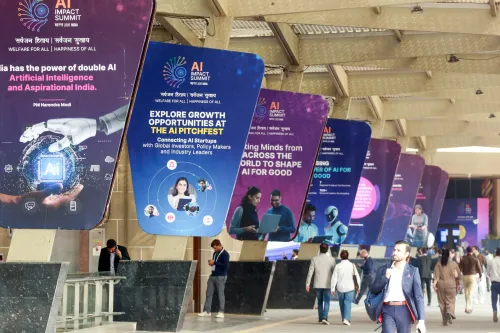
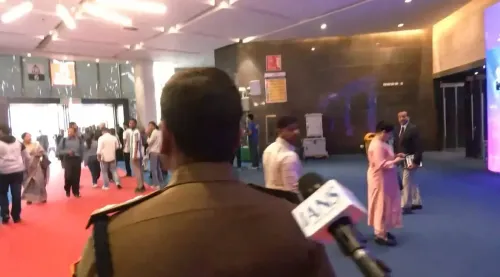
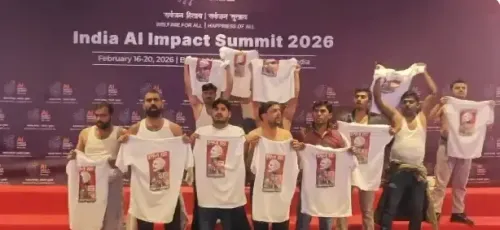
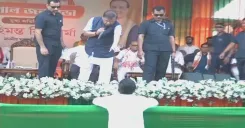
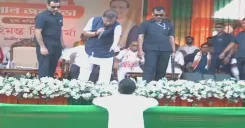
New Delhi, Feb 20 (NationPress) The mood at the AI Impact Summit held in Bharat Mandapam underwent a drastic change on Friday afternoon as a contingent of demonstrators, associated with the Indian Youth Congress (IYC), invaded the venue.
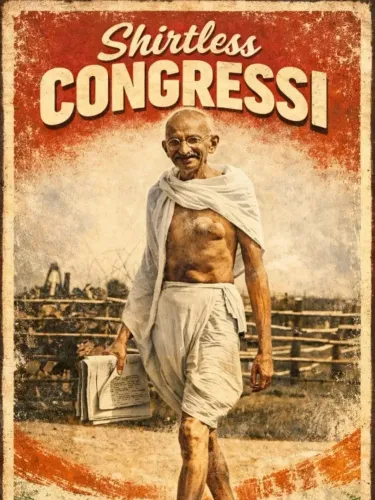
While global tech leaders, policymakers, and investors convened to deliberate on the future of Artificial Intelligence, the protesters voiced their dissent against Prime Minister Narendra Modi and the anticipated India-US trade agreement. Some participants were reported to be partially undressed, showcasing or donning T-shirts that featured slogans like “PM is compromised” and “India-US trade deal”.
The summit was intended to serve as a platform to highlight India’s expanding technological capabilities, but it rapidly became a stage for a fierce domestic political clash, according to reports. International attendees, including CEOs from major corporations and representatives from global media organizations, observed a scenario that many described as “a clash between India’s innovation narrative and its electoral disputes.”
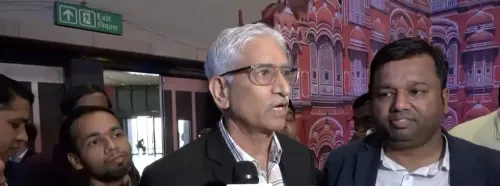
Political experts quickly labeled the incident as a “miscalculated choice of venue.” One analyst noted, “Protest is a fundamental aspect of democracy. However, context is crucial for legitimacy. During an international tech summit, the context is not just domestic; it is also diplomatic.”
The AI Impact Summit was positioned as India’s declaration to the world: it is not merely a market for technology but also a creator and influencer of it. “At that moment, the nation was portraying itself as a technological leader. The protest diverted attention from AI policy to political discord,” remarked an observer.
Critics pointed out that raising concerns about a bilateral trade agreement at a technology forum blurred the thematic boundaries. “If the issue pertains to the India-US trade deal, then Parliament, press conferences, or organized rallies are more appropriate venues,” stated a senior political analyst. “Merging unrelated issues risks undermining the gravity of both.”
The nature of the protest elicited even more intense reactions. Videos showing semi-nude demonstrations spurred outrage across various social media platforms and political discussions, with many commentators describing the incident as “inappropriate” and “a disgrace on a global platform.”
Critics referred to the event as indicative of what they termed a “dearth of ideas.”
One commentator remarked that such “spectacle politics” indicated ideological fatigue. Another suggested that opposition parties should differentiate between vigorous dissent and what he referred to as “counterproductive theatrics.”
India’s democratic vibrancy has historically been regarded as one of its strengths. “The right to protest is constitutionally guaranteed and historically honored,” noted a political observer. “Nonetheless, democratic rights must align with strategic considerations. A global summit encompasses both domestic and international dimensions.”
Analysts argued that while opposing the ruling party or even the Prime Minister is legitimate, it must not lead to what they termed a “national embarrassment.”
One analyst commented, “Critique the government, challenge policies, question trade agreements -- but do not confuse partisan opposition with the nation’s global representation. International forums are delicate ecosystems.”
This incident has prompted reflection within the broader opposition landscape. An analyst suggested that dramatic protests often emerge from a perceived shrinking of political space.
“When traditional avenues seem ineffective, movements often resort to symbolism. The key question is whether such symbolism garners support or alienates the undecided middle,”
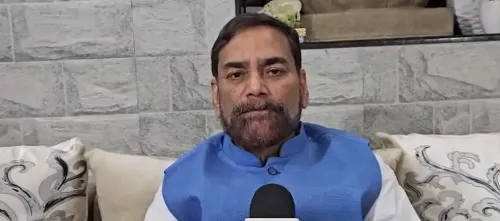
explained an analyst.Some critics have contended that rather than amplifying their message, the protest may have eclipsed critical discussions regarding trade negotiations. “The focus shifted from the substance of the India-US deal to the behavior of the protesters,” stated a politician. “In media politics, optics often overshadow substantive arguments.”
The AI Impact Summit was intended as a proclamation of India’s digital aspirations -- a moment to convey confidence and capability. Instead, it briefly transformed into a display of domestic polarization.
The more profound concern, as several observers highlighted, transcends a single protest. It encompasses political culture. “Democracy flourishes on dissent, but it also requires discernment -- regarding place, method, and timing.”
Point of View
It is essential to uphold the integrity of India's image on the world stage. While the right to protest is fundamental, it must be exercised with an awareness of its impact on national perception.
NationPress
2 Oct 2026
Frequently Asked Questions
What was the main issue raised by the protesters?
The protesters, linked to the Indian Youth Congress, raised concerns against Prime Minister Modi and the India-US trade deal.
What was the significance of the AI Impact Summit?
The summit aimed to showcase India's technological leadership on a global platform.
How did the protest affect the summit?
The protest shifted focus from discussions on AI policy to political contention.
What are analysts saying about the protest?
Analysts view the protest as a misjudged choice of venue that could dilute serious political discourse.
What is the overall sentiment regarding the protest?
While dissent is a vital part of democracy, the manner of protest raises concerns about national embarrassment.