Congress crosses a line dragging cricket into religious politics
Synopsis
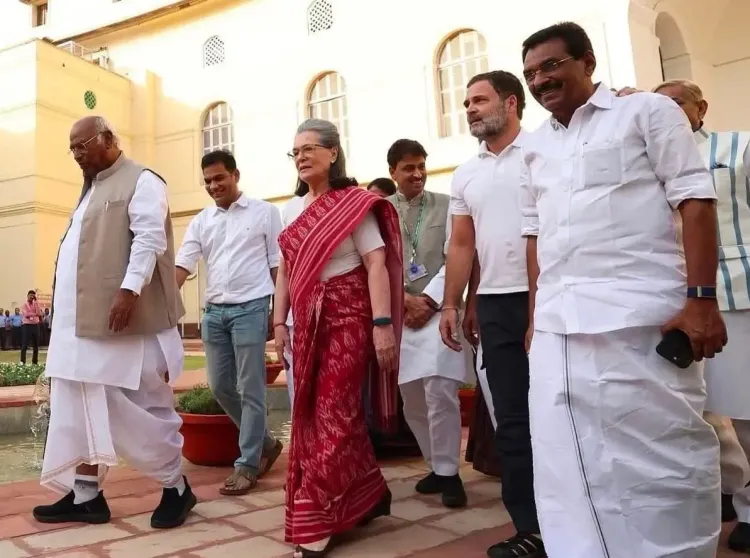
Congress MP Imran Masood's claim that pacer Mohammed Siraj was dropped from India's Test XI on religious grounds has drawn fierce pushback — but it did not arrive in a vacuum. It sits alongside a string of contested statements from Rahul Gandhi abroad and Mallikarjun Kharge at home, all pointing to a party willing to test the outer limits of political decorum as assembly elections approach.
Key Takeaways
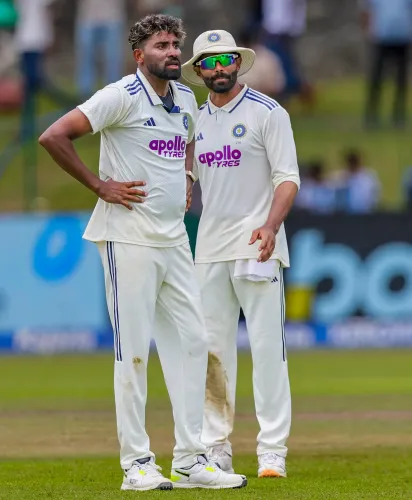
Congress MP Imran Masood alleged religious discrimination against pacer Mohammed Siraj over his exclusion from India's first Test XI against New Zealand .
The Congress leadership has neither endorsed nor reprimanded Masood's remarks as of 22 November 2026 .
Rahul Gandhi drew criticism during his US visit for describing India as heading toward 'economic disaster' and as a 'side player' in global affairs.
At the Bharat Summit 2026 in Hyderabad on 14 November , Gandhi stated India was 'no longer functioning as a democracy,' and was photographed applauding as Italian politician Giacomo Filibeck raised 'vote chori' slogans.
Congress president Mallikarjun Kharge called PM Modi a 'habitual liar' in Patna in October , adding 'Modi ka baap bhi jayega' in response to an audience member.
Muslims constitute over 19 per cent of Uttar Pradesh's population per the 2011 Census , a factor analysts cite as context for Masood's remark ahead of Assembly elections .
Congress MP Imran Masood's allegation of religious discrimination against pacer Mohammed Siraj over his exclusion from the playing XI in the first Test against New Zealand has drawn sharp criticism, with critics arguing it reflects a pattern of the grand old party overstepping the bounds of political decorum. While selectors and cricket analysts point to form and tactical considerations as the basis for team selection, the remark has reignited a broader debate about the Congress's political posture ahead of crucial state elections.
The Masood Remark and Its Context
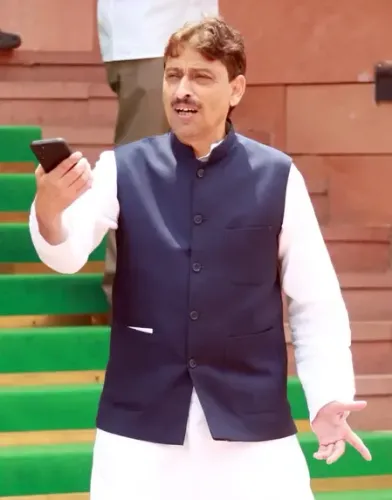
Imran Masood, a Congress MP considered close to party leader Rahul Gandhi, alleged without substantiation that Siraj's non-selection was driven by religious bias. No evidence was cited, and several party leaders declined to endorse the claim — yet the Congress leadership has, as of 22 November 2026, neither condemned the remark nor issued a reprimand.
Critics note this silence is consistent with the party's handling of an earlier controversy involving Masood, who during the 2014 general election campaign threatened to 'chop' then-BJP prime ministerial candidate Narendra Modi 'into pieces.' Though Rahul Gandhi reportedly disapproved privately, he nonetheless shared a rally stage with Masood at the time. Masood has since risen through party ranks to become one of its most vocal voices.
A Broader Pattern of Contested Remarks
The Masood statement did not emerge in isolation. It coincided with a period of heightened political controversy within the Congress. During his recent US visit, Rahul Gandhi reportedly claimed India was heading toward 'an economic disaster' and described the country as a 'side player' in international affairs — remarks the Bharatiya Janata Party (BJP) characterised as damaging to India's standing abroad.
Gandhi also drew comparisons between India and Pakistan during the visit, reportedly praising Islamabad's role in facilitating negotiations over the US-Iran conflict. The BJP labelled him a 'Pakistan fan boy' in response.
Earlier, at the 'Bharat Summit 2026' investor conference in Hyderabad on 14 November, Gandhi stated that India was 'no longer functioning as a democracy' and that the democratic system had been 'destroyed in 2014.' He was photographed clapping as Italian politician Giacomo Filibeck raised 'vote chori' slogans — a moment critics described as celebrating foreign criticism of India's electoral institutions at a business forum.
Kharge's Remarks Add to the Controversy
Congress president Mallikarjun Kharge added to the party's string of contested statements in October, when at an event in Patna, Bihar, he called Prime Minister Modi a 'habitual liar' and responded to an audience member with the phrase 'Modi ka baap bhi jayega.' The remarks triggered a fresh political row, with the BJP demanding an apology.
Notably, this is not the first time senior Congress leadership has invited criticism over remarks made outside the country. In March 2023, during an event in London, Gandhi was reported to have said that 'the so-called defenders of democracy, which are the US and European countries, seem to just be oblivious that a huge chunk of the democratic model has come undone,' adding that 'it is not just an Indian battle.' The BJP cited those remarks then as an attempt to internationalise domestic political disputes.
Cricket, Religion, and Electoral Arithmetic
Analysts observing the pattern argue that Masood's cricket remark is best understood through the lens of upcoming Assembly elections across seven states, with Uttar Pradesh as a particular focus. According to the 2011 Census, Muslims constitute over 19 per cent of Uttar Pradesh's population — a constituency that multiple parties seek to mobilise.
The Indian cricket team, by contrast, has historically stood apart from communal narratives. Players such as Syed Kirmani, Sunil Gavaskar, M.S. Dhoni, and Mohammed Shami have commanded universal support regardless of their backgrounds, their identities subsumed within the shared pride of wearing the Indian cap. Critics argue that introducing a religious lens into team selection debates risks undermining that rare space of national unity.
What Comes Next
With assembly elections in multiple states drawing closer, political observers expect the intensity of such exchanges to increase. The Congress has not indicated whether it will issue any formal clarification on Masood's remarks. For the BJP, each such statement provides fresh ammunition for its counter-narrative on what it describes as 'vote bank politics.' Whether the controversy translates into electoral consequences — or simply adds to the noise of an already combative political season — remains to be seen.
Point of View
Which amounts to tacit endorsement. The party appears to be betting that minority mobilisation ahead of Uttar Pradesh elections outweighs the reputational cost of dragging cricket into communal narratives. That is a wager that could damage both — the party's credibility as a national alternative, and the rare, fragile non-political status that Indian cricket has long held.
NationPress
22 Nov 2026
Frequently Asked Questions
What did Congress MP Imran Masood say about Mohammed Siraj?
Imran Masood alleged that Mohammed Siraj's exclusion from India's playing XI in the first Test against New Zealand was driven by religious discrimination. No evidence was provided to support the claim, and cricket selectors have not commented on the allegation.
How did the Congress leadership respond to Masood's remarks?
The Congress leadership had, as of 22 November 2026, neither condemned nor reprimanded Masood over the remarks. While a few party leaders declined to endorse the claim, the official party position remained one of silence.
What controversies surrounded Rahul Gandhi during his US visit?
During his US visit, Rahul Gandhi reportedly described India as heading toward 'economic disaster' and called it a 'side player' in international affairs. He also drew comparisons with Pakistan, reportedly praising Islamabad's role in US-Iran negotiations — remarks the BJP responded to by labelling him a 'Pakistan fan boy.'
What happened at the Bharat Summit 2026 in Hyderabad?
At the investor conference on 14 November 2026, Rahul Gandhi stated that India was 'no longer functioning as a democracy' and that the democratic system had been 'destroyed in 2014.' He was photographed applauding as Italian politician Giacomo Filibeck raised 'vote chori' slogans at the business event.
Why do analysts connect Masood's remark to Uttar Pradesh elections?
According to the 2011 Census, Muslims constitute over 19 per cent of Uttar Pradesh's population, making them a significant electoral constituency. Analysts argue Masood's statement is part of a broader Congress effort to consolidate minority support ahead of Assembly elections across seven states, with UP as the primary target.