Tamil Nadu Congress hits back, recalls DMK's 2014 alliance exit as 'major betrayal'
Synopsis
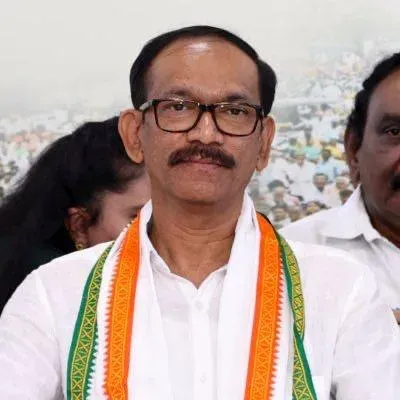
Tamil Nadu Congress in-charge Girish Chodankar has broken his party's stated restraint by publicly recalling the DMK's pre-2014 Lok Sabha exit from the Congress-led alliance as a 'major betrayal' — a pointed warning shot that Congress still holds cards it has chosen, until now, not to play.
Key Takeaways
Girish Chodankar , Tamil Nadu Congress in-charge, posted a sharp counterattack on X on 24 May .
He recalled the DMK 's exit from the Congress-led alliance ahead of the 2014 Lok Sabha elections as a 'major betrayal.' Chodankar defended Tamil Nadu voters, warning critics not to 'attack the people of Tamil Nadu who voted for us.' Congress had previously chosen restraint, but Chodankar signalled the party retains the option to revisit past grievances.
The DMK severed its alliance with Congress after nearly a decade of partnership before the 2014 general elections.
Tamil Nadu Congress in-charge Girish Chodankar on Sunday, 24 May launched a sharp political counterattack against critics of the Congress and its alliance strategy, invoking what he called a 'major betrayal' — the DMK's decision to walk out of the Congress-led coalition ahead of the 2014 Lok Sabha elections. The remarks, posted on X, signal a hardening of Congress' posture in Tamil Nadu's increasingly charged alliance politics.
The Core Charge: DMK's Pre-2014 Exit
Chodankar pointedly recalled that the Dravida Munnetra Kazhagam (DMK) severed its association with the Congress-led alliance after nearly a decade of partnership, just ahead of the 2014 general elections. He stopped short of detailing the specific circumstances of the split but made clear that Congress had consciously chosen not to weaponise this history — until now. 'We could have reminded people of this major betrayal,' he said, framing Congress' restraint as a mark of political maturity rather than weakness.
Defending the Tamil Nadu Mandate
At the heart of Chodankar's statement was a defence of Tamil Nadu voters. He drew a firm line between acceptable political criticism and what he described as disrespect toward the democratic verdict delivered by the state's electorate. 'You may attack us if you wish, but do not attack the people of Tamil Nadu who voted for us,' he said. He argued that the people of the state had exercised their franchise with wisdom and clarity, and that no partisan calculation should be used to undermine that judgment.
Congress' Stated Approach: Restraint With Limits
Chodankar outlined what he framed as Congress' deliberate strategy of restraint — avoiding personal attacks on rival leaders and refraining from raking up old political wounds. However, his remarks suggest that restraint has its limits. By publicly recalling the DMK's pre-2014 exit, Chodankar served notice that Congress retains the option to revisit past grievances if criticism continues. Notably, he did not name any specific critic or party responsible for the current round of attacks on the Congress.
Alliance Politics in Tamil Nadu: The Broader Context
The statement arrives amid a continuing churn in Tamil Nadu's alliance dynamics, where electoral equations have remained fluid since recent electoral developments. The Congress-DMK relationship has historically been transactional, shaped by seat-sharing arithmetic rather than ideological convergence. The DMK's 2014 exit — widely seen at the time as a response to the Congress-led United Progressive Alliance (UPA) government's handling of the Sri Lanka Tamil issue — remains a sensitive chapter in the two parties' shared history. That Chodankar chose to surface it now points to underlying tensions even within what is formally a functioning alliance today.
What to Watch
Whether the DMK responds to Chodankar's remarks will be a key indicator of the current state of the alliance. Political observers will also watch whether Congress escalates further or treats this as a one-time warning shot ahead of future seat-sharing negotiations in Tamil Nadu.
Point of View
Yet it is reaching back to a moment when it held the senior position and was abandoned. That framing is deliberate. It reminds the DMK — and Tamil Nadu's political class — that the Congress has institutional memory and is no longer content to absorb criticism silently. The durability of the Congress-DMK alliance ahead of future elections may depend on how the DMK responds, or chooses not to, in the coming days.
NationPress
19 Sept 2026
Frequently Asked Questions
What did Tamil Nadu Congress in-charge Girish Chodankar say about the DMK?
Chodankar recalled the DMK's decision to exit the Congress-led alliance ahead of the 2014 Lok Sabha elections, describing it as a 'major betrayal.' He said Congress had consciously avoided raising this issue earlier but could no longer stay silent in the face of continued criticism.
Why did the DMK exit the Congress-led alliance before the 2014 elections?
The DMK's pre-2014 exit was widely attributed at the time to the Congress-led UPA government's handling of the Sri Lanka Tamil issue. The two parties had been allied for nearly a decade before the split. Chodankar did not elaborate on the specific circumstances in his post.
Who is Girish Chodankar and what is his role in Tamil Nadu Congress?
Girish Chodankar is the Indian National Congress in-charge for Tamil Nadu, responsible for overseeing the party's political affairs and alliance management in the state. He made the remarks in a post on X on 24 May.
What is the current state of the Congress-DMK alliance in Tamil Nadu?
The Congress and DMK are currently part of a functioning alliance in Tamil Nadu. However, Chodankar's remarks suggest underlying tensions, and political observers are watching whether the DMK responds to his invocation of the 2014 split.
Why does the 2014 DMK alliance exit matter today?
The 2014 split is a politically sensitive chapter that Congress has largely avoided revisiting — until now. By surfacing it, Chodankar signals that Congress retains leverage in alliance negotiations and is willing to use historical grievances as a counterweight to current criticism.