Tamil Nadu minister warns on delimitation, alleges DMK-BJP secret pact

Synopsis
A Tamil Nadu minister has accused the DMK — the state's own ruling party — of secretly aligning with the BJP on delimitation, allegedly planning a parliamentary walkout instead of voting against a proposal that could cost Tamil Nadu seats. The allegation cuts to the heart of a long-running north-south fault line over whether population-control success should translate into political loss.
Key Takeaways
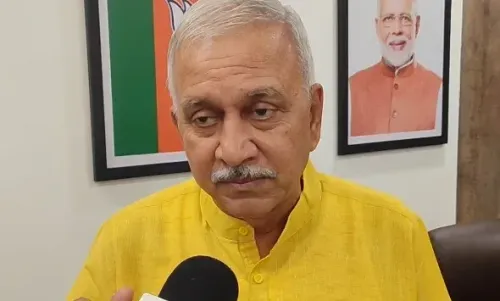
Tamil Nadu Minister Nirmal Kumar on 9 August strongly opposed the Centre's proposed delimitation exercise in Madurai .
He warned that a population-based seat redistribution could reduce Tamil Nadu's parliamentary representation , penalising the state for its population-control record.
Kumar alleged the DMK had reached a secret understanding with the BJP on delimitation.
He claimed DMK MPs may stage a walkout rather than vote against the proposal — which he described as tantamount to supporting it.
Kumar accused the DMK leadership of prioritising the political interests of former Chief Minister M.K.
Stalin's family over Tamil Nadu's broader interests.
The parliamentary seat freeze, in place since 1976 , is due for review, making the issue increasingly urgent for southern states.
Tamil Nadu Minister Nirmal Kumar on 9 August issued a sharp warning against the Centre's proposed delimitation exercise in Madurai, cautioning that any population-based redistribution of parliamentary seats would erode Tamil Nadu's political representation — and levelling a pointed allegation that the Dravida Munnetra Kazhagam (DMK) had quietly reached an understanding with the Bharatiya Janata Party (BJP) on the contentious issue.
The Delimitation Concern
Speaking to reporters on the sidelines of a marathon organised under a Madurai garbage-free city initiative, Kumar argued that Tamil Nadu's relatively strong record on population control should not become a penalty at the national level. Under a purely population-based formula, states that successfully curbed birth rates stand to lose seats to states with higher population growth — a prospect that has alarmed southern states for years.
He urged all political parties in Tamil Nadu to set aside differences and present a united front against any delimitation formula that could diminish the state's voice in Parliament. Protecting Tamil Nadu's parliamentary representation, he said, must take precedence over partisan calculations.
The DMK Allegation
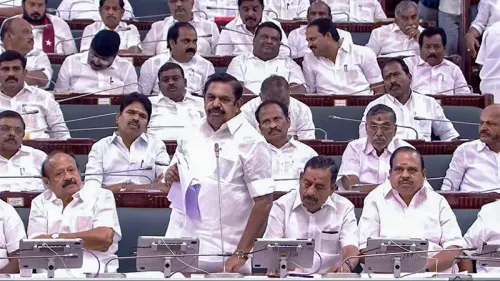
Kumar's sharpest remarks were directed at the DMK, the ruling party in Tamil Nadu. He alleged that information had surfaced indicating the DMK had already arrived at an understanding with the BJP over delimitation. Specifically, he claimed reports suggested that DMK members of Parliament could stage a walkout when the issue comes to a vote in Parliament, rather than voting against the proposal outright.
The minister argued that a walkout would effectively function as tacit support for the delimitation exercise, allowing it to pass without the DMK having to cast a formal vote in its favour. 'If the DMK genuinely opposed delimitation, it should remain in Parliament and vote against the proposal rather than walk out,' he maintained.
A Betrayal of Southern States, Kumar Argues
Kumar described any such walkout as a serious betrayal — not only of Tamil Nadu but of all states at risk of losing representation under a population-driven seat redistribution. He noted that the DMK had initially projected itself as a strong opponent of delimitation, making any softening of that stance a significant reversal.
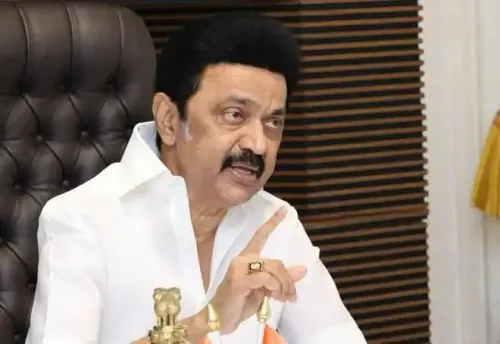
He further alleged that the DMK leadership was compromising Tamil Nadu's broader interests to safeguard the political interests of former Chief Minister M.K. Stalin's family, contending that the party had repeatedly shown a willingness to accommodate the BJP at the state's expense.
Centre's Timing Under Scrutiny
Kumar also questioned the Union government's rationale for pressing ahead with delimitation at this juncture, alleging the exercise was being driven by political considerations rather than administrative necessity. The delimitation debate has long been a fault line between northern and southern India, with southern states arguing the current freeze on seat counts — in place since 1976 — should be extended to avoid penalising states for effective family planning.
With the freeze on parliamentary seat counts due for review, the issue is expected to intensify ahead of the next census-based delimitation cycle. How Tamil Nadu's parties align — or fracture — on this question will carry significant consequences for the state's national political leverage.
Point of View
But they tap into a structural anxiety that is very real: southern states that delivered on family planning now face the prospect of losing parliamentary weight to states that did not. The DMK's position is particularly delicate — it must balance its alliance optics with the BJP at the national level against its role as Tamil Nadu's governing party and self-styled defender of state rights. A walkout, if it materialises, would be politically damaging precisely because it is procedurally deniable. The broader story here is not just about one minister's press conference — it is about whether the southern bloc can hold together on delimitation or whether it will fragment under the pressure of coalition arithmetic in New Delhi.
NationPress
23 Sept 2026
Frequently Asked Questions
What is the delimitation controversy in Tamil Nadu?
Delimitation refers to the redrawing of parliamentary constituency boundaries and the reallocation of seats based on population data. Tamil Nadu and other southern states fear that a population-based formula will reduce their seats in Parliament because they successfully controlled population growth, while northern states with higher populations would gain seats.
What did Minister Nirmal Kumar allege about the DMK?
Kumar alleged that the DMK had reached a secret understanding with the BJP on delimitation, and that DMK MPs might walk out of Parliament rather than vote against the proposal. He argued this would amount to indirect support for the exercise.
Why would a walkout be significant?
A walkout means a party abstains from voting without formally opposing a measure. Kumar's argument is that by not voting against delimitation, the DMK would effectively allow it to pass, making the walkout a form of tacit support despite the party's stated opposition.
How does Tamil Nadu's population record affect the delimitation debate?
Tamil Nadu has performed relatively well in population control compared to many northern states. Under a purely population-based seat redistribution, this success could result in fewer parliamentary seats for the state — a paradox that has fuelled opposition to delimitation across southern India.
When is the delimitation exercise expected to take place?
The freeze on parliamentary seat counts has been in place since 1976. It is due for review following the next census-based delimitation cycle, making the current political debate a precursor to what could be a major redrawing of India's parliamentary map.