Emergency 1975: Gujarat BJP marks Samvidhan Hatya Diwas, targets Congress
Synopsis
Fifty years after the Emergency, Gujarat BJP is turning 25 June into a political reckoning — not just a commemoration. By felicitating MISA detainees and invoking Article 370 in the same breath, the party is using the anniversary to frame the Congress's constitutional record as a live electoral liability, not a closed chapter of history.
Key Takeaways
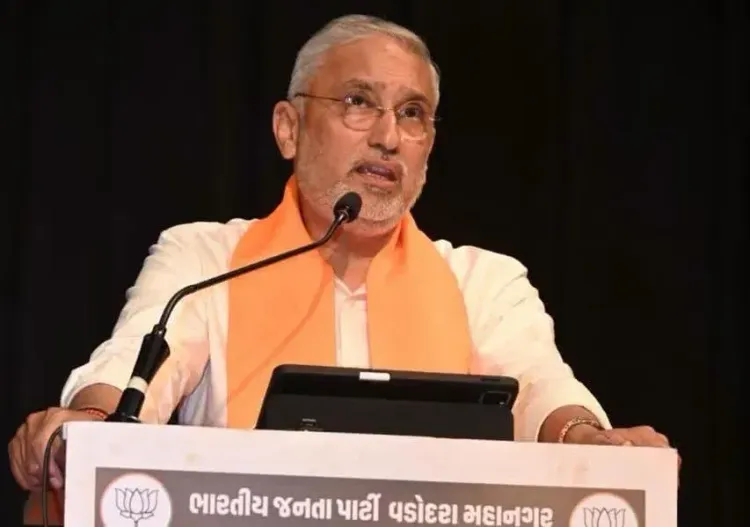
Gujarat BJP President Jagdish Vishwakarma addressed a Samvidhan Hatya Diwas convention in Vadodara on 25 June .
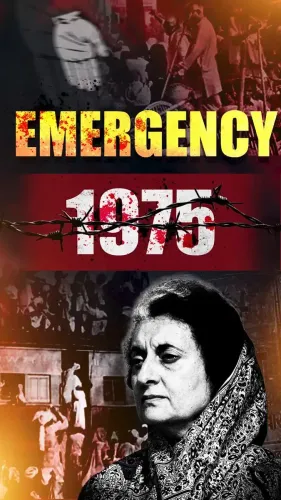
He alleged the Emergency of 1975 , imposed by the Congress government under Indira Gandhi , is 'the darkest chapter in India's democratic history.' Vishwakarma claimed more than one lakh people were detained without warrants under MISA during the Emergency.
He alleged the Emergency was triggered by the Allahabad High Court ruling invalidating Gandhi's 1971 Lok Sabha election victory.
He also cited the addition of Article 35A under Nehru and praised the 2019 abrogation of Article 370 under Modi as a restoration of constitutional equality.
MISA detainees were felicitated at the event, attended by state ministers and party workers from across Gujarat .
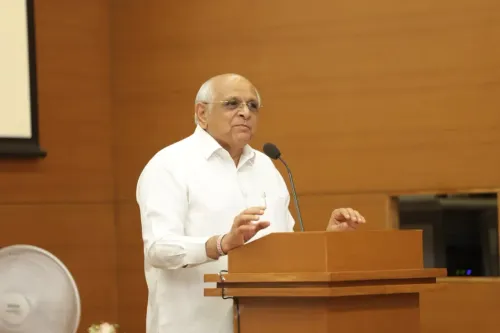
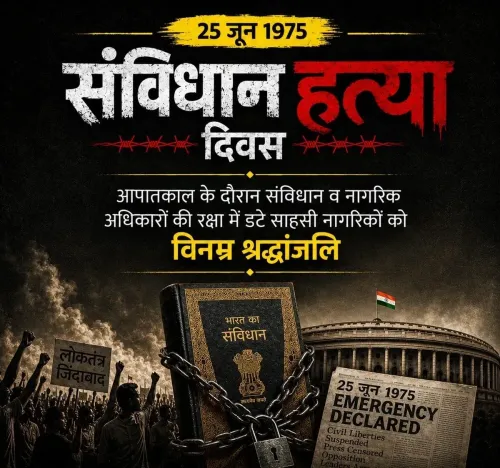
Gujarat Bharatiya Janata Party (BJP) President Jagdish Vishwakarma on Thursday, 25 June urged those who invoke the Constitution today to also reckon with what he called its systematic dismantling during the Emergency of 1975. He was addressing a convention in Vadodara organised to mark '25 June: Samvidhan Hatya Diwas' — Constitution Killing Day — on the 50th anniversary of the Emergency's imposition.
The Emergency: What Vishwakarma Said
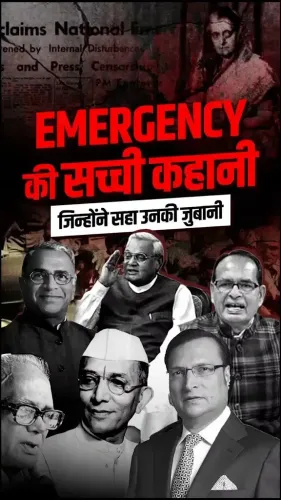
Vishwakarma described the Emergency, imposed on the night of 25 June 1975 by the then Congress government under Prime Minister Indira Gandhi, as 'the darkest chapter in India's democratic history.' He alleged the Emergency was declared not to serve national interest but 'to save her own power,' following the Allahabad High Court's ruling that invalidated Gandhi's victory in the 1971 Lok Sabha election — a case brought by opposition leader Raj Narain — and restricted her from holding office for a period.
'Those who speak about the Constitution today, their own predecessors committed the biggest violation of the Constitution,' Vishwakarma said at the event.
Civil Liberties and Press Freedom
Vishwakarma claimed that during the Emergency, more than one lakh people were detained without warrants under the Maintenance of Internal Security Act (MISA), and that detainees were denied legal remedies including bail and the right to challenge their detention in court. He alleged that press and media freedoms were curtailed through censorship, dissenting voices were suppressed, and political workers, social activists, and ordinary citizens were detained for opposing government policies.
He also alleged that coercive population control programmes were implemented during the period, generating widespread public dissatisfaction. Several constitutional amendments, including changes to the Preamble, were carried out during the Emergency, he said, adding that judicial independence was also challenged at the time.
Article 370, Article 35A, and the BJP's Broader Argument
Vishwakarma widened his critique to include the historical addition of Article 35A alongside Article 370 during the tenure of Prime Minister Jawaharlal Nehru, arguing it 'created differences in constitutional rights between Jammu and Kashmir and other parts of the country.' He contrasted this with the 2019 abrogation of Article 370 under Prime Minister Narendra Modi, which he said 'strengthened national unity and integrity.'
He also invoked the legacy of Dr Shyama Prasad Mukherjee, stating that his sacrifice was linked to the integration of Jammu and Kashmir with the rest of India. 'The national flag is now proudly flying from Lal Chowk to Ladakh,' he said.
Felicitation and Political Attendance
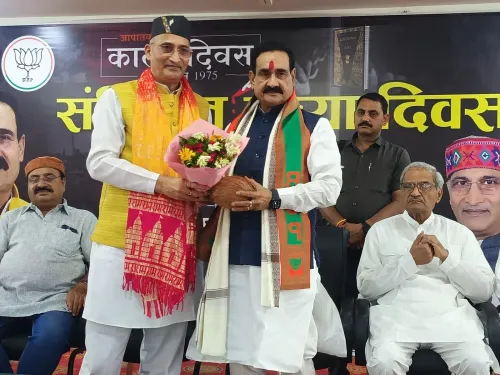
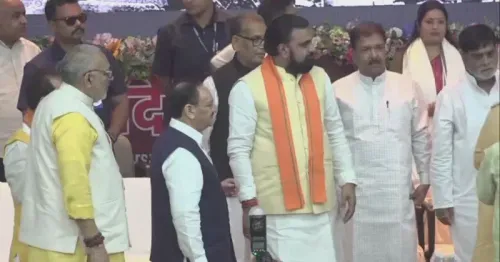
During the programme, Vishwakarma felicitated individuals who had been detained under MISA during the Emergency — a symbolic gesture aimed at honouring those who resisted what the BJP characterises as authoritarian rule. The event was attended by state ministers, party office-bearers, elected representatives, and workers from Vadodara and other parts of Gujarat.
The Gujarat BJP president said the observance of Samvidhan Hatya Diwas should serve as both a reminder of the Emergency and a call to remain vigilant in protecting democratic institutions. The Centre had designated 25 June as Samvidhan Hatya Diwas in 2024, institutionalising the BJP's long-standing political messaging around the Emergency anniversary.
Point of View
The party keeps a 50-year-old wound politically fresh. What mainstream coverage often misses is the layering: the Emergency critique is now bundled with Article 370, Nehru's legacy, and Dr Shyama Prasad Mukherjee — compressing decades of ideological grievance into a single event. The Congress, which has leaned heavily on constitutional rhetoric in recent election cycles, has yet to develop a consistent public response to this framing.
NationPress
26 Jun 2026
Frequently Asked Questions
What is Samvidhan Hatya Diwas and why is it observed on 25 June?
Samvidhan Hatya Diwas, or Constitution Killing Day, is observed on 25 June to mark the anniversary of the Emergency imposed by the Congress government under Prime Minister Indira Gandhi on the night of 25 June 1975. The Centre designated this date in 2024 to commemorate what the BJP describes as a systematic assault on India's constitutional framework during the Emergency period.
What did Gujarat BJP President Jagdish Vishwakarma allege about the Emergency?
Vishwakarma alleged that the Emergency was declared to protect Indira Gandhi's political position after the Allahabad High Court invalidated her 1971 Lok Sabha election victory. He claimed over one lakh people were detained without warrants under MISA, press freedom was curtailed, and several constitutional amendments — including changes to the Preamble — were pushed through during the period.
What is MISA and how was it used during the Emergency?
The Maintenance of Internal Security Act (MISA) was a preventive detention law that allowed authorities to detain individuals without producing them before a court. According to Vishwakarma's claims at the Vadodara convention, more than one lakh people were detained under MISA during the 1975–77 Emergency, and detainees were denied bail and the right to challenge their detention.
Why did the Gujarat BJP also raise Article 370 and Article 35A at this event?
BJP President Vishwakarma used the occasion to argue that Congress's constitutional violations extended beyond the Emergency. He alleged that the addition of Article 35A alongside Article 370 during Jawaharlal Nehru's tenure created unequal constitutional rights for Jammu and Kashmir. He contrasted this with the 2019 abrogation of Article 370 under PM Modi, which he said restored national unity.
Who attended the Samvidhan Hatya Diwas convention in Vadodara?
The convention was attended by Gujarat state ministers, BJP office-bearers, elected representatives, and party workers from Vadodara and other parts of Gujarat. Vishwakarma also felicitated individuals who had been detained under MISA during the Emergency as part of the programme.