VP Radhakrishnan: Emergency 1975 severely tested constitutional values
Synopsis
On the 51st anniversary of Indira Gandhi's Emergency declaration, Vice President C.P. Radhakrishnan called it a period when constitutional values were 'severely tested' — while the BJP marked Samvidhan Hatya Diwas across multiple states. Five decades on, the debate over institutional safeguards remains sharply relevant.
Key Takeaways
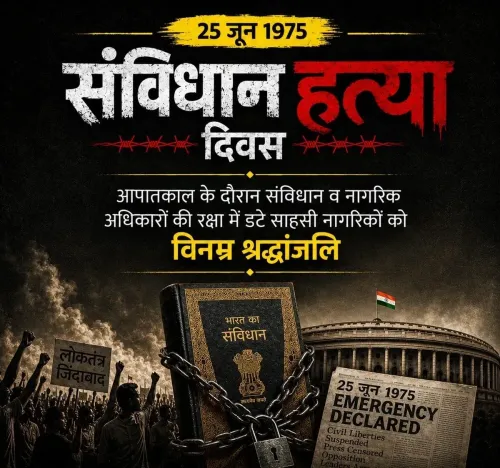
Radhakrishnan marked Samvidhan Hatya Diwas on 25 June 2025 , honouring those who resisted the 1975 Emergency .
Radhakrishnan described the Emergency as a period when 'constitutional values were severely tested' and civil liberties were suspended.
The observance marks the 51st anniversary of the Emergency declared by then Prime Minister Indira Gandhi on 25 June 1975 .
The BJP organised Samvidhan Hatya Diwas programmes across Bihar , Haryana , and other states.
The 1975 Emergency lasted 21 months (25 June 1975 – 21 March 1977), suspending fundamental rights and press freedom.
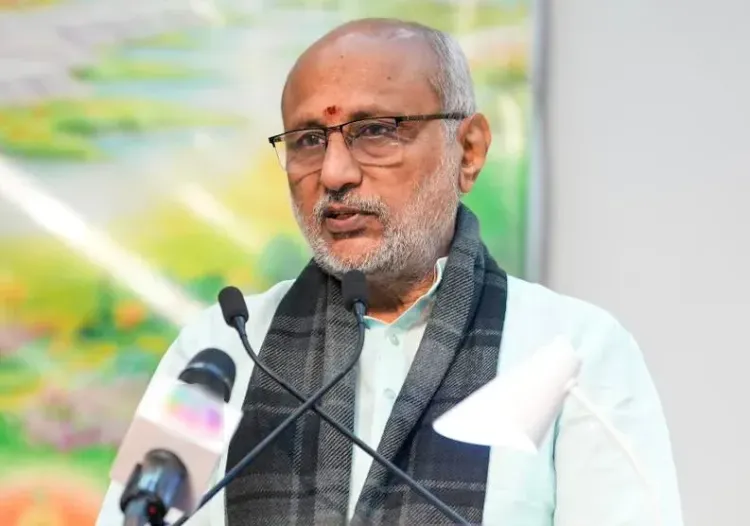
Vice President C.P. Radhakrishnan on Thursday, 25 June 2025 marked Samvidhan Hatya Diwas by honouring those who resisted the suspension of civil liberties during the Emergency of 1975, calling the period 'one of the darkest chapters in India's history.' The observance coincides with the 51st anniversary of the Emergency declaration by then Prime Minister Indira Gandhi on 25 June 1975.
What the Vice President Said
In a post on X, Radhakrishnan paid tribute to 'all the brave souls who stood firm in defence of democratic values and safeguarded the spirit of our Constitution during one of the darkest chapters in India's history — The Emergency declared in 1975.'
He described the Emergency as 'a solemn reminder of a time when constitutional values were severely tested,' noting that 'civil liberties were suspended, freedom of expression was curtailed, and institutions central to our democratic framework were undermined.'
Radhakrishnan concluded his post with a call to reaffirm commitment to the Constitution's ideals of 'justice, liberty, equality and fraternity.'
BJP's Nationwide Observance
The Bharatiya Janata Party (BJP) is observing Samvidhan Hatya Diwas — literally 'Constitution Murder Day' — across Bihar, Haryana, and several other states on Thursday. The party has organised a series of programmes highlighting what it describes as the Emergency's damaging impact on democratic institutions and civil liberties.
This is part of a broader BJP effort to institutionalise the commemoration of the Emergency as a cautionary political milestone, framing it in constitutional rather than purely partisan terms.
What Was the 1975 Emergency
The 1975 Indian Emergency lasted 21 months, from 25 June 1975 to 21 March 1977. During this period, the Indira Gandhi government suspended key democratic norms, curtailed press freedom, and detained political opponents without trial. It is widely regarded as the most authoritarian episode in independent India's post-partition history.
The declaration was made under Article 352 of the Constitution, citing internal disturbance — a justification that remains contested among historians and constitutional scholars.
Historical Context and Significance
India has observed 25 June as Samvidhan Hatya Diwas since the current government formally designated the date for national remembrance. This year's observance carries added weight as it marks the half-century mark since the Emergency was declared, prompting renewed public debate about institutional safeguards and the resilience of Indian democracy.
Notably, the Emergency period saw the suspension of fundamental rights, press censorship, and the controversial 42nd Constitutional Amendment, which critics argue concentrated power in the executive. The subsequent 1977 general election — in which the Indira Gandhi government was voted out — is often cited as evidence of India's democratic self-correction.
As the country reflects on five decades since that episode, attention turns to whether existing constitutional safeguards are robust enough to prevent a recurrence.
Point of View
The BJP and the Vice President are making a structural claim about institutional vulnerability. What mainstream coverage underplays is the irony that many of the constitutional amendments enabling the Emergency were never fully reversed. India's democratic resilience in 1977 was real, but the legal scaffolding that permitted the Emergency largely remains. Fifty-one years on, that is the more uncomfortable conversation.
NationPress
23 Sept 2026
Frequently Asked Questions
What is Samvidhan Hatya Diwas?
Samvidhan Hatya Diwas, meaning 'Constitution Murder Day,' is observed on 25 June to mark the anniversary of the Emergency declared by then Prime Minister Indira Gandhi in 1975. It commemorates those who resisted the suspension of civil liberties and democratic norms during that 21-month period.
What did Vice President Radhakrishnan say about the 1975 Emergency?
Vice President C.P. Radhakrishnan said the Emergency stands as 'a solemn reminder of a time when constitutional values were severely tested,' with civil liberties suspended and democratic institutions undermined. He paid tribute to those who defended the Constitution during what he called 'one of the darkest chapters in India's history.'
Why is the 2025 observance significant?
The 2025 observance marks the 51st anniversary — the half-century milestone — of the Emergency declaration on 25 June 1975. It has renewed public debate about the resilience of India's democratic institutions and the adequacy of existing constitutional safeguards.
What did the BJP do on Samvidhan Hatya Diwas 2025?
The BJP organised programmes across Bihar, Haryana, and several other states to mark Samvidhan Hatya Diwas. The events focused on what the party describes as the Emergency's damaging impact on democratic institutions and civil liberties.
How long did the 1975 Emergency last?
The 1975 Indian Emergency lasted 21 months, from 25 June 1975 to 21 March 1977. During this period, the Indira Gandhi government suspended fundamental rights, curtailed press freedom, and detained political opponents without trial.