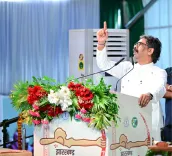
Rahul Gandhi Backs Tribal Rights on World Indigenous Peoples Day

Synopsis
On World Indigenous Peoples Day, 9 August 2026, Congress leader Rahul Gandhi declared Adivasis the 'first owners' of India and reaffirmed the party's commitment to their rights over water, forest and land, invoking the long-standing jal-jungle-zameen framework.
Key Takeaways
Congress leader Rahul Gandhi posted a World Indigenous Peoples Day message on 9 August 2026 .
He described Adivasis as the 'first owners of this country' and called their culture India's 'priceless heritage'.
Gandhi explicitly invoked rights over jal, jungle aur zameen (water, forest and land) — the defining demand of Adivasi movements.
The Forest Rights Act, 2006 remains the key legislative benchmark; a large backlog of individual and community claims is still pending across states.
9 August has been observed as World Indigenous Peoples Day since a UN General Assembly resolution in 1994 .
Opposition parties routinely use this date to press governments on Forest Rights Act implementation and land acquisition in Schedule V areas .
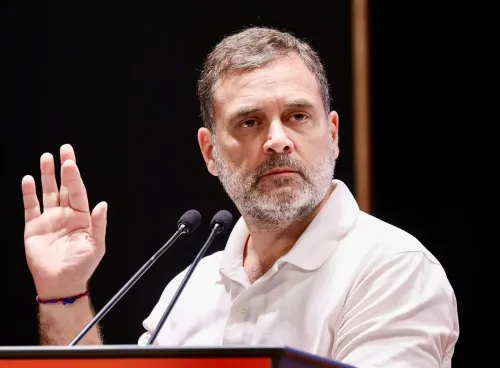
On a day the United Nations set aside to honour the world's first peoples, Congress leader Rahul Gandhi used World Indigenous Peoples Day, 9 August 2026, to reaffirm his party's commitment to Adivasi rights — land, forest, water, and dignity.
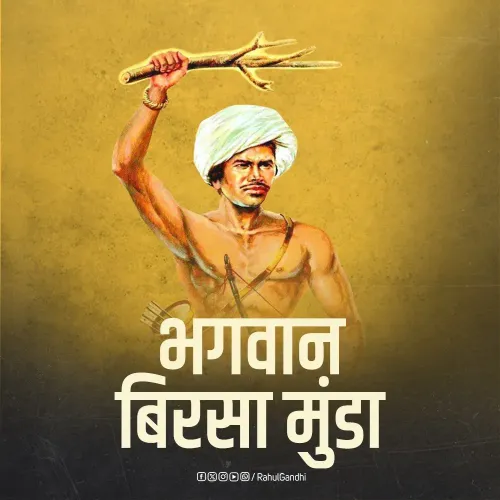
Posting in Hindi, Gandhi offered greetings to tribal communities across India and declared: 'Adivasis are the first owners of this country — their historic culture is India's priceless heritage.' He added that Congress stands firmly with them in the fight for their identity, dignity, and rights over jal, jungle aur zameen (water, forest and land).
A phrase that carries decades of struggle
The slogan jal, jungle, zameen is not rhetorical flourish — it is the condensed grammar of a century-long Adivasi movement. It anchors demands for control over rivers that sustain subsistence farming, forests that provide food and medicine, and land that is both livelihood and identity. The Scheduled Tribes and Other Traditional Forest Dwellers (Recognition of Forest Rights) Act, 2006 was Parliament's most direct legislative response to these demands, recognising both individual and community rights of tribals over forest land and produce.Pending claims and the pressure on governments
Decades after the Forest Rights Act came into force, a significant backlog of individual and community claims remains unresolved across multiple states. Opposition parties, including Congress, have consistently used 9 August — the date the UN General Assembly designated in 1994 to spotlight indigenous rights globally — to press governments on implementation gaps. Criticism has also mounted over land acquisition for mining and infrastructure projects in constitutionally protected Schedule V areas, where Adivasi communities hold special legal status. Gandhi's post, while a ceremonial greeting in form, carries the political weight of that ongoing contest. The explicit invocation of rights over water, forest, and land signals that Congress intends to keep tribal entitlements at the centre of its opposition agenda — not just on designated days. The real test, as rights groups have long argued, lies in state-level Forest Rights Act implementation reports and any moves to amend the Forest Conservation Act in coming parliamentary sessions. Words on 9 August are measured against votes and policy positions the other 364 days of the year.Point of View
It is low-risk but purposeful: it keeps Congress visible to a constituency that has drifted toward regional and identity-based parties in several states. The real political question is whether this rhetorical solidarity translates into concrete legislative positions when Forest Conservation Act amendments or mining clearances come before Parliament.
NationPress
9 Aug 2026
Frequently Asked Questions
What is World Indigenous Peoples Day and why is it observed on 9 August?
World Indigenous Peoples Day is observed on 9 August every year following a UN General Assembly resolution in 1994 . The date marks the first meeting of the UN Working Group on Indigenous Populations in 1982 and is used globally to highlight the rights and cultures of indigenous communities.
What did Rahul Gandhi say on World Indigenous Peoples Day 2026?
Rahul Gandhi greeted Adivasi communities across India, called them the 'first owners of this country,' described their culture as India's 'priceless heritage,' and pledged Congress's support for their rights over water, forest and land — the jal, jungle aur zameen framework.
What is the Forest Rights Act and how does it relate to Adivasi land rights?
The Scheduled Tribes and Other Traditional Forest Dwellers (Recognition of Forest Rights) Act, 2006 legally recognises individual and community rights of tribal people over forest land and produce. It is the primary legislative response to Adivasi demands over jal, jungle, zameen , though a large backlog of pending claims remains across multiple states.
What are Schedule V areas in India?
Schedule V areas are regions listed under the Fifth Schedule of the Indian Constitution where Adivasi communities have special legal protections. The Governor of each state has powers to restrict or modify laws in these areas to protect tribal interests, particularly regarding land transfer and acquisition.
Why do opposition parties focus on tribal rights on 9 August?
Indian opposition parties, including Congress, routinely use 9 August — World Indigenous Peoples Day — to highlight unresolved Forest Rights Act claims, criticise land acquisition for mining and infrastructure in tribal areas, and signal solidarity with Adivasi communities, making it a politically significant date in the tribal rights calendar.