CR Paatil Urges South Gujarat to Heed Red Alert
Synopsis
Union Jal Shakti Minister C. R. Paatil on 23 July 2026 warned of a serious flood situation across South Gujarat's Surat, Navsari, and Valsad districts, urging residents to respect red alerts. He confirmed PM Modi is personally monitoring the crisis and has directed the state government.
Key Takeaways
Union Jal Shakti Minister C.
Paatil declared the situation in South Gujarat 'serious' on 23 July 2026 due to extremely heavy rainfall.
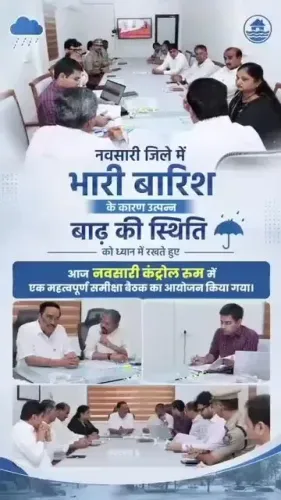
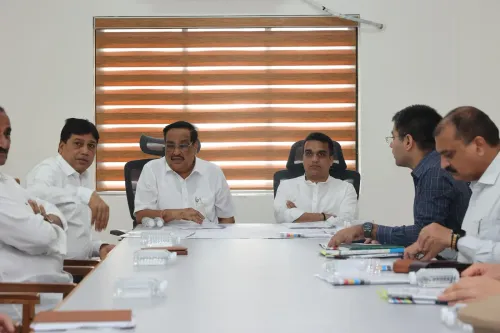
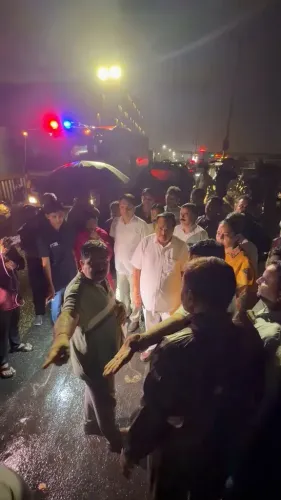
Relief and rescue operations are active at full capacity in Surat , Navsari , and Valsad districts.
Prime Minister Narendra Modi is personally monitoring the crisis and has issued instructions to the Gujarat state government .
Paatil issued a public advisory urging residents not to leave home unless absolutely necessary and to avoid all risk.
A red alert — the highest IMD weather warning — is in force across the affected South Gujarat districts.
Citizens have been asked to help each other while cooperating fully with the administration.
Union Jal Shakti Minister C. R. Paatil on Thursday, 23 July 2026 issued an urgent public appeal after severe rainfall triggered a crisis across South Gujarat, warning residents in Surat, Navsari, and Valsad to take red alerts seriously and avoid unnecessary movement.
Context
Posting in Gujarati on X, Paatil described the situation as grave — 'પરિસ્થિતિ ગંભીર છે' ('the situation is serious') — and confirmed that relief and rescue machinery is operating at full capacity across the affected districts. He urged citizens: 'Do not step out unless absolutely necessary, and do not take any kind of risk.'
The minister also appealed to residents to help one another while keeping their own safety paramount, and to cooperate with the administration. 'In this time of crisis, the safety of ourselves and our families is paramount,' he wrote.
Policy Backdrop
Paatil noted that Prime Minister Narendra Modi is 'continuously concerned' about the situation and has issued necessary instructions to the Gujarat state government. Central oversight of state-level disaster response is a standard protocol under the National Disaster Management Act, 2005, which established coordinated frameworks between the Centre and states for flood and relief operations.
The Ministry of Jal Shakti, created in 2019 by merging water-resources and river-development portfolios, plays a key role in flood mitigation coordination alongside state disaster management authorities. As a senior BJP leader and former Gujarat state party president, Paatil occupies a dual role — ministerial and political — that gives his public advisories particular weight in the state.
Stakeholders and Impact
South Gujarat's riverine and coastal geography makes districts like Surat, Navsari, and Valsad perennially vulnerable to monsoon flooding. Surat, a major industrial hub, faces economic disruption alongside humanitarian risk when heavy rainfall leads to river overflow and waterlogging.
Residents across these districts are the immediate stakeholders, with state relief agencies, the National Disaster Response Force (NDRF), and local administration conducting ongoing rescue operations. The red alert status issued by the India Meteorological Department (IMD) signals the highest tier of weather warning, requiring the public to exercise maximum caution.
What's Next
The situation will hinge on how quickly rainfall intensity subsides and whether relief operations can reach all affected pockets in time. Further IMD updates on red alert continuity across South Gujarat districts will be closely watched, as will any formal requests from the Gujarat government for additional central assistance or NDRF deployment.
Central ministers from Gujarat have consistently stepped up public communication during major monsoon events, and Paatil's post signals that the Centre is monitoring this episode at the highest level. If rainfall persists, pressure will mount for accelerated infrastructure responses — including better early-warning systems and flood-resilient urban planning in cities like Surat.
Point of View
Where a Union minister with deep roots in Gujarat uses a high-visibility platform to amplify official advisories and signal federal solidarity during a state-level disaster. The explicit mention of PM Modi's personal concern is politically deliberate — it frames the BJP-led Centre as an active partner rather than a bystander, reinforcing the party's governance narrative ahead of any criticism about flood preparedness. The appeal to civic solidarity ('help each other') also reflects a pattern of mobilising community trust when administrative bandwidth is stretched. The episode underscores the continuing challenge of South Gujarat's flood vulnerability and whether long-term infrastructure investment in early-warning and drainage systems will match the annual political urgency these events generate.
NationPress
22 Oct 2026
Frequently Asked Questions
Why has a red alert been issued in South Gujarat in July 2026?
A red alert — the highest level of weather warning — has been issued across South Gujarat districts including Surat, Navsari, and Valsad due to extremely heavy rainfall that has triggered a serious flood and rescue situation as of 23 July 2026.
What did CR Paatil say about the South Gujarat floods?
Union Jal Shakti Minister C. R. Paatil described the situation as 'serious,' confirmed that relief and rescue operations are running at full capacity, and urged residents to take the red alert seriously, avoid going outside unless essential, and cooperate with authorities.
Is PM Modi involved in the Gujarat flood response?
Yes. Paatil stated that Prime Minister Narendra Modi is 'continuously concerned' about the situation and has issued necessary instructions to the Gujarat state government to manage relief and rescue operations.
Which districts in South Gujarat are most affected by the heavy rain?
Surat, Navsari, and Valsad are the districts specifically mentioned by Minister Paatil as areas where the administration is actively conducting relief and rescue work amid the severe monsoon conditions.
What should residents of South Gujarat do during the red alert?
Residents have been advised not to leave their homes unless absolutely necessary, avoid taking any risks, look after their own safety and that of their families, help neighbours where possible, and cooperate fully with the administration.