Culture Minister Shekhawat hails ₹11,000 crore scheme
Synopsis
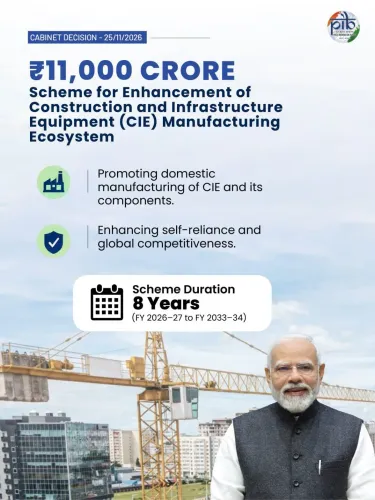
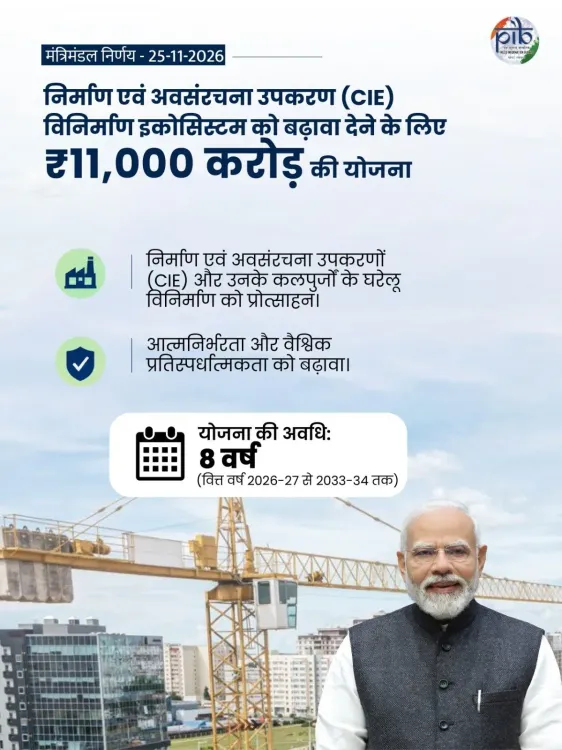
Union Culture and Tourism Minister Gajendra Singh Shekhawat welcomed the Cabinet's ₹11,000 crore scheme to boost domestic manufacturing of construction and infrastructure equipment, calling it a key step toward self-reliance under Prime Minister Narendra Modi.
Key Takeaways
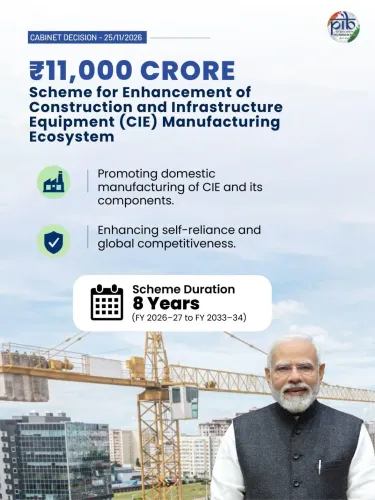
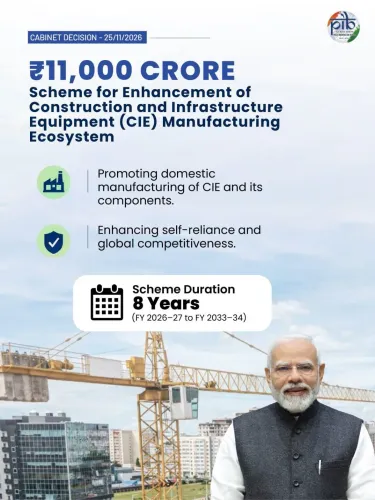
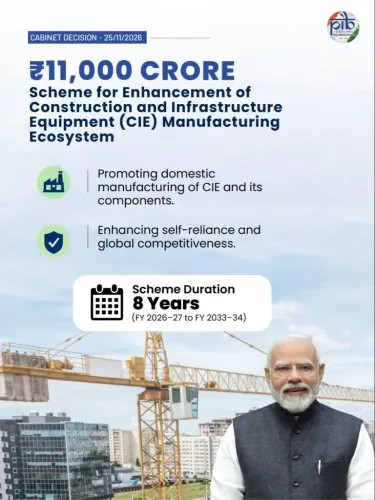
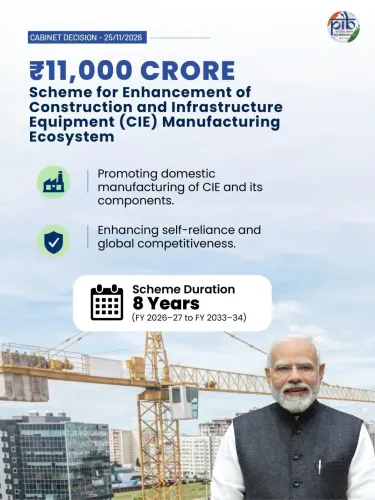
Union Culture and Tourism Minister Gajendra Singh Shekhawat on 25 November 2026 welcomed a Union Cabinet scheme of ₹11,000 crore for domestic construction and infrastructure equipment manufacturing.
He said the approval is a very important step under Prime Minister Narendra Modi's leadership toward self-reliance.
Shekhawat said the scheme would encourage manufacturing, strengthen industries and expand India's capacity in the sector.
The move continues the Make in India (2014) and Atmanirbhar Bharat (2020) push to cut import dependence in capital goods.
Shekhawat is a senior BJP leader and Lok Sabha MP from Jodhpur, Rajasthan.
Union Culture and Tourism Minister Gajendra Singh Shekhawat on 25 November 2026 hailed the Union Cabinet's approval of a ₹11,000 crore scheme to promote domestic manufacturing of construction and infrastructure equipment, calling it a very important step in India's self-reliance drive under Prime Minister Narendra Modi.
The senior BJP leader and Lok Sabha MP from Jodhpur said the outlay would encourage manufacturing, strengthen industries and help India expand capacity in a sector still tied to imports.
In a Hindi post tagged #CabinetDecisions, Shekhawat wrote that under Modi's visionary leadership India is continuously moving forward toward self-reliance. He called the Cabinet decision ek bahut mahatvapurna kadam (a very important step) that will give manufacturing a boost, firm up industry and let India raise its capability in this field.
He put the core claim in these words: ‘This will encourage manufacturing in the country, strengthen industries, and enable India to further enhance its capacity in this sector.’
₹11,000 crore for construction machinery
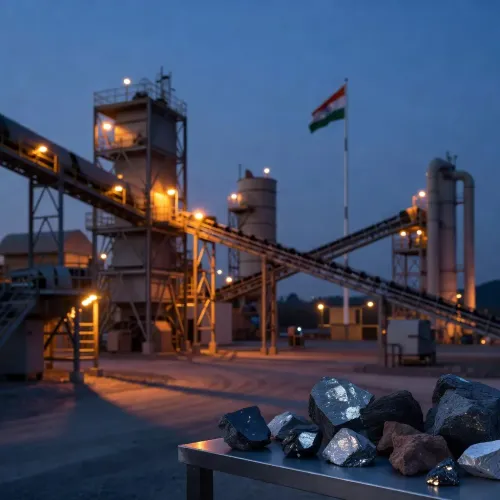
The Union Cabinet cleared the package to lift local production of the heavy machines that lay highways, raise metros, dredge ports and raise power plants. Construction and infrastructure equipment is capital goods in the most literal sense: without excavators, cranes and pavers, public works stall.
Shekhawat placed the approval inside a larger argument. Make the machines in India, and the roads and rails they build carry a deeper domestic imprint. For manufacturers and infrastructure developers, the signal from New Delhi is that the state is putting money behind indigenisation of this kit.
Make in India and the equipment gap
The thread runs back more than a decade. Make in India, launched in 2014, put manufacturing and capital goods at the centre of industrial policy. The Atmanirbhar Bharat campaign of May 2020 tightened that focus after global supply shocks. Production Linked Incentive schemes from 2020 onwards have already covered electronics, automobiles and other clusters.
Construction equipment has remained a live import line even as India poured money into roads, railways and urban transit. Successive Cabinet approvals have targeted that leak, treating local machinery as a missing piece of the infrastructure story. This ₹11,000 crore nod continues that pattern.
What comes next is operational, not rhetorical. Guidelines from the nodal ministry, and any targets for indigenisation, will decide how fast the outlay turns into plants, orders and machines with an Indian stamp.
The Cabinet has put a four-figure crore sum on the table. The test is whether Indian factories can convert that into equipment that actually replaces the imports still rolling onto work sites.
Point of View
000 crore approval extends Atmanirbhar Bharat from consumer and electronics manufacturing into the heavier capital goods that actually build infrastructure. Shekhawat, speaking from the culture and tourism brief rather than heavy industry, is carrying a whole-of-government political message: self-reliance is not a sectoral slogan but a Cabinet-wide claim. The wager is that local equipment makers can cut the import bill and put factory jobs against a global supply chain that still dominates cranes and excavators. Delivery, not the post, will settle whether this is industrial policy or a well-timed headline.
NationPress
25 Nov 2026
Frequently Asked Questions
What did Gajendra Singh Shekhawat say about the Cabinet decision?
Union Culture and Tourism Minister Gajendra Singh Shekhawat said the Cabinet's ₹11,000 crore scheme to promote domestic manufacturing of construction and infrastructure equipment is a very important step toward self-reliance. He added that it would encourage manufacturing, strengthen industries and expand India's capacity in the sector.
How much funding did the Union Cabinet approve for construction equipment manufacturing?
The Union Cabinet approved a scheme of ₹11,000 crore to promote domestic manufacturing of construction and infrastructure equipment. Minister Gajendra Singh Shekhawat described the outlay as a major boost for industry under Prime Minister Narendra Modi's leadership.
How is this scheme linked to Atmanirbhar Bharat?
Shekhawat explicitly tied the approval to India's self-reliance drive under Prime Minister Narendra Modi, the political frame of the Atmanirbhar Bharat campaign launched in 2020. The scheme aims to raise domestic production of capital equipment and reduce import dependence in a sector that supports large infrastructure projects.
Who is Gajendra Singh Shekhawat?
Gajendra Singh Shekhawat is the Union Minister of Culture and Tourism, a senior BJP leader and the Lok Sabha MP from Jodhpur, Rajasthan. He posted on 25 November 2026 welcoming the Cabinet decision on construction equipment manufacturing.
When was the ₹11,000 crore construction equipment scheme approved?
Minister Gajendra Singh Shekhawat announced on 25 November 2026 that the Union Cabinet had approved the ₹11,000 crore scheme. Operational guidelines and the implementing ministry were not detailed in his statement.