Dawood syndicate building sharpshooter network for targeted killings, warn intel officials
Synopsis
Indian intelligence agencies are warning that the Dawood Ibrahim syndicate — fresh off a busted blast-plot module — is now building a distributed sharpshooter network designed to carry out low-profile but patterned killings of ordinary citizens across northern India. The alleged architect: Munna Jhingada, a veteran contract killer extradited from Thailand to Pakistan, now reportedly operating under ISI direction.
Key Takeaways
Intelligence agencies have warned that the Dawood Ibrahim syndicate is assembling a new sharpshooter network across northern India and neighbouring states.
Unlike past networks, the targets are reportedly locally prominent individuals — not politicians or national figures — to create widespread public fear.
The network is allegedly being led by Munna Jhingada (alias Sayyad Muzzakkir Muddasar Hussain ), who spent 17 years in a Thai prison before being extradited to Pakistan .
A previous Dawood-linked module — reportedly backed by Pakistan's ISI and planning serial blasts — was dismantled by the Delhi Police Special Cell , UP ATS , and NIA .
Shooters are expected to be recruited from Punjab , Mumbai , Delhi , and Uttar Pradesh and deployed outside their home states to avoid detection.
The Dawood Ibrahim syndicate is reportedly assembling a fresh network of sharpshooters across northern India and neighbouring states to carry out targeted killings of locally prominent individuals, intelligence agencies have warned. The alert, issued on 12 June, marks a significant escalation in the gang's operational posture inside India following the recent dismantling of a Dawood-linked module.
Nature of the Threat
Unlike previous networks that focused on high-profile politicians or public figures, this one is designed to target individuals who are well-known within their localities, according to an Intelligence Bureau official. 'While the attacks may not attract national attention individually, the network is expected to execute a series of such killings,' the official said.
Officials drew a parallel with a pattern seen in Jammu and Kashmir in recent years, when shopkeepers and locally influential figures — accused by terror groups of assisting Indian security agencies — were selectively targeted. The broader objective, investigators believe, is to generate sustained fear and public anxiety through a campaign of regular, patterned violence.
How the Network Is Structured
According to officials, the final selection of targets would be left to local operatives, with the overarching instruction being that killings occur at regular intervals and follow a discernible pattern. 'The targets are likely to be ordinary individuals chosen at random. While the operations would be carefully planned, the final selection of targets would be left to the network,' a second official said.
To reduce the risk of detection, shooters would reportedly not be deployed in their home states, where police may already hold records on them. A shooter recruited from Uttar Pradesh, for instance, would likely be assigned operations in another state. The network is expected to draw recruits from Punjab, Mumbai, Delhi, and Uttar Pradesh, officials claimed.
The Man Allegedly Behind It: Munna Jhingada
The new sharpshooter network is reportedly being overseen by Munna Jhingada, also identified by investigators as Sayyad Muzzakkir Muddasar Hussain. According to investigators, Jhingada has long managed the Dawood gang's contract-shooter network and reported directly to Dawood's close aide, Chhota Shakeel.
Jhingada is believed to have been involved in numerous killings and was allegedly tasked by Shakeel with eliminating rival gang leader Chhota Rajan in Thailand. Following that failed attempt, he was arrested and spent 17 years in a Thai prison before being extradited to Pakistan. 'Given his background and his alleged involvement in several successful shootings in the past, he has now been tasked with leading the newly formed network of sharpshooters,' officials said.
Context: Busted Module and ISI Links
This development comes shortly after security agencies dismantled a Dawood-linked module allegedly operated by Jhingada from Pakistan. Investigators said that module was planning a series of blasts at key locations and had recruited several individuals, including a Nepali national. It was broken up through coordinated operations by the Special Cell of the Delhi Police, the Uttar Pradesh Anti-Terrorism Squad (ATS), and the National Investigation Agency (NIA).
Officials said the dismantled module was reportedly backed by Pakistan's Inter-Services Intelligence (ISI), which had high expectations from the network. Investigators noted it was intended to mirror the structure of the network behind the 1993 Mumbai serial blasts. Following the module's exposure, the ISI is believed to have instructed the syndicate to quickly devise a fresh operational strategy — of which the new sharpshooter network is reportedly the result.
What Comes Next
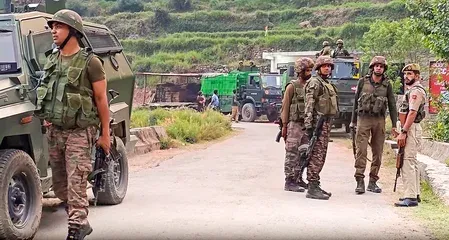
Security agencies across northern India are believed to be on heightened alert. The pattern of low-profile, geographically dispersed killings — if executed — could prove difficult to attribute quickly, making early detection and network interdiction critical. Investigators are reportedly tracking Jhingada's communications and financial channels from across the border.
Point of View
Locally known individuals is a tactical recalibration — harder to predict, harder to prevent, and designed to generate disproportionate fear relative to each individual incident. The ISI's reported involvement suggests this is not freelance criminality but a state-adjacent pressure campaign, timed after the dismantling of the blast module. What is notable is that the same alleged operator, Jhingada, is at the centre of both the busted module and the new network — raising questions about whether Indian agencies have fully mapped his current communications infrastructure. The 1993 Mumbai blasts parallel invoked by investigators is a deliberate signal: the syndicate is being positioned as a long-range instrument of destabilisation, not merely organised crime.
NationPress
26 Oct 2026
Frequently Asked Questions
What is the Dawood Ibrahim syndicate's alleged new plan in India?
According to intelligence agencies, the Dawood Ibrahim syndicate is reportedly building a fresh network of sharpshooters across northern India to carry out targeted killings of locally prominent individuals at regular intervals. The goal, officials say, is to generate sustained public fear and panic through patterned violence rather than single high-profile attacks.
Who is Munna Jhingada and what is his alleged role?
Munna Jhingada, also identified as Sayyad Muzzakkir Muddasar Hussain, is a veteran contract killer who reportedly managed the Dawood gang's shooter network and reported to Chhota Shakeel. He spent 17 years in a Thai prison after a failed attempt to eliminate rival gang leader Chhota Rajan, and was subsequently extradited to Pakistan, from where he allegedly now oversees the new network.
What was the Dawood-linked module that was recently busted?
Security agencies dismantled a Dawood-linked module allegedly operated by Jhingada from Pakistan that was planning a series of blasts at key locations in India. The module, which had recruited several individuals including a Nepali national, was broken up through joint operations by the Delhi Police Special Cell, the Uttar Pradesh ATS, and the NIA.
What is Pakistan's ISI's alleged connection to these plots?
Investigators allege that Pakistan's Inter-Services Intelligence (ISI) backed the now-busted blast module and had high expectations from it. Following its exposure, the ISI is believed to have directed the Dawood syndicate to quickly develop a new operational strategy, of which the sharpshooter network is reportedly the outcome.
Why are ordinary citizens being targeted instead of politicians?
Officials say the deliberate targeting of locally known but not nationally prominent individuals is a strategic choice — it makes each killing harder to link to a broader campaign, complicates attribution, and is designed to make ordinary people feel unsafe in their own communities, amplifying fear beyond what a single high-profile attack would achieve.