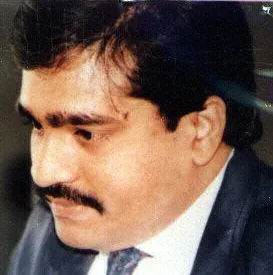
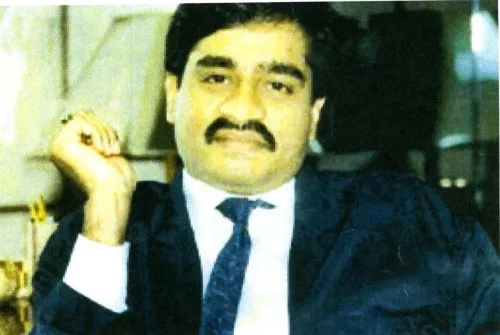
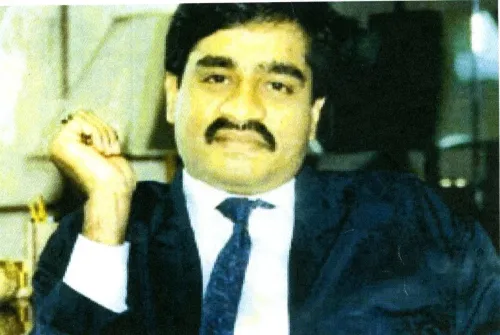
ISI shifts focus to protecting Dawood Ibrahim near Karachi port, intelligence inputs reveal
Synopsis
Post-Operation Sindoor, Pakistan's ISI has quietly shelved plans to use Dawood Ibrahim's narcotics network for large-scale fund-raising — and is now focused almost entirely on keeping him alive and hidden near Karachi's port. With a succession battle brewing between Chhota Shakeel and Anees Ibrahim, and India's crackdown disrupting supply chains, D-Company is the most fractured it has been in years.
Key Takeaways
Pakistan's ISI has reportedly shifted focus from using Dawood Ibrahim 's network for operations to securing him at a location near Karachi port .
The port location was chosen to allow a quick escape in the event of an Indian targeted operation, according to intelligence officials.
Following Operation Sindoor , Dawood was forced to change his movements and operating pattern; his health is said to be deteriorating.
The arrest of Dawood's aide Salim Dola has disrupted D-Company's international supply chains and unsettled the syndicate.
An internal succession dispute has emerged between Chhota Shakeel and Anees Ibrahim , lowering operational morale within the syndicate.
Pakistan faces added pressure from FATF scrutiny, making concealment of Dawood's presence strategically critical for Islamabad .
Pakistan's Inter-Services Intelligence (ISI) has reportedly shifted its operational priorities regarding fugitive underworld don Dawood Ibrahim, with intelligence inputs suggesting the agency is now focused primarily on securing him at a location near Karachi port rather than leveraging his network for active operations. The move, according to officials, is aimed at shielding his narcotics network from international scrutiny while reducing exposure for Islamabad.
Why the ISI Has Changed Tack
According to intelligence officials, the ISI's pivot away from using Dawood for operations stems from a combination of factors: his deteriorating health, mounting security pressures following Operation Sindoor in May last year, and the disruption of established supply chains after the arrest of his close aide Salim Dola. The operation reportedly forced Dawood to change his movements and operating pattern significantly.
'He is currently living near a port in Karachi, and this location was chosen so that he could make a quick escape in case of an Indian operation that would look to target him,' an official said.
An Intelligence Bureau (IB) official further explained the rationale: if Dawood were killed in a targeted operation, it would conclusively confirm that Pakistan has been sheltering him — a reality Islamabad has vehemently denied for years. The port location thus serves both as a potential exit route and as a buffer against geopolitical exposure.
Operation Sindoor's Lasting Impact on D-Company
While Operation Sindoor inflicted significant damage on Pakistan's terror infrastructure, it also fundamentally altered the operating environment for the so-called D-Company. Officials say the syndicate, which has been running narcotics smuggling networks into India for several years, is now under heightened strain. 'Today, when it comes to Dawood, the ISI is focusing more on ensuring his protection rather than using him for operations,' the IB official said.
The ISI has historically relied on the Dawood network to fund terror outfits including Lashkar-e-Taiba (LeT) and Jaish-e-Mohammed (JeM). With those funding pipelines under pressure, intelligence inputs suggest the agency is keen to expand narcotics smuggling substantially — with a particular push reportedly being made through Punjab.
Succession Battle Complicates ISI's Plans
Beyond the external pressure, D-Company is also grappling with an internal succession struggle, according to officials. Chhota Shakeel reportedly believes he has contributed more to the syndicate's operations than any other figure and positions himself as the natural successor. However, Dawood's family is said to be backing his brother Anees Ibrahim to take charge.
The uncertainty has dented operational morale. 'Dawood is a cult figure for the syndicate, and with him not to be seen, many of the operatives have developed low morale,' one official noted. Senior figures including Anees Ibrahim and Haji Salim continue to run day-to-day operations, but the leadership vacuum is visible.
India's Crackdown and What It Means Going Forward
The Narendra Modi government's intensified anti-narcotics drive has added further pressure on the ISI's funding calculus. Enforcement agencies in India are reportedly maintaining relentless pursuit of narcotics networks, and officials say a weakened D-Company offers an opportunity to crack cases and dismantle supply chains more effectively.
Pakistan's exposure is further compounded by scrutiny from the Financial Action Task Force (FATF), making it increasingly important for the ISI to conceal Dawood's presence — given his alleged centrality to terror financing, counterfeiting, and money laundering. 'It cannot afford so many problems, especially with this syndicate, at a time when it wants to raise funds in a big way through narcotics smuggling,' an official said.
How Indian agencies exploit the current fragmentation within D-Company may well determine the trajectory of cross-border narcotics flows in the months ahead.
Point of View
Not that the threat has receded. The succession battle between Shakeel and Anees Ibrahim is the more consequential development: leadership disputes in criminal syndicates often accelerate informant recruitment and operational leaks, which Indian agencies should be best-placed to exploit. What is also notable is how Operation Sindoor's ripple effects extended well beyond Pakistan's military infrastructure into the shadow economy that funds its proxy groups. The FATF angle deserves greater scrutiny — Islamabad's compulsion to hide Dawood is as much about multilateral financial diplomacy as it is about bilateral optics with India.
NationPress
25 Sept 2026
Frequently Asked Questions
Where is Dawood Ibrahim currently located, according to intelligence inputs?
Intelligence inputs suggest Dawood Ibrahim is currently living near a port in Karachi, Pakistan. The location was reportedly chosen to allow him a quick escape route in the event of a targeted Indian operation, according to officials.
Why has the ISI shifted from using Dawood's network to protecting him?
According to intelligence officials, a combination of Dawood's deteriorating health, post-Operation Sindoor security pressures, and the disruption of established narcotics supply chains has prompted the ISI to prioritise his protection over operational deployment. The agency reportedly cannot risk his death in an operation, as it would confirm Pakistan's long-denied sheltering of him.
What is the succession battle within D-Company?
Officials say Chhota Shakeel believes he is the natural successor to Dawood Ibrahim, given his operational contributions, while Dawood's family is backing his brother Anees Ibrahim to take charge. The dispute has reportedly lowered morale among syndicate operatives.
How has Operation Sindoor affected the Dawood Ibrahim syndicate?
Operation Sindoor, conducted in May last year, reportedly forced Dawood to change his movements and operating patterns significantly and led the ISI to step up his security detail. The operation is said to have altered the entire operating environment for D-Company, reducing its capacity for active narcotics and terror-funding operations.
What role does FATF scrutiny play in Pakistan's handling of Dawood Ibrahim?
Pakistan's ongoing exposure to Financial Action Task Force (FATF) monitoring makes concealing Dawood Ibrahim's presence strategically critical for Islamabad. Dawood is considered a key figure in terror financing, counterfeiting, and money laundering — activities that directly attract FATF attention, giving Pakistan a strong incentive to keep his location secret.