Master Plan Delhi 2047: DDA holds 5th stakeholder meet with CII, FICCI, ASSOCHAM
Synopsis
Delhi's urban future is being negotiated meeting by meeting. The DDA's fifth MPD 2047 consultation — with CII, FICCI, ASSOCHAM and others — zeroed in on private land allocation and the ISR framework, while Monday's session with RWAs surfaced demands for higher FAR, single-window approvals, and structural safety audits of buildings over 50 years old.
Key Takeaways
The DDA held its fifth MPD 2047 stakeholder consultation on 15 September 2026 with industry bodies including CII , FICCI , ASSOCHAM , and DSIIDC .
Discussions covered DDA land allocation to the private sector and the Institutional Social Responsibility (ISR) framework .
Lieutenant Governor T.S.
Sandhu has mandated a three-month, 20-meeting outreach programme to refine MPD 2047 implementation.
The fourth consultation , held on Monday with RWAs and CGHS representatives, addressed redevelopment of buildings over 50 years old , FAR incentives, and TOD provisions.
Residents called for a single-window approval system and structural safety audits for older buildings.
The Master Plan for Delhi 2047 was notified by the Central government on 20 August 2026 .
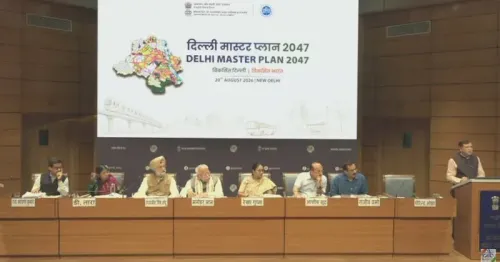
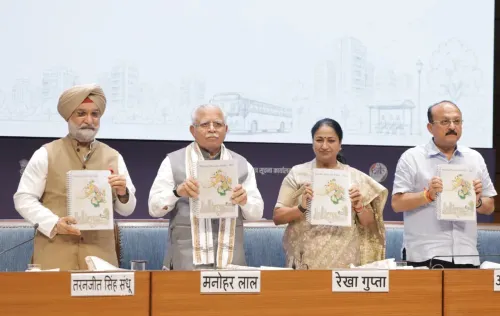
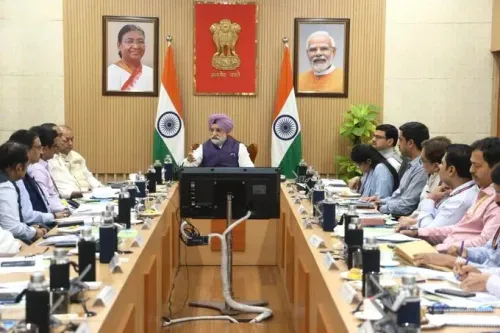
The Delhi Development Authority (DDA) on Tuesday, 15 September 2026, convened its fifth stakeholder consultation on the Master Plan for Delhi 2047 (MPD 2047), bringing together representatives from leading industry and commerce bodies to deliberate on measures for industrial development under the plan. The session is part of a structured three-month outreach programme mandated by Lieutenant Governor T.S. Sandhu, involving 20 meetings aimed at refining and implementing the capital's long-term urban blueprint.
Industry Bodies at the Table
Tuesday's consultation drew participants from some of India's most prominent trade and industry organisations, including the Confederation of Indian Industry (CII), the Federation of Indian Chambers of Commerce and Industry (FICCI), the PHD Chamber of Commerce and Industry, ASSOCHAM, and the Delhi State Industrial and Infrastructure Development Corporation (DSIIDC). DDA officials briefed the stakeholders on the plan's key provisions and the overall framework envisaged for facilitating industrial development in the capital.
The discussions specifically focused on provisions relating to the allocation of DDA land to the private sector and the Institutional Social Responsibility (ISR) framework — two mechanisms seen as central to enabling private participation in Delhi's planned urban growth through 2047.
Residents' Associations Heard a Day Earlier
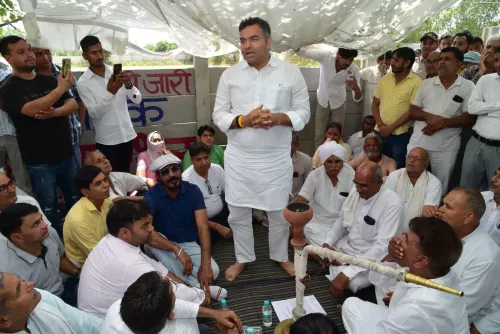
On Monday, the fourth consultation in the series was held with representatives of Residents' Welfare Associations (RWAs) and Cooperative Group Housing Societies (CGHS). DDA officials briefed these groups on the policy framework for ageing neighbourhoods and older housing societies — particularly those that are more than 50 years old or are structurally unsafe.
Key planning provisions discussed included Transit-Oriented Development (TOD), Floor Area Ratio (FAR), incentivised FAR, and the rationalisation of density restrictions to facilitate planned redevelopment. The consultation also covered amalgamation of adjoining plots, road networks, parking, open spaces, and sustainable development and waste management frameworks.
Residential representatives raised several concerns, including the need for enhanced permissible FAR, a single-window approval system across multiple agencies, and mandatory structural safety audits for older buildings ahead of redevelopment. The DDA noted that its redevelopment framework is designed to deliver more dwelling units, increased open spaces, and improved parking, while raising living standards in existing residential zones.
What MPD 2047 Seeks to Achieve
The Master Plan for Delhi 2047 was notified by the Central government on 20 August 2026. It centres on the improvement and redevelopment of ageing urban areas and buildings to accommodate a growing population in a planned manner, alongside upgrades to water supply, sewerage infrastructure, roads, open spaces, and public facilities.
Notably, this is Delhi's most comprehensive urban planning exercise in recent decades, with the plan covering a sweeping range of themes: land pooling, redevelopment of group housing and low-density areas, the Yamuna and blue-green zones, heritage conservation, mixed-use and commercial areas, in-situ slum redevelopment, decongestion, and the development of education and medical hubs.
Outreach Programme: Scope and Timeline
Lieutenant Governor T.S. Sandhu has directed the DDA to complete 20 stakeholder meetings over three months, engaging a diverse cross-section of groups — government agencies, architects and planners, farmers and landowners, market and trade associations, conservation bodies, transport agencies, and representatives from the education and healthcare sectors. The ongoing consultations reflect an intent to ensure the plan's implementation is ground-tested before large-scale execution begins.
With the outreach programme still in progress, how effectively the DDA incorporates stakeholder feedback into actionable policy revisions will be the critical measure of MPD 2047's real-world impact.
Point of View
But unless disbursement and accountability mechanisms are locked in before implementation, MPD 2047 risks the same gap between blueprint ambition and on-ground delivery that plagued earlier iterations.
NationPress
15 Sept 2026
Frequently Asked Questions
What is the Master Plan for Delhi 2047?
The Master Plan for Delhi 2047 (MPD 2047) is a long-term urban development blueprint notified by the Central government on 20 August 2026. It focuses on planned redevelopment of ageing areas and buildings, improved infrastructure, and accommodating Delhi's growing population through better land use, transit-oriented development, and upgraded public facilities.
Why did the DDA hold this stakeholder consultation?
The DDA is conducting a three-month outreach programme of 20 meetings, directed by Lieutenant Governor T.S. Sandhu, to address stakeholder concerns, clarify MPD 2047 provisions, and incorporate feedback before full implementation. Tuesday's session was the fifth in the series, focused on industrial development provisions.
Which industry bodies participated in the 15 September consultation?
Representatives from the Confederation of Indian Industry (CII), FICCI, PHD Chamber of Commerce and Industry, ASSOCHAM, and the Delhi State Industrial and Infrastructure Development Corporation (DSIIDC) attended the fifth stakeholder consultation on 15 September 2026.
What concerns did Residents' Welfare Associations raise at the MPD 2047 consultation?
At the fourth consultation held on Monday, RWA representatives called for enhanced permissible FAR, a single-window system for approvals across multiple agencies, and mandatory structural safety audits of buildings that are more than 50 years old or structurally unsafe before redevelopment proceeds.
What themes will future MPD 2047 consultations cover?
Upcoming sessions will address land pooling, group housing and low-density area redevelopment, the Yamuna and blue-green zones, heritage conservation, mixed-use zones, in-situ slum redevelopment, decongestion strategies, and education and medical hub development, among other topics.