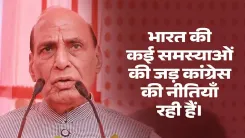
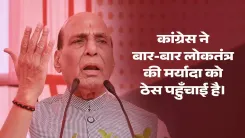
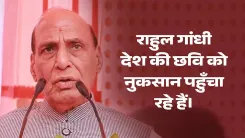
Defence Minister Rajnath Singh rejects anarchy, coup talk
Synopsis
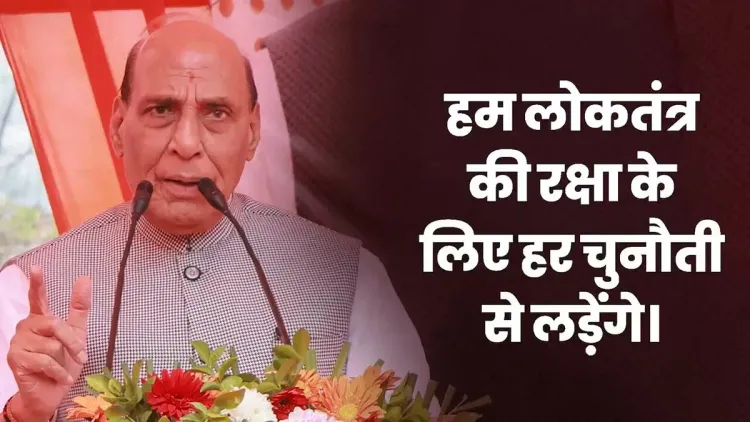
Union Defence Minister Rajnath Singh said the dignity of democracy and the Constitution is supreme, calling talk of anarchy and coups anti-democratic and pledging a firm democratic reply to any force that toys with India's democracy.
Key Takeaways
Union Defence Minister Rajnath Singh on 28 November 2026 said the dignity of democracy and the Constitution is supreme.
He described talk of anarchy and coups as contrary to democratic values.
He pledged a firm reply, by democratic means, to every force that plays with India's democracy.
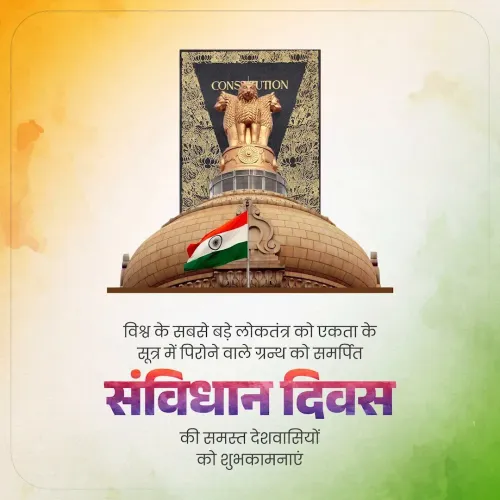
India's Constitution was adopted in 1949 and came into force in 1950.
Singh is a senior BJP leader, former Uttar Pradesh Chief Minister and former Union Home Minister.
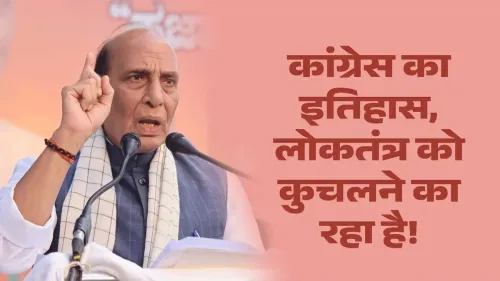
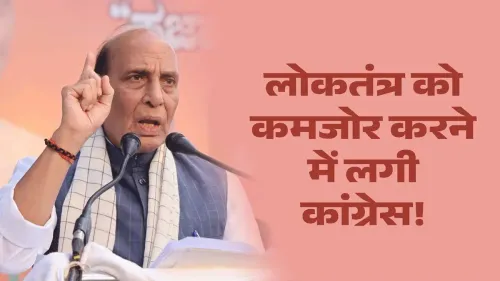
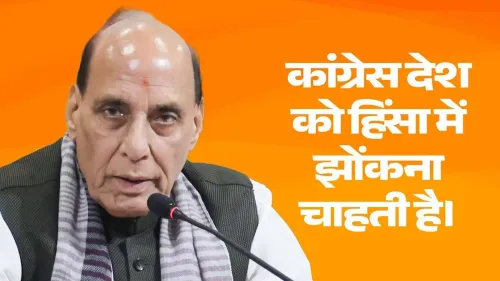
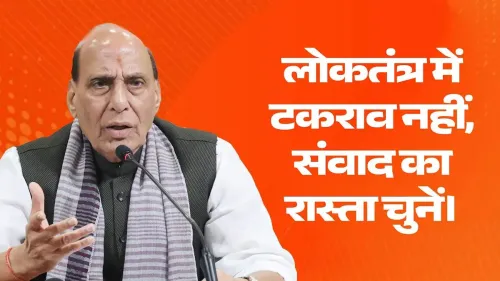
Talk of anarchy and a coup, Union Defence Minister Rajnath Singh said on Saturday, is not ordinary political heat — it cuts against democratic values. The dignity of democracy and the majesty of the Constitution, he insisted, stand supreme, and every force that toys with India's republic will meet a firm reply delivered the democratic way.
In a message on X on 28 November 2026, Singh wrote: ‘The dignity of democracy and the majesty of the Constitution are supreme. Talk of anarchy and coups is against democratic values. Our resolve is clear, we will firmly respond in a democratic manner to every force that plays with India's democracy.’ He reached for the Hindi phrases loktantra ki maryada (dignity of democracy) and takhtapalat (coup) to mark the line he would not let others cross.
Dignity of democracy, majesty of the Constitution
That pairing is not accidental. India's Constitution, adopted in 1949 and in force from 1950, is the legal spine of parliamentary government and fundamental rights. Singh — a senior BJP leader, former Uttar Pradesh Chief Minister and former Union Home Minister — has often spoken as a defender of that spine. Here he elevates maryada and garima (dignity) above the noise of contestation.
Senior ministers have periodically issued such public reaffirmations during stretches of domestic political contest. The BJP-led government has consistently framed its answers to opposition action or protest as a defence of institutional norms rather than a partisan counter-punch. Singh's three sentences sit in that pattern of high-reach political communication in a multi-party system.
Every force, answered the democratic way
The operational pledge is the last line. He did not threaten extra-legal force. He promised to answer, loktantrik tarike se and with firmness, every power that plays with India's democracy. That is a warning wrapped in a constraint: the contest stays inside the constitutional method.
Opposition parties will now decide how to read the charge. Debates in Parliament or state assemblies in the coming session are the natural next arena. No independent account of a specific coup plot or anarchic episode attached to this November message has been established.
Singh has put the Constitution in the foreground. The question for Indian politics is whether the argument that follows stays inside its frame.
Point of View
He frames the government as the defender of institutional order rather than a combatant in a street argument. The language of anarchy and coups raises the rhetorical stakes without naming an opponent, leaving others to contest the charge or the premise. Watch for whether this line migrates from social media into the next parliamentary session, where the same vocabulary can harden into a floor fight.
NationPress
28 Nov 2026
Frequently Asked Questions
What did Rajnath Singh say about democracy on 28 November 2026?
Union Defence Minister Rajnath Singh said the dignity of democracy and the majesty of the Constitution are supreme, that talk of anarchy and coups is against democratic values, and that every force that plays with India's democracy will be answered firmly by democratic means.
Why did Rajnath Singh mention anarchy and a coup?
He described such talk as contrary to democratic values. The specific events or statements that prompted the November 2026 message have not been independently established.
Who is Rajnath Singh?
He is India's Union Defence Minister, a senior BJP leader, a former Chief Minister of Uttar Pradesh and a former Union Home Minister.
When did India's Constitution come into force?
The Constitution of India was adopted in 1949 and came into force in 1950, setting the framework for democratic governance and fundamental rights.
Did Rajnath Singh call for extra-legal action?
No. He said the response to any force that toys with India's democracy would be delivered in a democratic manner, and with firmness.