Rajnath Singh questions Congress on Emergency, Shah Bano
Synopsis
Defence Minister Rajnath Singh said Congress cannot live down the 1975 Emergency, the dismissal of elected governments under Indira Gandhi, and the 1986 law that overturned the Supreme Court's Shah Bano verdict. He argued those episodes still raise serious questions about the party's record on democracy and civil rights.
Key Takeaways
Union Defence Minister Rajnath Singh on 28 November 2026 said Congress history holds chapters on democracy and constitutional propriety that cannot be forgotten.
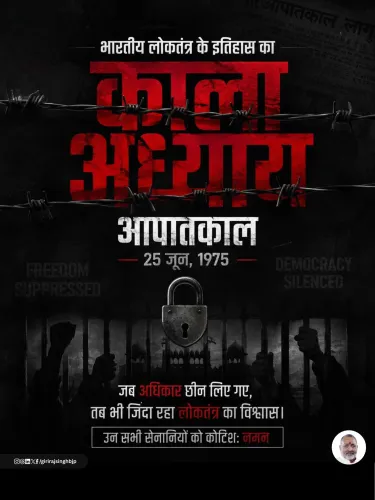
He cited the dismissal of elected governments in Indira Gandhi's tenure and the 1975 Emergency, declared on 25 June 1975 and revoked on 21 March 1977.
He also named the legislative reversal of the 1985 Supreme Court judgment in the Shah Bano case.
The Rajiv Gandhi government passed the Muslim Women (Protection of Rights on Divorce) Act in 1986 to override that verdict.
The pairing of the Emergency and Shah Bano is a long-running BJP argument about Congress and constitutional limits.
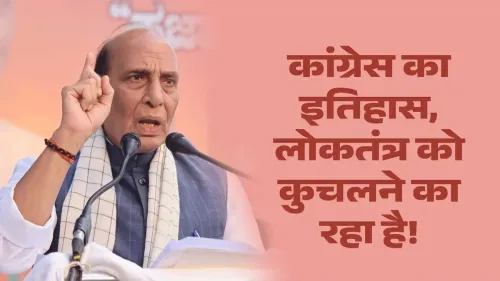
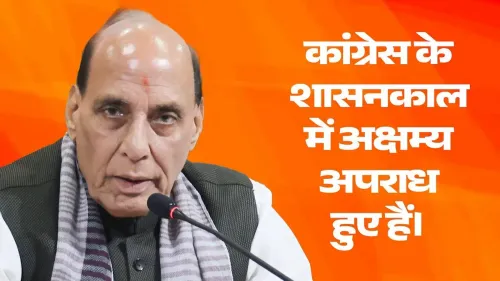
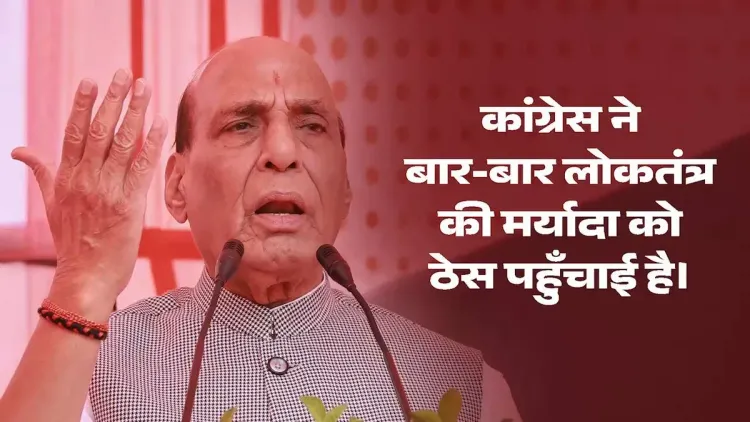
Union Defence Minister Rajnath Singh on Saturday reached past the day's headlines to Indira Gandhi's years, the Emergency of 1975, and the Shah Bano reversal, arguing that Congress still has to answer for how it treated democracy and the Constitution. Those chapters, he said, cannot be forgotten. They still raise serious questions, in his telling, about democratic values and civil rights.
Writing in Hindi on X, in a post accompanied by a video, Singh said Congress history holds several chapters linked to democracy and sanvaidhanik maryadaon (constitutional propriety) that public memory cannot erase. He grouped three flashpoints: the sacking of elected governments during Indira Gandhi's tenure, the Emergency of 1975, and the overturning of the Supreme Court judgment in the Shah Bano case. 'These events raise serious questions about the Congress regime's approach towards democratic values and civil rights,' he wrote.
The 21-month Emergency he put back on the table
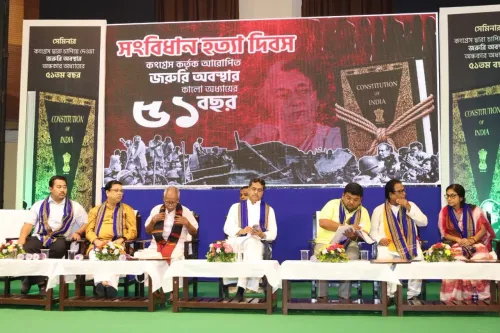
The National Emergency was declared on 25 June 1975 on the advice of then Prime Minister Indira Gandhi and revoked on 21 March 1977. For 21 months, fundamental rights stood suspended and opposition leaders were detained under MISA. Singh's post also recalled the dismissal of elected state administrations in that era — a practice that still fuels arguments over how far New Delhi may go against a mandate from a state.
The dates are not in dispute. The political meaning is. BJP leaders have for years treated the Emergency as the central exhibit when they accuse Congress of treating the Constitution as an inconvenience. Singh, a senior BJP figure, former Union Home Minister and former Uttar Pradesh Chief Minister, is among the voices that keep returning to that exhibit.
Shah Bano, 1986, and a law that overrode the Court
The second episode sits more than a decade later. In 1985, the Supreme Court of India granted maintenance to a divorced Muslim woman, Shah Bano, under Section 125 of the CrPC. The Rajiv Gandhi government answered in 1986 with the Muslim Women (Protection of Rights on Divorce) Act, a statute that overrode that judgment. Singh placed that sequence in the same ledger as the Emergency: a test of whether a ruling party would accept judicial limits.
The Act remains one of the most cited examples in debates on personal law, gender justice and the independence of the courts. Pairing it with 1975 lets him argue that the problem was not a single night but a pattern of how Congress governments handled democratic values and citizens' rights.
A partisan ledger that keeps returning
The Emergency-plus-Shah Bano pairing is a familiar BJP talking point. It surfaces whenever the two national parties clash over who is the better custodian of the Constitution. Congress has long rejected that framing and pointed to its own role in the freedom movement and in drafting the Republic's basic law. Singh's post does not take up those counter-claims. It restates the charge.
Whether the remark draws a formal rebuttal, or echoes in the winter session of Parliament or in state election campaigns, will show if this is a passing post or another round in a long argument. The historical record is settled on the dates. The politics around them is not finished.
Fifty years on from the Emergency and four decades after Shah Bano, the files Singh named are still open in Indian politics.
Point of View
The other against the Supreme Court. Rajnath Singh's intervention fits that long campaign rather than a new policy announcement from the Defence Ministry. It keeps the contest over constitutional virtue at the centre of national politics, a terrain the ruling party prefers when it wants Congress on the defensive. The next test is whether other BJP leaders amplify the charge or whether it is answered on the floor of Parliament.
NationPress
28 Nov 2026
Frequently Asked Questions
What did Rajnath Singh say about Congress and the Emergency?
Union Defence Minister Rajnath Singh said the 1975 Emergency, the dismissal of elected governments under Indira Gandhi, and the later reversal of the Shah Bano Supreme Court verdict are chapters in Congress history that cannot be forgotten. He argued those events raise serious questions about the party's approach to democratic values and civil rights.
What was the 1975 Emergency in India?
The National Emergency was declared on 25 June 1975 on the advice of then Prime Minister Indira Gandhi and revoked on 21 March 1977. For 21 months, fundamental rights were suspended and opposition leaders were detained under MISA.
What is the Shah Bano case Rajnath Singh mentioned?
In 1985 the Supreme Court granted maintenance to a divorced Muslim woman, Shah Bano, under Section 125 of the CrPC. Parliament later passed the Muslim Women (Protection of Rights on Divorce) Act in 1986, overriding that judgment.
When was the Muslim Women (Protection of Rights on Divorce) Act passed?
The Act was passed in 1986 by the Rajiv Gandhi government. It was designed to override the Supreme Court's 1985 Shah Bano ruling on maintenance for a divorced Muslim woman.
Who was Prime Minister of India during the 1975 Emergency?
Indira Gandhi was Prime Minister when the Emergency was declared on 25 June 1975. She held the office from 1966 to 1977 and again from 1980 to 1984.