FM Sitharaman: Cabinet nod to boost women's representation
Synopsis
Finance Minister Nirmala Sitharaman said the Union Cabinet, under PM Narendra Modi, approved legislative proposals to deepen women's representation in legislatures, calling it a historic NDA step for nari shakti and democratic participation.
Key Takeaways
Union Finance Minister Nirmala Sitharaman said on 28 November 2026 that the Union Cabinet had a day earlier approved legislative proposals to strengthen women's representation in India's democracy.
She credited Prime Minister Narendra Modi 's leadership and described the step as a historic initiative of the NDA government.
The post did not spell out the clauses of the proposals; it stressed greater participation and equitable representation in legislative institutions.
India already mandates one-third reservation for women in panchayats and municipalities under the 73rd and 74th Amendments of 1992-1993 .
The 2023 Nari Shakti Vandan Adhiniyam provides 33 percent reservation for women in the Lok Sabha and state assemblies, with implementation linked to census and delimitation.
Next steps to watch are parliamentary introduction and passage, state-level effects, and any delimitation exercise that would turn seats on a map into seats in a House.
Union Finance Minister Nirmala Sitharaman on Saturday placed a Cabinet decision at the heart of India's unfinished debate on who sits in its legislatures: a day earlier, she said, the Union Cabinet under Prime Minister Narendra Modi had cleared legislative proposals to deepen women's representation in the country's democracy. The message, posted from New Delhi on 28 November 2026, framed the nod as both timely and necessary as women take on more leadership roles across public life.
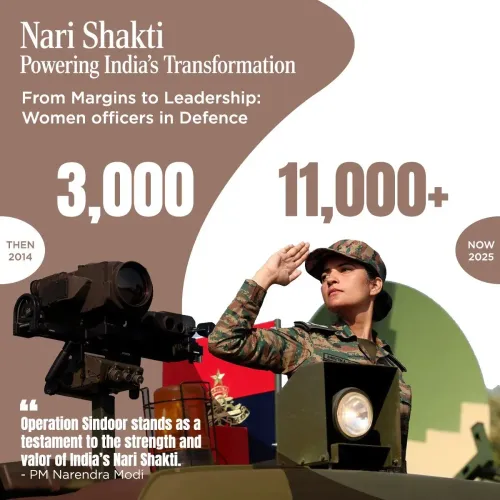
In Hindi, she wrote that nari shakti (women's power) is carving a distinct identity in every field, contributing to nation-building and accelerating India's development journey. 'Today, when women are playing a leading role in leadership by overcoming all obstacles,' she said, 'it is timely and necessary that their growing contribution to the nation is also reflected through greater participation and equitable representation in our legislative institutions.'
She called the move a historic initiative of the NDA government that would broaden women's role in shaping India's future, strengthen democratic representation, and ensure effective participation of women in decision-making.
What the Finance Minister said the Cabinet cleared
Sitharaman did not list the clauses. She described a package of legislative proposals, approved on 27 November 2026, aimed at more equitable representation of women in legislative institutions. The emphasis was on participation that matches the contribution women already make outside the House — in work, welfare delivery, and local leadership.
The political signal is unmistakable. A senior Cabinet voice chose to pin the announcement, invoke the Prime Minister by name, and brand the step as an NDA landmark rather than a routine clearance.
From one-third in panchayats to a seat in the House
India's reservation architecture for women did not begin in Parliament. The 73rd and 74th Constitutional Amendments of 1992-1993 locked in one-third reservation in panchayats and municipalities — the first large, nationwide experiment in mandated political space for women. Three decades later, that local pipeline is the backdrop against which every national debate on women's seats is read.
Parliament has already gone further on paper. The Constitution (One Hundred and Twenty-eighth Amendment) Bill, 2023 — the Nari Shakti Vandan Adhiniyam — provides 33 percent reservation for women in the Lok Sabha and state assemblies. Implementation has been tied to census and delimitation exercises, which is why any new legislative package on representation immediately raises a practical question: does it speed the path from statute to seat, or add a new layer?
Bills, state houses and the delimitation hinge
Cabinet approval is the start of a bill's public life, not the end. The proposals still have to be introduced, debated and passed. State legislatures sit at the receiving end of any change in assembly composition. Delimitation — the redrawing of constituencies — remains the mechanical hinge on which reserved seats actually appear on the map.
For women candidates, the difference between a Cabinet note and a ballot paper is the difference between a promise and a winnable constituency. That is the gap this package will now be judged against.
The test is not whether India talks about nari shakti. It is whether the next Houses, after the next maps, look more like the country they claim to represent.
Point of View
From local-body reservations already in force to the 2023 constitutional amendment that still waits on census and delimitation. Cabinet clearance is real political capital, but representation changes only when seats are drawn, tickets are given, and women actually sit. The 2023 law already promised 33 percent in the Lok Sabha and assemblies; any new package will be read against that unfinished clock. Watch the text of the bills and the timeline for introduction — that is where a historic claim either becomes law or stays a press note.
NationPress
28 Nov 2026
Frequently Asked Questions
What did Nirmala Sitharaman say about the Cabinet and women's representation?
Union Finance Minister Nirmala Sitharaman said the Union Cabinet, under Prime Minister Narendra Modi, had approved legislative proposals to further strengthen women's representation in India's democracy. She called it a historic NDA initiative to widen women's role in decision-making and nation-building.
When did the Union Cabinet approve the proposals Sitharaman mentioned?
In her post on 28 November 2026, she said the Cabinet had given its approval the previous day, which is 27 November 2026. She did not publish the full text of the proposals in the post.
What is the Nari Shakti Vandan Adhiniyam?
It is the Constitution (One Hundred and Twenty-eighth Amendment) Bill, 2023, which provides 33 percent reservation for women in the Lok Sabha and state assemblies. Implementation has been linked to census and delimitation exercises.
Does India already reserve seats for women in local bodies?
Yes. The 73rd and 74th Constitutional Amendments of 1992-1993 mandate one-third reservation for women in panchayats and municipalities. That local-level quota is the foundation on which later debates about assembly and parliamentary seats have been built.
What happens after the Cabinet approves such legislative proposals?
Cabinet approval is only the first step. The proposals still need to be introduced in Parliament, debated and passed, and then applied through state legislatures and, where relevant, delimitation of constituencies before reserved seats appear on the ground.