Is Delhi Sinking Under Hazardous Smog? Air Quality Plummets!
Synopsis
As New Delhi battles a severe air quality crisis, the capital finds itself engulfed in a thick layer of hazardous smog. With visibility plummeting and the Air Quality Index soaring frighteningly high, the situation poses a serious threat to health and safety across the region. Stay informed on this critical environmental issue.
Key Takeaways
Delhi's air quality has deteriorated to severe levels.
Visibility has dropped to near-zero in many areas.
Rohini and Bawana are the most polluted areas.
Authorities are implementing safety measures at airports.
The pollution crisis poses serious health risks.
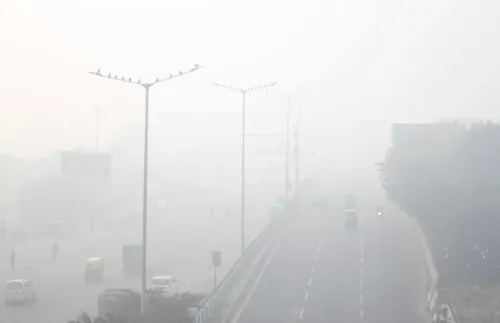
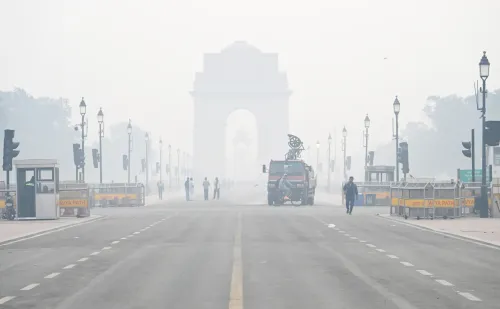
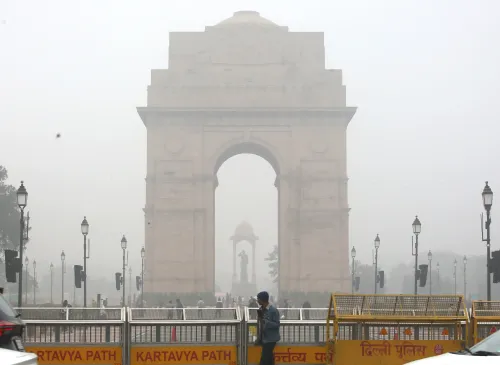
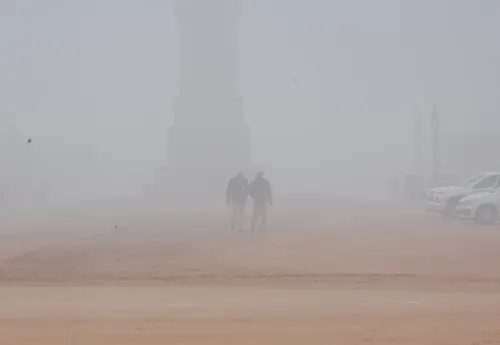
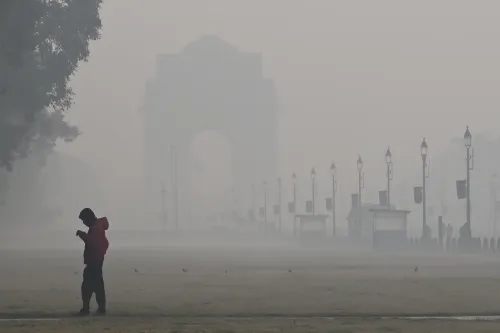
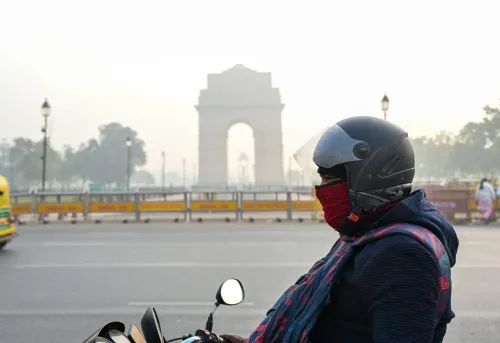
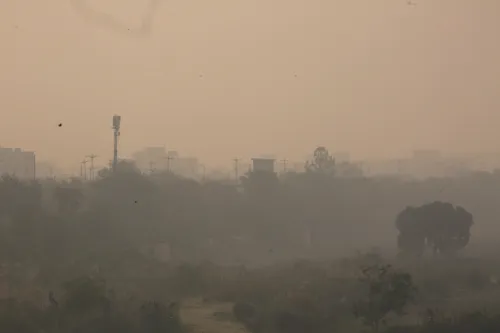
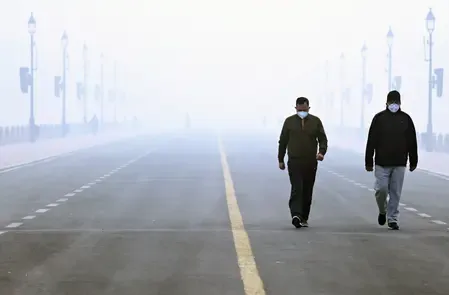
New Delhi, Dec 14 (NationPress) The air pollution crisis in the national capital, which had already escalated to the ‘severe’ category, took a turn for the worse on Sunday as a dense layer of poisonous smog enveloped the city, pushing air quality to hazardous levels and impairing visibility across numerous locations.
As per the latest data from the Central Pollution Control Board (CPCB), Delhi’s average Air Quality Index (AQI) surged to 461 by 7 a.m. on Sunday, a jump from 431 reported the previous day. These alarming statistics highlight the escalating air quality crisis plaguing the national capital.
All 40 air quality monitoring stations throughout Delhi recorded readings in the ‘severe’ category, with several areas approaching the maximum measurable limit. Rohini emerged as one of the most impacted regions, registering an AQI of 499, closely followed by Bawana at 498. Vivek Vihar noted 495, while both Ashok Vihar and Wazirpur reported AQI levels of 493. Narela recorded 492, and Anand Vihar stood at 491.
Other city areas also faced extreme pollution levels. ITO clocked an AQI of 485, Mundaka 486, Punjabi Bagh 478, Nehru Nagar 476, and both Chandni Chowk and Okhla marked readings of 470, indicating widespread and persistent pollution throughout the capital.
The air quality dilemma was not limited to Delhi, as various cities in the National Capital Region (NCR) also reported alarming pollution levels.
Noida registered an AQI of 470, firmly placing it in the ‘severe’ category, while Ghaziabad followed with a hazardous AQI of 460. Gurugram’s air quality remained in the ‘very poor’ category at 348, whereas Faridabad recorded a comparatively lower yet concerning AQI of 220, categorized as ‘poor’.
The deterioration in air quality was evident early in the morning, with thick smog intermingled with fog blanketing the region. Visibility in some areas plummeted to nearly zero, severely hindering early-morning travel.
This reduced visibility compelled authorities to implement low-visibility protocols at the Indira Gandhi International Airport. While flight operations continued, officials reported that pilots were adhering to precautionary measures due to fluctuating and poor visibility.
The India Meteorological Department (IMD) had issued a warning indicating that visibility at IGI Airport could drop to as low as 100 metres during early morning hours on Sunday due to the dense fog, before improving to around 800 metres later in the day as shallow fog conditions persisted.
The combination of stagnant weather conditions, dense fog, and continuous emissions exacerbates air quality, raising serious health concerns for residents throughout Delhi and the NCR.
Point of View
It is imperative that we as a nation take immediate action to combat pollution and safeguard public health. The alarming AQI levels demand urgent attention from policymakers, environmentalists, and citizens alike. We must prioritize sustainable practices to ensure a cleaner, healthier future for all.
NationPress
23 Sept 2026
Frequently Asked Questions
What is the current air quality index in Delhi?
As of the latest readings, Delhi's average Air Quality Index (AQI) has risen to 461.
What areas in Delhi are most affected by pollution?
Rohini and Bawana are among the worst-hit areas, with AQI levels reaching 499 and 498, respectively.
What measures are being taken to address low visibility due to smog?
Authorities have activated low-visibility procedures at Indira Gandhi International Airport to ensure flight safety.
How does this pollution crisis affect public health?
The hazardous air quality poses serious health risks, aggravating respiratory issues and other health problems for residents.
Is the pollution crisis only affecting Delhi?
No, nearby cities in the National Capital Region (NCR), such as Noida and Ghaziabad, are also experiencing dangerously high pollution levels.