Has Delhi's Air Quality Marginally Improved Thanks to Strong Winds?
Synopsis
On December 17, Delhi's air quality showed a slight improvement due to strong winds; however, pollution levels remain in the 'very poor' category. Monitoring stations reveal alarming AQI levels, and experts advise residents to take precautionary measures to safeguard their health. Find out more about the ongoing air quality crisis and its implications.
Key Takeaways
Delhi's air quality has seen a slight improvement due to strong winds.
The average AQI remains in the 'very poor' category.
Political debates persist regarding accountability for air quality issues.
Residents are urged to take precautions for health safety.
Forecast suggests continued fluctuations in air quality levels.
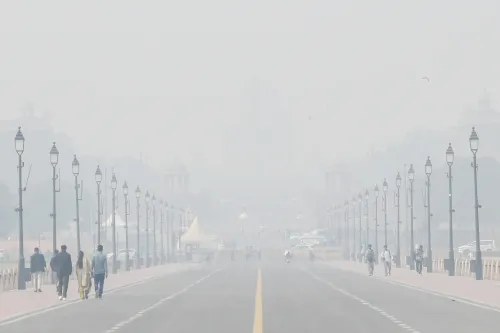
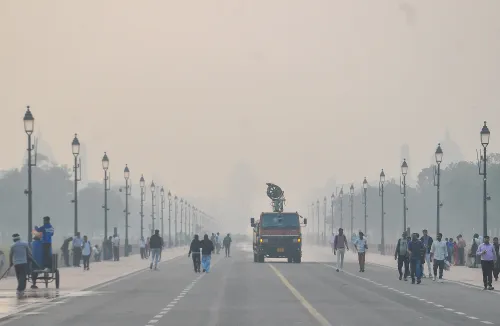
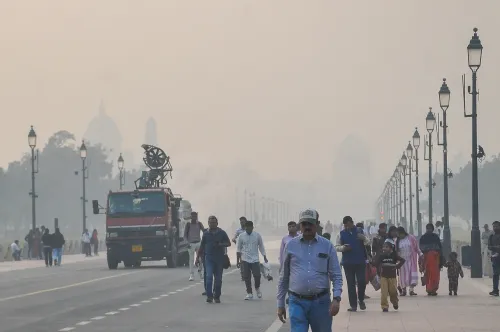
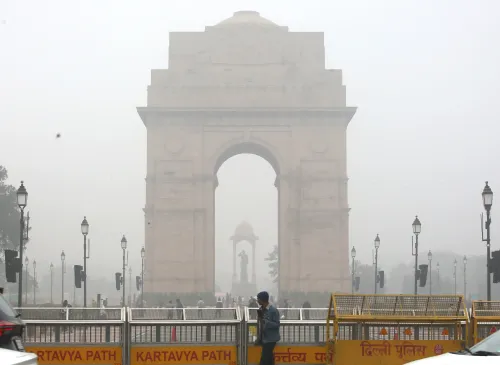
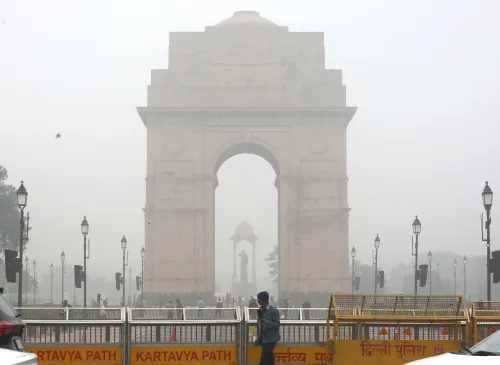
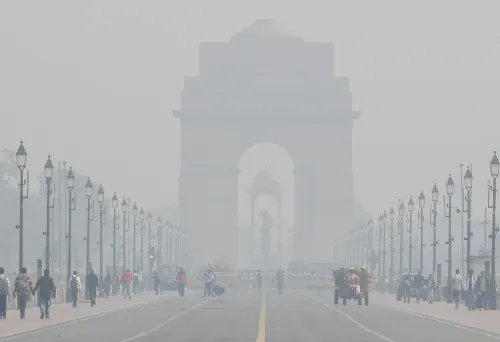
New Delhi, Dec 17 (NationPress) The air quality in Delhi showed a slight improvement on Wednesday, thanks to relatively strong surface winds, but pollution levels still fell within the ‘very poor’ category.
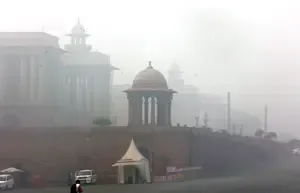
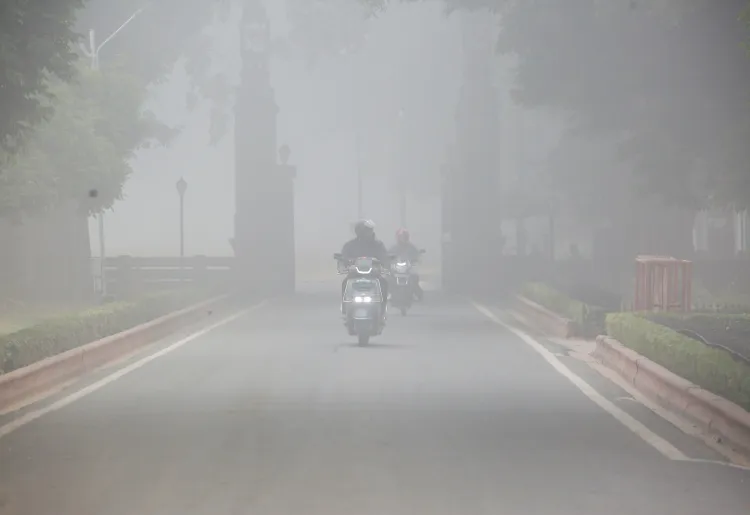
During the morning hours, shallow fog was reported in several areas of the city. Official statistics indicated that the average Air Quality Index (AQI) of the national capital was 328 at 8 a.m., a slight enhancement from the 354 recorded at 4 p.m. on Tuesday.
The India Meteorological Department (IMD) noted reduced visibility in various parts of Delhi. Safdarjung experienced the lowest visibility at 900 metres, while Palam reported visibility of about 1,100 metres under misty conditions. The IMD mentioned that steady winds blowing at speeds between 7-10 km per hour during the early hours contributed to the dispersion of pollutants to some degree.
Despite this minor relief, high pollution levels are anticipated to persist in the upcoming days. The Centre’s Air Quality Early Warning System (EWS) for Delhi predicts that air quality will likely remain in the ‘very poor’ category from December 17 to December 19. Starting December 20, the forecast for the next six days suggests that AQI levels may fluctuate between ‘very poor’ and ‘severe’ categories.
Monitoring stations throughout Delhi reported concerning pollution levels. Bawana registered the highest AQI at 378, followed by Mundka at 370, Pusa at 365, and Rohini at 364. Areas like ITO, Wazirpur, and Nehru Nagar had AQI values ranging from 360 to 361, while Jahangirpuri and NSIT Dwarka also reported figures around 361.
Residential and commercial zones faced similar challenges. Ashok Nagar recorded an AQI of 350, DTU 357, Sirifort 356, Vivek Vihar 354, and Shadipur 343. Other neighborhoods, including RK Puram, Dwarka Sector 8, and the Dr. Karni Singh Shooting Range, showed AQI levels of 342 each. Central and older city areas, such as Chandni Chowk (328), Punjabi Bagh (339), Patparganj (331), and North Campus at Delhi University (319), remained firmly within the ‘very poor’ category.
However, some locations reported relatively better air quality. Burari Crossing had an AQI of 298, categorizing it as ‘poor’. IGI Airport Terminal 3 recorded an AQI of 263, while IIT Delhi reported 300 and CRRI Mathura Road stood at 297, indicating slight improvement, even though conditions were still deemed unhealthy.
According to AQI.in, breathing the air in Delhi under current circumstances is akin to smoking approximately 8.5 cigarettes daily. The platform urged residents to minimize outdoor exposure, utilize air purifiers indoors, maintain clean vehicle air filters, wear N95 masks when outside, and remain indoors as much as possible.
The Central Pollution Control Board (CPCB) classifies air quality as ‘moderate’ when AQI values are between 101 and 200, ‘poor’ between 201 and 300, and ‘very poor’ between 301 and 400. AQI readings above 400 are categorized as ‘severe’.
In the meantime, political reactions to the deteriorating pollution levels continued. Delhi Environment Minister Manjinder Singh Sirsa attributed the air quality crisis to the Aam Aadmi Party, asserting that it is unrealistic for any elected government to significantly lower AQI levels within a mere nine to ten months. He apologized to Delhi residents for the pollution issue and claimed that the BJP government is performing better than the previous administration, gradually reducing AQI levels.
In response, AAP leader Saurabh Bhardwaj criticized the minister on social media, accusing him of evading accountability and questioning earlier assertions of credit for improved air quality during the monsoon season.
Point of View
It's vital to highlight the urgent need for effective measures to address Delhi's air quality crisis. While some improvement is noted, the persistent 'very poor' levels demand immediate attention from both the government and citizens. Collaborative efforts are essential in combatting this public health concern.
NationPress
5 Oct 2026
Frequently Asked Questions
What is the current AQI level in Delhi?
As of December 17, the average AQI level in Delhi is 328, indicating 'very poor' air quality.
What factors contribute to the air pollution in Delhi?
Key contributors include vehicle emissions, industrial discharges, construction dust, and seasonal factors such as winter fog.
What health risks are associated with 'very poor' air quality?
Breathing 'very poor' air quality can lead to respiratory issues, cardiovascular problems, and can exacerbate existing health conditions.
What precautions can residents take during poor air quality days?
Residents are advised to limit outdoor activities, use air purifiers, wear masks, and ensure clean air filters in vehicles.
How does Delhi's air quality compare to other cities?
Delhi often ranks among the most polluted cities globally, with consistently high AQI levels compared to many other urban areas.