Delhi BJP chief Harsh Malhotra demands Kharge apologise to PM Modi
Synopsis
Delhi BJP chief Harsh Malhotra has demanded a public apology from Congress president Mallikarjun Kharge for saying the BJP government is 'scared', invoking the 1966 firing on protesters, the Emergency, and the 1988 Rajpath crackdown as counter-charges. The BJP also accused CJP leader Abhijeet Dipke of staging a 'five-star arrest' and Arvind Kejriwal of skipping a protest he had publicly pledged to attend.
Key Takeaways
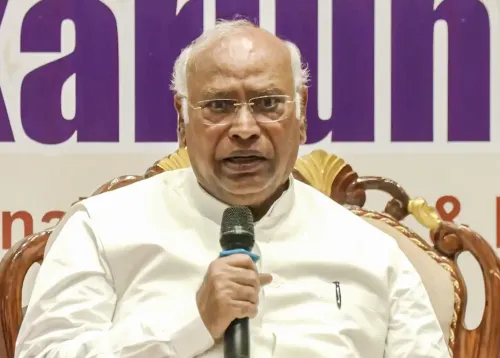
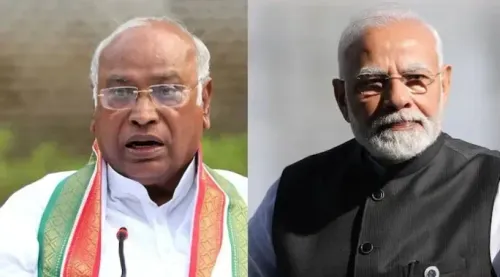
Delhi BJP President Harsh Malhotra demanded on 11 October that Congress President Mallikarjun Kharge apologise to PM Narendra Modi for a remark calling the BJP government 'scared'.
Kharge was quoted as saying, “They are scared, and a person who is afraid dies sooner or later.” Malhotra cited Congress-era incidents — the 1966 cow-slaughter protest firing, the Emergency , the 1988 Rajpath firing, and 1990 / 1993 crackdowns on kar sevaks — as counter-examples.
BJP spokesperson Praveen Shankar Kapoor alleged that CJP leader Abhijeet Dipke flew in from Mumbai after arrests began and staged a “five-star arrest,” misleading 500–700 young protesters.
Arvind Kejriwal was accused of failing to appear at Jantar Mantar despite publicly pledging to attend Saturday’s protest with his family.
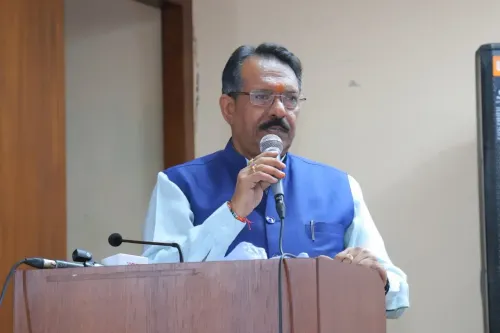
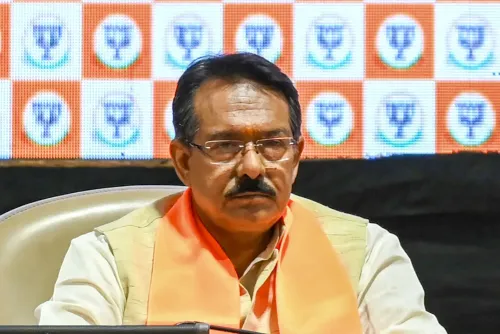
Delhi Bharatiya Janata Party (BJP) President Harsh Malhotra on 11 October publicly condemned Congress President Mallikarjun Kharge over a remark directed at the BJP government, demanding that Kharge either apologise to Prime Minister Narendra Modi or brace for a sharp public backlash. The remarks have sharpened an already bitter exchange between the two parties ahead of upcoming political mobilisations.
The Remark That Triggered the Row
Malhotra quoted Kharge as having said, “They are scared, and a person who is afraid dies sooner or later.” The Delhi BJP chief characterised the statement as “intemperate language” and argued that BJP leaders had, by contrast, consistently exercised restraint out of respect for Kharge’s age. Malhotra said the Congress president’s pattern of such remarks was becoming a recurring feature of political discourse.
BJP Counters with Historical Allegations
Malhotra mounted a pointed counter-offensive, asking Kharge to explain what he considered Congress governments’ own record of handling dissent. “If preparing to handle a protest is a sign of fear, then what was the opening of fire on protesters during the cow slaughter protest in 1966? What was the imposition of the Emergency in the country? What was the opening of fire on farmers protesting at Rajpath in 1988? And what was the installation of barbed-wire barricades, the use of tear gas, and cane charges in 1990 and again in 1993 to prevent kar sevaks from proceeding towards Rajpath following the Vishva Hindu Parishad’s call?” he asked.
Malhotra argued that if security arrangements ahead of Saturday’s protest constituted fear, Congress governments must have been “frightened on countless occasions” given their recourse to firing on demonstrators.
BJP Targets CJP Protest and Kejriwal
Delhi BJP spokesperson Praveen Shankar Kapoor separately took aim at what he described as low turnout and leadership absence at a Citizens for Justice and Peace (CJP) protest held on Saturday. Kapoor alleged that CJP leader Abhijeet Dipke had announced the protest two weeks in advance but did not himself take to the streets, instead boarding a flight from Mumbai only after arrests had begun in Delhi.
“Instead, he misled 500 to 700 young people and compelled them to court arrest,” Kapoor said, characterising Dipke’s subsequent detention as a “five-star arrest” staged after arriving by air. He argued that genuine protesters would have quietly come to Delhi and courted arrest alongside their workers.
Kejriwal Accused of No-Show
Kapoor also trained his fire on Aam Aadmi Party (AAP) convenor Arvind Kejriwal, alleging that Kejriwal had publicly committed to reaching Jantar Mantar with his family on Saturday morning but neither he nor any family member nor any party worker appeared at the venue in the morning. Kapoor said Kejriwal eventually left home in the evening rather than the morning and did not reach Jantar Mantar at all.
“Kejriwal, who once swore on his children that he would never support the Congress but later joined hands with the party, did not bring his own family to the protest but instead misled ordinary young people and sent them to face the police,” Kapoor said. The BJP framed the episode as fresh evidence of what it called Kejriwal’s political inconsistency.
What Comes Next
The BJP’s dual offensive — targeting both Kharge’s language and the opposition’s protest credibility — signals an intensifying pre-poll political climate in Delhi. Congress and AAP are yet to formally respond to the specific allegations. Whether Kharge issues any clarification or the opposition mounts a rebuttal is likely to determine the next phase of this war of words.
Point of View
Deploying historical grievances — Emergency, Rajpath firing, 1966 — to shift the narrative from the present government’s protest management to Congress’s own record. What is notable is the simultaneity: the Malhotra-Kharge exchange and the Kapoor-Kejriwal broadside were released together, suggesting coordinated messaging. The 'five-star arrest' framing of Dipke’s detention and the Kejriwal no-show allegation are designed to undercut opposition protest optics ahead of what could be a contested Delhi political season. Whether the Congress and AAP respond in kind or let the BJP’s framing stand will be telling.
NationPress
11 Oct 2026
Frequently Asked Questions
What remark by Kharge prompted the BJP’s demand for an apology?
Congress President Mallikarjun Kharge reportedly said, “They are scared, and a person who is afraid dies sooner or later,” referring to the BJP government. Delhi BJP President Harsh Malhotra cited this as intemperate language and demanded a public apology to Prime Minister Narendra Modi.
What historical incidents did BJP’s Malhotra cite in his counter-attack?
Malhotra invoked the firing on protesters during the 1966 cow-slaughter agitation, the imposition of the Emergency, the firing on farmers at Rajpath in 1988, and the use of tear gas and cane charges against kar sevaks in 1990 and 1993. He argued these episodes showed Congress governments had far greater reason to be called 'afraid' of public protests.
What did the BJP allege about the CJP protest on Saturday?
BJP spokesperson Praveen Shankar Kapoor alleged that CJP leader Abhijeet Dipke, who had announced the protest two weeks earlier, flew in from Mumbai only after arrests had already begun in Delhi and staged what Kapoor called a 'five-star arrest.' Kapoor said around 500 to 700 young people were misled into courting arrest while their leader arrived by air.
Why did the BJP target Arvind Kejriwal over the protest?
BJP spokesperson Kapoor alleged that Kejriwal had publicly promised to reach Jantar Mantar with his family on Saturday morning but neither he, his family, nor party workers appeared at the venue. Kapoor said Kejriwal left home in the evening rather than the morning and never reached the protest site, calling it evidence of political hypocrisy.
Has Congress or AAP responded to these allegations?
As of the time of reporting, neither Congress nor AAP had issued a formal rebuttal to the specific charges made by Malhotra or Kapoor. The political exchange is expected to continue as Delhi’s political climate intensifies.