Delhi BJP honours 115 democracy warriors on Samvidhan Hatya Diwas
Synopsis
Fifty years after the Emergency, Delhi BJP gathered 115 surviving democracy warriors at the NDMC Convention Centre and gave the day a sharp political framing — Samvidhan Hatya Diwas. With CM Rekha Gupta invoking Jayaprakash Narayan and Smriti Irani alleging that women's suffering was erased from history books, the event was as much a forward-looking political statement as a commemoration.
Key Takeaways
Delhi BJP organised a seminar on 26 June at the NDMC Convention Centre, New Delhi to mark Samvidhan Hatya Diwas .
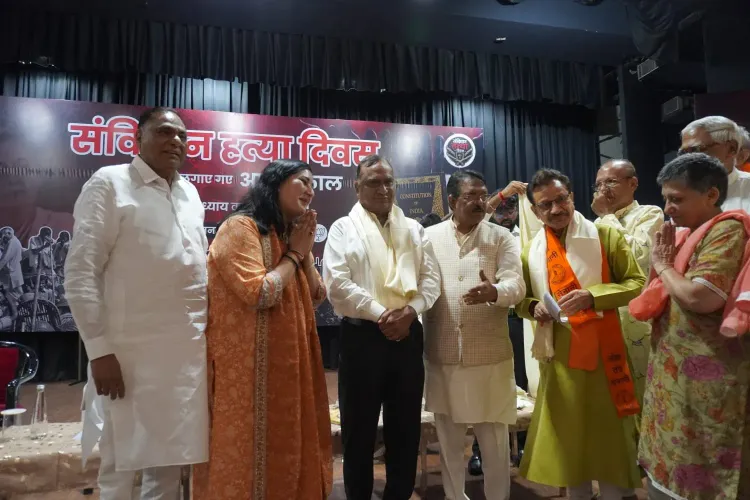
115 Loktantra Senanis (democracy warriors) were felicitated with shawls for enduring hardships during the 1975 Emergency .
Chief Minister Rekha Gupta said 140 crore citizens would never allow a repeat of the Emergency.
Former Union Minister Smriti Irani alleged that records of atrocities against women during the Emergency were removed from history.
Delhi BJP chief Harsh Malhotra said the Emergency's lesson is that an independent judiciary, free press, and aware citizens are democracy's strongest pillars.
Senior BJP MPs including Manoj Tiwari , Ramvir Singh Bidhuri , and Bansuri Swaraj attended the event.
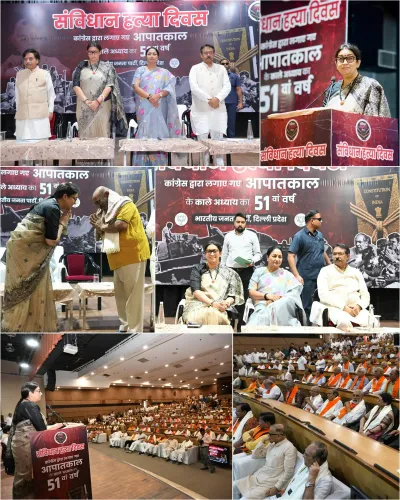
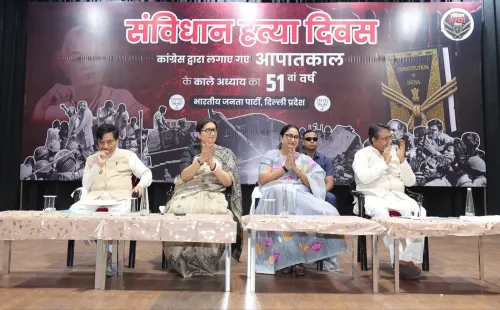
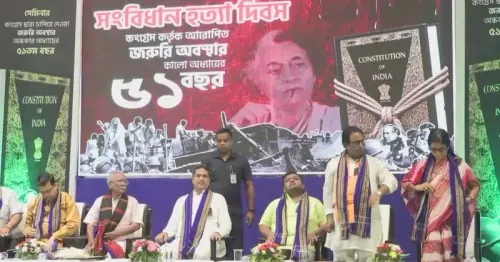
Delhi BJP on Friday, 26 June held a seminar at the NDMC Convention Centre, New Delhi, to mark Samvidhan Hatya Diwas — the anniversary of the Emergency imposed in 1975 by the then Indian National Congress government — and to felicitate 115 Loktantra Senanis (democracy warriors) who endured hardships during that period. The event was organised under the chairmanship of Delhi BJP chief Harsh Malhotra.
What Was Said at the Seminar
Delhi Chief Minister Rekha Gupta, the keynote speaker, described Samvidhan Hatya Diwas as a pivotal date in Indian history. Drawing a parallel with the Dussehra ritual, she said just as Ravana's effigy is burnt each year to mark the triumph of truth over falsehood, 25 June must be remembered so that future generations understand that 140 crore citizens will never permit a repeat of such an assault on the Constitution. She also invoked the legacies of Jayaprakash Narayan — whom she said the Congress government 'chained' but could not break — and former Prime Minister Atal Bihari Vajpayee, whose writings from prison, she argued, became the voice of lakhs of democracy warriors.
Smriti Irani on Women and Erased History
Former Union Minister Smriti Irani said the programme was specifically designed to ensure the Emergency's history is never repeated, and that young attendees were invited to hear directly from those who lived through it. She alleged that the suffering of women during the Emergency is rarely discussed and that references to atrocities against women were removed from historical records. 'Those who speak about women's rights today must answer what happened to women during that period,' she said.
Delhi BJP Chief on Democratic Pillars
Delhi BJP president Harsh Malhotra said the Emergency saw press freedom curtailed, privileges stripped, and both opposition workers and ordinary citizens subjected to hardship. He argued that remembering the day serves a dual purpose: holding accountable those responsible for past wrongs and educating a younger generation that did not witness the period. He said the Emergency's enduring lesson is that an independent judiciary, a free press, an active civil society, and aware citizens are democracy's strongest pillars, and that no government, however powerful, can override the people's final verdict.
Honourees and Attendees
The seminar was also addressed by Loktantra Senani and BJP Parliamentary Board member Satyanarayan Jatiya. Senior democracy warriors — including O.P. Babbar, Nand Kishore Garg, Lal Bihari Tiwari, P.K. Chandela, Suresh Gupta, Rambhaj, Karan Singh Tanwar, Shravan Kumar, Tilak Raj Kataria, Sanjay Bhatia, Rajan Dhingra, and Jagmal Prasad — were honoured with shawls. Members of Parliament Manoj Tiwari, Ramvir Singh Bidhuri, Bansuri Swaraj, and Delhi Minister Ashish Sood also attended. The programme was conducted by MPs Yogendra Chandolia, Dharamvir Sharma, and Devendra Solanki.
Broader Context
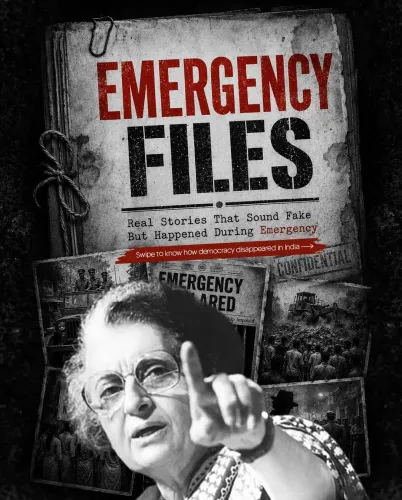
The Emergency, declared by then Prime Minister Indira Gandhi on 25 June 1975 and lifted in 1977, remains one of the most contested episodes in post-Independence Indian politics. The BJP and its ideological affiliates have consistently used its anniversary to highlight what they describe as Congress's authoritarian legacy. This year's event, with 115 Loktantra Senanis formally recognised, is among the larger such commemorations held in the capital. The naming of the day as Samvidhan Hatya Diwas — literally 'Constitution Murder Day' — was formalised as a state observance under the current dispensation.
Point of View
Not merely a party event. Honouring 115 Loktantra Senanis gives the occasion a human anchor that is harder to dismiss as political theatre. Yet the framing remains almost entirely partisan: the Congress is cast as perpetual villain, and the ruling party as democracy's custodian — a narrative that conveniently sidesteps scrutiny of present-day press freedom rankings or judicial independence concerns. Smriti Irani's allegation that women's suffering during the Emergency was deliberately erased from historical records is a serious claim that warrants documented evidence, not just assertion from a political stage.
NationPress
25 Sept 2026
Frequently Asked Questions
What is Samvidhan Hatya Diwas?
Samvidhan Hatya Diwas — meaning 'Constitution Murder Day' — is observed on 25 June to mark the anniversary of the Emergency declared by then Prime Minister Indira Gandhi in 1975. The BJP government in Delhi has formalised it as a state observance to commemorate those who resisted the suspension of civil liberties during that period.
Who are Loktantra Senanis?
Loktantra Senanis, or 'democracy warriors', are individuals who were imprisoned or faced hardships for opposing the Emergency imposed between 1975 and 1977. At the Delhi BJP seminar on 26 June, 115 such individuals were formally honoured with shawls.
What did Chief Minister Rekha Gupta say at the event?
Chief Minister Rekha Gupta said Samvidhan Hatya Diwas is a critical date in Indian history and that 140 crore citizens would never allow a repeat of the Emergency. She invoked Jayaprakash Narayan and Atal Bihari Vajpayee as symbols of resistance against authoritarian rule.
What allegation did Smriti Irani make about women during the Emergency?
Former Union Minister Smriti Irani alleged that women suffered atrocities during the Emergency and that references to this suffering were removed from historical records. She said those who champion women's rights today must account for what happened to women during that period.
Where and when was the Delhi BJP seminar held?
The seminar was held on Friday, 26 June, at the NDMC Convention Centre in New Delhi, under the chairmanship of Delhi BJP chief Harsh Malhotra.