Delhi CM Rekha Gupta pushes NCR-wide pollution strategy at 42nd NCRPB meet

Synopsis
At the 42nd NCRPB meeting, Delhi CM Rekha Gupta broke from the usual inter-state blame game on pollution and called for a single, technology-backed policy framework shared across Delhi, Haryana, UP, and Rajasthan. Whether that consensus holds beyond the meeting room is the real test.
Key Takeaways
Delhi CM Rekha Gupta addressed the 42nd NCRPB meeting on 16 June , calling for a unified NCR pollution-control strategy.
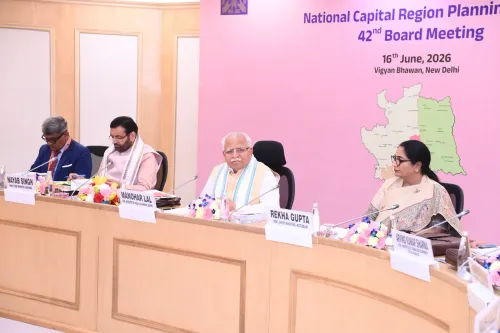
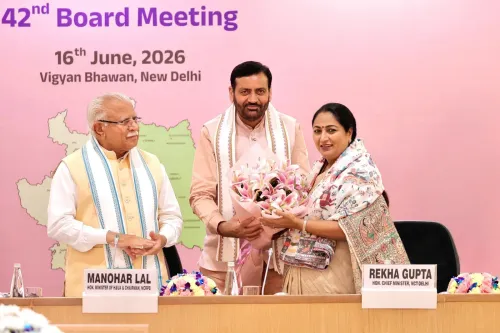
The meeting was chaired by Union Minister Manohar Lal and attended by Haryana CM Nayab Singh Saini and representatives from UP and Rajasthan .
Gupta urged all four NCR states to adopt a common policy backed by modern technology and coordinated pollution-control resources.
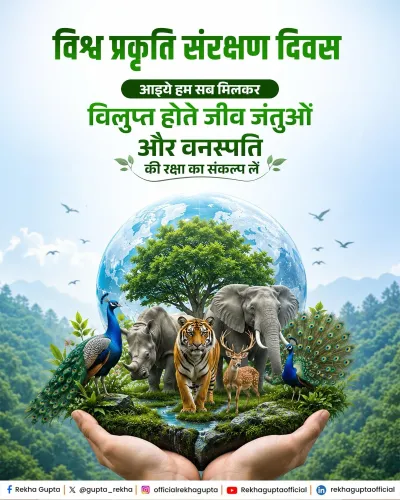
She stressed that expanding green cover is a long-term public health priority for current and future generations.
Discussions also covered regional transport , connectivity gaps, and accelerating pending development projects across the NCR.
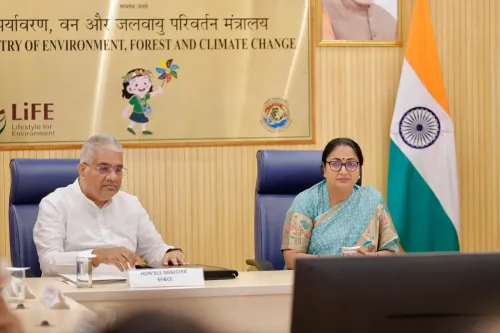
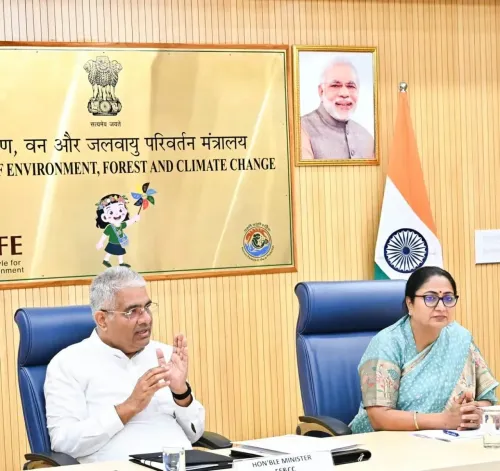
Delhi Chief Minister Rekha Gupta on Tuesday, 16 June called on all states within the National Capital Region (NCR) to adopt a unified pollution-control strategy and accelerate green cover expansion, speaking at the 42nd meeting of the National Capital Region Planning Board (NCRPB) in New Delhi. Gupta described rising pollution across the NCR as a 'serious, shared challenge' requiring concrete, long-term action from all four member states.
Key Developments at the NCRPB Meeting
The meeting was chaired by Union Minister for Housing and Urban Affairs Manohar Lal and attended by Haryana Chief Minister Nayab Singh Saini, along with senior representatives from Delhi, Haryana, Uttar Pradesh, and Rajasthan. Discussions covered institutional coordination, regional transport and connectivity, accelerated implementation of development projects, and other NCR-related priorities.
Chief Minister Gupta argued that a shared policy framework — supported by modern technology and coordinated pollution-control resources — could make the region's environmental challenge far more manageable than piecemeal, state-by-state responses.
What Gupta Said on Pollution and Green Cover
Gupta stressed that expanding green cover is not merely a present-generation concern but a long-term public health imperative. She said all four NCR states must undertake sustained, coordinated efforts rather than isolated initiatives, adding that the benefits of regional growth must reach every corner of the NCR through a unified development approach.
She also pointed out that the Delhi government continues to prioritise expansion of public facilities and infrastructure, and urged other NCR states to match that pace so that population pressure on Delhi can be eased and regional balance achieved.
On Transport, Connectivity, and Balanced Development
Gupta welcomed the ongoing expansion of transport and connectivity infrastructure across the NCR, calling it an encouraging sign. She insisted, however, that no part of the region should be left behind on connectivity, and that all states must sustain collaborative efforts to close existing gaps.
She noted that Haryana, Uttar Pradesh, and Rajasthan currently share a common governance orientation with Delhi, which she said has already improved inter-state coordination and accelerated the rollout of several development schemes. The common priority across all four states, she said, is the overall development of the NCR and better quality of life for its residents.
Why This Matters
The NCR is among the most polluted urban agglomerations in the world, with air quality breaching hazardous thresholds repeatedly during winter months. Pollution in the region is a multi-source problem — spanning vehicular emissions, industrial activity, crop stubble burning, and construction dust — that no single state can address unilaterally. The NCRPB, as the apex regional planning body, is the primary institutional mechanism for driving coordinated responses across state boundaries.
Notably, inter-state blame over pollution sources — particularly stubble burning in Haryana and Punjab — has historically complicated joint action. A formal commitment to a common policy framework, if followed through, would mark a meaningful shift in approach. The next steps from the board and the member states will determine whether Tuesday's consensus translates into enforceable, time-bound action.
Point of View
While winter air quality in the region has remained among the worst in the world. What is different this time, at least rhetorically, is Gupta's framing of political alignment across four states as an operational advantage rather than a talking point. The real accountability gap is enforcement: the NCRPB has planning authority but limited power to compel state-level action. Until the board's recommendations carry binding timelines and consequences, the risk is that Tuesday's consensus remains aspirational. The stubble-burning question — the single largest seasonal driver of NCR air pollution — was conspicuously absent from the reported agenda, which is itself a signal of how far genuine coordination still has to go.
NationPress
19 Sept 2026
Frequently Asked Questions
What was decided at the 42nd NCRPB meeting on 16 June?
The 42nd NCRPB meeting, chaired by Union Minister Manohar Lal, focused on strengthening institutional coordination among Delhi, Haryana, Uttar Pradesh, and Rajasthan on pollution control, regional transport, connectivity, and development project implementation. Delhi CM Rekha Gupta called for a unified, technology-backed pollution policy across all four NCR states.
Why is a common NCR pollution strategy important?
The NCR spans four states, and pollution sources — vehicular emissions, industrial activity, stubble burning, and construction dust — cross state boundaries. No single state can resolve the problem unilaterally, making coordinated policy the only effective long-term solution.
Who attended the 42nd NCRPB meeting?
The meeting was chaired by Union Minister for Housing and Urban Affairs Manohar Lal and attended by Haryana Chief Minister Nayab Singh Saini, Delhi Chief Minister Rekha Gupta, and senior representatives from Uttar Pradesh and Rajasthan.
What did Delhi CM Rekha Gupta say about green cover?
Gupta said expanding green cover is critical not just for the present generation but for the long-term health and future of generations to come, and urged all NCR states to treat it as a shared, sustained priority.
How does the NCRPB coordinate development across NCR states?
The National Capital Region Planning Board is the apex regional body responsible for planning and coordinating development across Delhi, Haryana, Uttar Pradesh, and Rajasthan. It facilitates joint discussions on infrastructure, transport, environment, and urban services, though its enforcement powers over individual states remain limited.