DDA issues SOP for 14 flying squads, demolition teams to curb Delhi encroachments

Synopsis
Delhi's DDA has formalised a sweeping SOP deploying 14 flying squads and 4 quick response teams to demolish unauthorised constructions within 72 hours of detection — backed by drone surveillance and real-time land monitoring. It is one of the most operationally specific anti-encroachment frameworks the agency has issued, and its real test will be consistent execution on the ground.
Key Takeaways
The Delhi Development Authority (DDA) issued an anti-encroachment SOP on 12 July following directives from Lieutenant Governor T.S.
14 Flying Squad Teams will conduct systematic field inspections across DDA zones and document violations via geo-tagged photographs .
Demolition must be completed within 72 hours of detection by a flying squad.
Four Quick Response Teams will execute demolitions and submit geo-tagged before-and-after reports by end of the same day.
The SOP integrates drone-based inspections and the Vacant Land Monitoring System (VLMS) to prevent re-encroachment.
Field officers have been assigned defined timelines and clear accountability under the revised framework.
The Delhi Development Authority (DDA) has issued a formal Standard Operating Procedure (SOP) governing 14 Flying Squad Teams and four Quick Response Teams, operationalising a zero-tolerance drive against unauthorised constructions and encroachments on government land across the capital. The move follows directives from Delhi Lieutenant Governor T.S. Sandhu, who also serves as DDA Chairperson, and was announced on Sunday, 12 July.
Key Provisions of the SOP
The SOP deploys 14 Flying Squad Teams across DDA's territorial zones to conduct systematic field inspections covering their full jurisdictions on a regular basis. The squads are tasked with identifying encroachments and unauthorised structures at an early stage, establishing land ownership and status, and documenting violations through geo-tagged photographs with date and time stamps. Reports are to be submitted immediately for enforcement action.
Critically, the SOP mandates that demolition must be carried out within 72 hours of detection by a flying squad — a hard deadline designed to prevent encroachments from consolidating before legal challenges can be mounted.
Role of Quick Response Teams
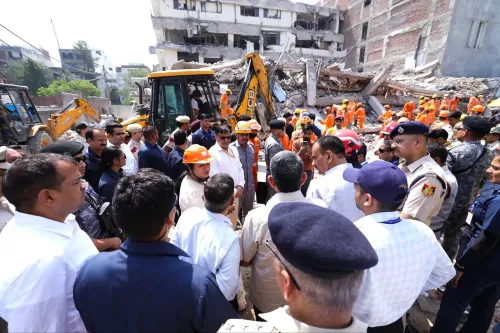
The four Quick Response Teams are responsible for prompt demolition and removal operations once violations are identified and requisite legal procedures are completed. Their obligations include submitting a demolition report with geo-tagged before-and-after photographs by the end of the same day, conducting videography of the demolition exercise wherever required, and ensuring that a DDA ownership board is fixed at the cleared site.
The dual-team structure — flying squads for detection, quick response teams for execution — is intended to compress the gap between identification and enforcement that has historically allowed encroachments to persist.
Technology Integration and Land Records
In line with L-G Sandhu's emphasis on real-time, technology-enabled monitoring, the SOP incorporates drone-based inspections wherever required. The framework also integrates field verification with the Vacant Land Monitoring System (VLMS), enabling regular updating of land records, verification of cleared plots following demolition, and continuous surveillance to prevent re-encroachment.
This digital layer is a notable departure from earlier enforcement models, which relied primarily on manual inspections and were criticised for inconsistent follow-through on cleared sites.
Accountability and Post-Demolition Monitoring
The SOP prescribes defined timelines and assigns clear responsibility to field officers, strengthening administrative accountability. After demolition, concerned field formations are required to ensure continuous monitoring and protection of the recovered land to prevent re-encroachment — a step that addresses a longstanding criticism that cleared sites were often re-occupied within weeks.
With the framework now formalised, the DDA's enforcement capacity will be tested in how consistently the 72-hour demolition window and same-day reporting obligations are met across its zones.
Point of View
Same-day photo reports, and drone integration are operational specifics that past enforcement circulars rarely committed to in writing. The real question is institutional follow-through: DDA has issued anti-encroachment directives before, and cleared sites have repeatedly been re-occupied. The VLMS integration is promising, but its effectiveness depends on data quality and whether field officers face genuine consequences for missed deadlines. L-G Sandhu's direct ownership of the initiative adds political weight, but Delhi's encroachment problem is structural — driven by land scarcity and weak tenure security — and no SOP alone resolves that.
NationPress
12 Jul 2026
Frequently Asked Questions
What is the DDA's new SOP for anti-encroachment operations in Delhi?
The DDA has issued a Standard Operating Procedure governing 14 Flying Squad Teams and four Quick Response Teams to detect and demolish unauthorised constructions and encroachments on government land. The SOP was issued on 12 July following directives from Lieutenant Governor T.S. Sandhu, who also chairs the DDA.
How quickly must demolitions happen under the new DDA rules?
The SOP mandates that demolition be carried out within 72 hours of detection by a flying squad, subject to completion of requisite legal procedures. Quick Response Teams must also submit geo-tagged before-and-after demolition reports by the end of the same day.
What technology will DDA use to enforce the anti-encroachment drive?
The DDA will use drone-based inspections for field surveillance and integrate findings with the Vacant Land Monitoring System (VLMS) to update land records, verify cleared plots, and monitor sites to prevent re-encroachment.
Who ordered the DDA's anti-encroachment crackdown?
Delhi Lieutenant Governor T.S. Sandhu, who also serves as DDA Chairperson, issued directives for zero-tolerance against encroachments. The SOP gives operational effect to those instructions by formalising team structures, timelines, and accountability for field officers.
How will DDA prevent re-encroachment after demolitions?
After demolition, field formations are required to ensure continuous monitoring and protection of recovered land. A DDA ownership board must be fixed at each cleared site, and the Vacant Land Monitoring System will track the plots to flag any fresh encroachment attempts.