Delhi University garbage dump turned RRR Centre and selfie point under Swachh Bharat Mission
Synopsis
A Delhi University garbage dump repurposed into a selfie point and recycling hub using only discarded tyres and old bricks — the MCD's Patel Chest makeover is a small but telling signal of how Swachh Bharat Mission-Urban 2.0 is trying to shift urban India's relationship with waste, one abandoned Dhalao Ghar at a time.
Key Takeaways
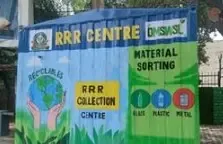
The former Dhalao Ghar at Delhi University's Patel Chest area in north Delhi has been converted into an RRR (Reduce, Reuse, Recycle) Centre and selfie point.
The makeover was carried out by the Municipal Corporation of Delhi (MCD) and Delhi MSW Solutions Ltd (DMSWSL) under Swachh Bharat Mission-Urban 2.0 .
The site was rebuilt using 45 discarded tyres and more than 3,000 used bricks — no new construction materials were reportedly used.
The RRR Centre accepts donations of clothes, books, toys, and e-waste for reuse, refurbishment, and recycling.
Officials described the project as a 'living lesson in the circular economy,' and a potential model for replicating across other waste sites in Delhi.
A former community garbage dump in Delhi University's Patel Chest area in north Delhi has been converted into an RRR (Reduce, Reuse, Recycle) Centre and selfie point by the Municipal Corporation of Delhi (MCD) under Swachh Bharat Mission-Urban 2.0, overseen by the Union Ministry of Housing and Urban Affairs. The transformation, confirmed by an official on Monday, 16 November, marks one of the more visible on-ground outcomes of the urban sanitation programme in the capital.
From Dhalao Ghar to Public Landmark
The erstwhile Dhalao Ghar — a designated waste collection site long associated with litter and neighbourhood complaints — has been reimagined through a collaboration between the MCD's Civil Lines Zone and its licensed waste management partner, Delhi MSW Solutions Ltd (DMSWSL). The makeover relied on 45 discarded tyres and more than 3,000 used bricks, materials sourced from waste streams, to construct colourful public installations.
Notably, no new construction material was reportedly procured for the aesthetic overhaul — a deliberate choice that reinforces the circular-economy premise at the heart of the project.
What the RRR Centre Does
Beyond aesthetics, the site now functions as an active resource-recovery hub. Citizens can donate unused clothes, books, toys, and e-waste at the RRR Centre, where these items are redirected toward reuse, refurbishment, and responsible recycling rather than ending up in landfills.
The dual function — a photogenic selfie point alongside a material-collection node — is intended to draw foot traffic from the adjacent university community and convert casual visitors into participants in waste reduction. According to officials, students who once avoided the site now stop to engage with it.
Government's Circular Economy Pitch
A Ministry official described the transformation as 'more than a facelift,' calling it 'a living lesson in the circular economy, where waste is not an end point but the beginning of something new.' The language reflects a broader government push to frame Swachh Bharat Mission-Urban 2.0 not merely as a cleanliness drive but as a behavioural and infrastructural shift toward sustainable urban waste management.
This comes amid persistent challenges in Delhi's solid waste management ecosystem, where landfill sites such as Ghazipur and Bhalswa continue to operate beyond capacity. Micro-interventions of this kind are increasingly positioned by the Centre as scalable models for neighbourhood-level waste diversion.
Significance for Swachh Bharat Mission-Urban 2.0
Launched in 2021, Swachh Bharat Mission-Urban 2.0 targets complete waste segregation at source, zero waste to landfill, and the elimination of legacy dump sites across urban India. The Patel Chest project, while small in scale, is being cited by officials as a demonstration that existing infrastructure — even abandoned waste collection points — can be repurposed without significant expenditure.
Whether this model is replicated across MCD's remaining Dhalao Ghars in Delhi will be a measure of the programme's on-ground ambition beyond its showcase pilots.
Point of View
But the gap between showcase pilot and systemic change in Delhi's solid waste infrastructure remains vast. The city's legacy landfills at Ghazipur and Bhalswa continue to tower over any feel-good transformation. The real question Swachh Bharat Mission-Urban 2.0 must answer is not whether one Dhalao Ghar can be turned into a selfie point — it clearly can — but whether the programme has the execution bandwidth to replicate this across hundreds of such sites. Without scale, these projects risk becoming photo opportunities rather than policy outcomes.
NationPress
16 Nov 2026
Frequently Asked Questions
What has been built at the Patel Chest area in Delhi University?
A former community garbage dump at Patel Chest in Delhi University's north Delhi campus has been converted into an RRR (Reduce, Reuse, Recycle) Centre and a selfie point. The site was rebuilt using 45 discarded tyres and over 3,000 used bricks under Swachh Bharat Mission-Urban 2.0.
Which agency carried out the transformation of the Delhi University garbage dump?
The Municipal Corporation of Delhi (MCD), through its Civil Lines Zone and licensed waste management partner Delhi MSW Solutions Ltd (DMSWSL), led the transformation. It was implemented under the Union Ministry of Housing and Urban Affairs' Swachh Bharat Mission-Urban 2.0.
What is the RRR Centre and what does it do?
The RRR Centre stands for Reduce, Reuse, Recycle. It is a drop-off hub where citizens can donate unused clothes, books, toys, and e-waste, which are then redirected toward reuse, refurbishment, and responsible recycling rather than being sent to landfills.
What is Swachh Bharat Mission-Urban 2.0?
Swachh Bharat Mission-Urban 2.0 is a central government programme launched in 2021 targeting complete waste segregation at source, zero waste to landfill, and the elimination of legacy dump sites across urban India. It is overseen by the Union Ministry of Housing and Urban Affairs.
Why does this transformation matter beyond Delhi University?
Officials are positioning the Patel Chest project as a scalable model for repurposing abandoned waste collection points across Delhi and other cities with minimal expenditure. It is intended to demonstrate how circular-economy principles can be applied at a neighbourhood level within existing urban infrastructure.