Delhi Fire Service Amendment Rules 2026: Buildings get stricter safety norms

Synopsis
Delhi has notified the Fire Service (Amendment) Rules, 2026, directly embedding fire safety mandates — including 6-metre engine access routes, sprinklers, and continuous monitoring — into the city's Unified Building Bye-Laws. It is a structural shift from the city's historically fragmented compliance regime, arriving after years of high-casualty building fires.
Key Takeaways
Delhi government notified the Delhi Fire Service (Amendment) Rules, 2026 on 29 August 2026 , issued by Lieutenant Governor T.S.
Sandhu under the Delhi Fire Service Act, 2007.
New rules mandate 6-metre clear access routes for fire engines, sprinkler systems , automated continuous monitoring , and dedicated emergency power backups across all buildings.
A standardised auditor inspection checklist has been introduced to enforce compliance transparency.
Fire safety standards are now directly aligned with the Unified Building Bye-Laws (UBBL) , integrating them into the building approval process.
Chief Minister Rekha Gupta announced 'Sewa Pakhwada' from 17 September to 2 October , with flagship project Barapullah Elevated Road Phase-III (₹ 1,635 crore ) set for inauguration.
The Delhi government has officially notified the Delhi Fire Service (Amendment) Rules, 2026, bringing building fire safety standards in the national capital in direct alignment with the revised Unified Building Bye-Laws (UBBL), according to an official statement issued on Saturday, 29 August 2026. The rules were issued by Lieutenant Governor T.S. Sandhu under the Delhi Fire Service Act, 2007.
What the New Rules Mandate
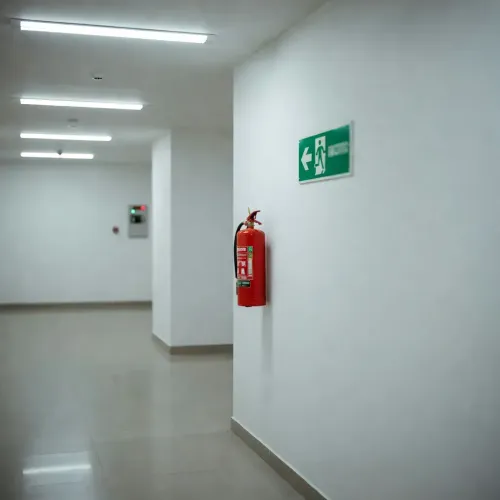
The amended rules introduce a set of mandatory safety requirements applicable across all buildings in Delhi. These include a minimum 6-metre clear access route for fire engines, automated continuous monitoring systems, sprinkler systems, and dedicated emergency power backups. A standardised auditor inspection checklist has also been introduced to ensure transparency and accountability in compliance.
The rules mark a structural shift from earlier guidelines by directly tying fire safety norms to the UBBL — a unified framework that governs construction standards across the city — rather than maintaining a parallel and sometimes inconsistent set of requirements.
What Delhi Home Minister Said
Delhi Home Minister Ashish Sood said the notification reflects the government's commitment to citizen safety. 'The safety and security of every citizen of Delhi is our government's topmost priority. By notifying the Delhi Fire Service (Amendment) Rules, 2026, we are aligning our fire safety standards directly with the Unified Building Bye-Laws,' he said.
Sood added that the revised rules 'enforce modern, mandatory safety measures across all buildings' and that 'a standardised auditor inspection checklist will bring complete transparency and accountability to safety compliance.'
Why This Matters
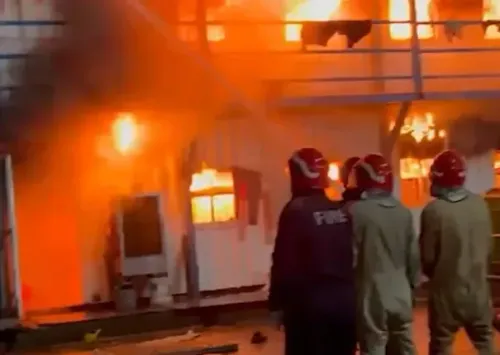
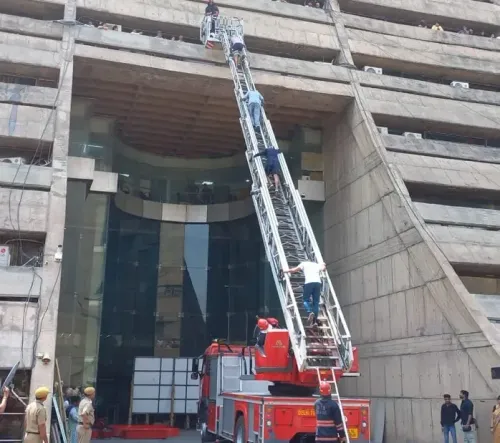
Delhi has witnessed several high-casualty fire incidents in recent years, many of which exposed gaps in building safety compliance — from inadequate fire exits to blocked access lanes and absent suppression systems. This amendment attempts to close those gaps by codifying specific, enforceable standards rather than relying on general compliance language. Notably, the integration with UBBL means that fire safety requirements will now be embedded in the building approval process itself, not treated as a separate post-construction checklist.
Sewa Pakhwada: Delhi's Infrastructure Push
Separately, Chief Minister Rekha Gupta announced that the Delhi government will observe 'Sewa Pakhwada' from 17 September to 2 October, coinciding with the birthday of Prime Minister Narendra Modi. During this fortnight, the government plans to inaugurate a series of completed infrastructure and civic projects across transport, roads, sewerage, water treatment, education, power, and urban beautification.
The centrepiece of the Sewa Pakhwada inaugurations is the Barapullah Elevated Road (Phase-III), constructed at a cost of approximately ₹1,635 crore. Water infrastructure projects include a 2-MGD recycling plant at the existing 20-MGD Water Treatment Plant in Bawana, a 564-MLD Wastewater Treatment Plant at Okhla, and an interceptor sewer from Barapullah Drain to Batla House Phase-II SPS. A 35-MGD Sewage Pumping Station at Batla House Phase-II and associated rising mains to the Okhla plant are also included.
In the education sector, a permanent Ground plus 3 floors school building in Sector-16, Dwarka (costing ₹38.44 crore), 68 SPS classrooms in East Vinod Nagar (₹38.30 crore), and 76 SPS classrooms in Sector-41, Rohini (₹66.28 crore) are slated for inauguration. Civic amenity projects include a public toilet in AP Block, Shalimar Bagh and beautification of roundabouts at Filmistan, Jhandewalan, and Veer Chandra Garhwali Chowk. Transport additions include a new ATS at Burari and a four-lane ATS at Tehkhand.
The pace of project completions and their formal dedication during Sewa Pakhwada will be closely watched as a gauge of the Delhi government's delivery record ahead of the next electoral cycle.
Point of View
But its credibility will depend entirely on whether inspectors are independent of the builders they audit, a detail the notification does not yet clarify. The bundling of fire safety reform with Sewa Pakhwada infrastructure announcements risks diluting the policy signal — one is a regulatory mandate with life-safety implications, the other is a political calendar event. They deserve separate attention.
NationPress
29 Aug 2026
Frequently Asked Questions
What are the Delhi Fire Service (Amendment) Rules, 2026?
The Delhi Fire Service (Amendment) Rules, 2026 are updated fire safety regulations notified by the Delhi government on 29 August 2026, aligning building fire safety standards with the Unified Building Bye-Laws (UBBL). They were issued by Lieutenant Governor T.S. Sandhu under the Delhi Fire Service Act, 2007.
What new safety requirements do the amended rules introduce?
The rules make it mandatory for all buildings in Delhi to have a minimum 6-metre clear access route for fire engines, automated continuous monitoring systems, sprinkler systems, and dedicated emergency power backups. A standardised auditor inspection checklist has also been introduced to ensure accountability.
Why are these amendments significant for Delhi?
By integrating fire safety norms directly into the Unified Building Bye-Laws, the amendments embed compliance into the building approval process rather than treating it as a separate post-construction requirement. This addresses a longstanding gap that critics say contributed to fire casualties in non-compliant buildings.
What is Sewa Pakhwada and what projects will be inaugurated?
Sewa Pakhwada is a fortnight of public service and project inaugurations announced by Chief Minister Rekha Gupta, running from 17 September to 2 October 2026. Key projects include the Barapullah Elevated Road Phase-III (₹1,635 crore), a 564-MLD Wastewater Treatment Plant at Okhla, new school buildings in Dwarka and Rohini, and transport facilities at Burari and Tehkhand.
Who issued the Delhi Fire Service Amendment Rules 2026?
The rules were issued by Lieutenant Governor T.S. Sandhu under the Delhi Fire Service Act, 2007, and were announced publicly by Delhi Home Minister Ashish Sood on 29 August 2026.