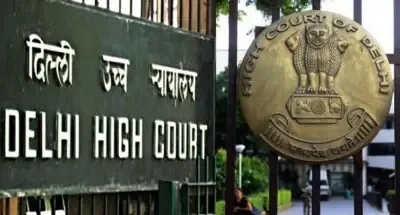
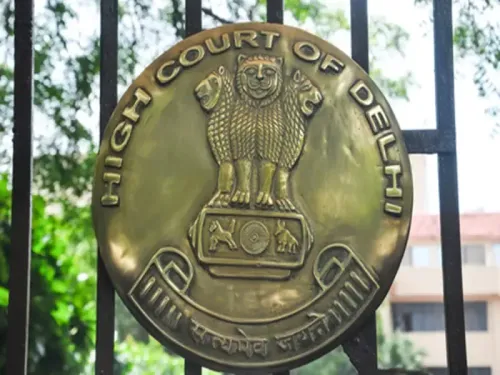
Delhi High Court Exonerates Two Men in Murder Case Over Flawed Eyewitness Testimony

Synopsis
In a landmark decision, the Delhi High Court has overturned the life imprisonment sentences of two men convicted of murder. The court's ruling hinges on the unreliability of the sole eyewitness, whose inconsistent testimony could not support the prosecution's case.
Key Takeaways
Two men acquitted by the Delhi High Court due to unreliable eyewitness testimony.
The prosecution failed to provide evidence beyond reasonable doubt.
The court highlighted serious inconsistencies in the eyewitness's account.
The ruling raises questions about the integrity of eyewitness testimony in legal proceedings.
Judicial decisions must be based on solid and credible evidence.
New Delhi, March 30 (NationPress) – In a significant ruling, the Delhi High Court has cleared two individuals previously sentenced to life imprisonment for murder, asserting that the case against them relied on an untrustworthy single eyewitness whose account was riddled with critical inconsistencies and lacked credibility.
A bench comprising Justices Prathiba M. Singh and Madhu Jain upheld the appeals brought forth by Virender alias Bablu and Vikas alias Tinku, who had been convicted by a Rohini court under Sections 302/34 of the Indian Penal Code (IPC).
Virender was additionally convicted under Sections 25/27 of the Arms Act.
In overturning the verdict, the Delhi High Court noted that the prosecution had failed to establish the charges against the Appellants beyond a reasonable doubt and ordered their immediate release.
The prosecution's narrative depicted the victim being assaulted by two individuals on a motorcycle, with the pillion rider allegedly shooting at him from close range, resulting in fatal cranio-cerebral injuries.
The trial court's judgment hinged largely on the testimony of a lone eyewitness, who claimed to have witnessed the accused firing at the victim while on a motorcycle.
However, the Delhi High Court identified serious flaws in the eyewitness's statement, commenting that his behavior was inconsistent with common human actions.
“A meticulous and independent examination of PW-18’s testimony uncovers significant inconsistencies, improbabilities, and behavior that contradicts normal human conduct, raising doubts about PW-18's presence at the incident,” the bench led by Justice Singh remarked.
The ruling indicated that while PW-18 asserted he transported the injured party to the hospital and stayed with him, another critical witness (PW-12), who was also present, did not recognize PW-18’s presence.
The Delhi High Court further questioned the identification of the accused, emphasizing that the eyewitness claimed to have recognized them coincidentally in the court premises, without any preceding Test Identification Parade (TIP).
“The identification of the accused in police custody, without any prior TIP, and by mere coincidence in the court complex, raises substantial doubts regarding the reliability of this segment of the prosecution's argument,” it stated.
The bench also criticized the prosecution’s supposed motive, noting that despite claims of a financial dispute, no prior complaint had been lodged, raising concerns about the seriousness of the alleged threat.
Reiterating established tenets of criminal law, the Delhi High Court asserted that mere suspicion cannot replace solid proof, and a conviction based solely on one eyewitness necessitates that their testimony be entirely reliable.
“In this Court’s considered view, the prosecution's case is fundamentally based on the testimony of PW-18, which is inconsistent and untrustworthy. His account lacks assurance and cannot serve as the exclusive basis for a conviction,” the judgment stated.
Consequently, the Delhi High Court granted the appeals, nullified the convictions and sentences, acquitted both defendants of all charges, and ordered their immediate release unless they were required in another matter.
Point of View
It is essential to recognize the judiciary's role in safeguarding justice. The Delhi High Court's decision to acquit the accused underscores the importance of reliable evidence in criminal cases and the potential ramifications of flawed eyewitness testimonies on the legal system.
NationPress
3 Oct 2026
Frequently Asked Questions
What led to the acquittal of the two men?
The Delhi High Court acquitted them due to the unreliability of a single eyewitness whose testimony was inconsistent and did not inspire confidence.
What was the original sentence given to the accused?
The two men were originally sentenced to life imprisonment for murder by a Rohini court.
What did the High Court say about the eyewitness testimony?
The High Court found serious inconsistencies in the eyewitness's account and deemed it untrustworthy as the sole basis for conviction.
Was there any motive established for the murder?
The court noted that while a monetary dispute was mentioned, no prior complaints were filed, weakening the prosecution's motive.
What is the significance of this ruling?
This ruling emphasizes the necessity for reliable evidence in criminal cases and highlights the potential dangers of relying solely on eyewitness accounts.