Delhi HC Frees Three Men from 2013 Gang-Rape Conviction Amid Inconsistent Testimony
Synopsis
In a shocking turn of events, the Delhi High Court acquitted three men convicted for gang-rape in 2013, citing significant inconsistencies in the victim's testimony and insufficient evidence from the prosecution. This ruling raises critical questions about the integrity of legal proceedings in sexual assault cases.
Key Takeaways
The Delhi High Court overturned a 2017 conviction for gang-rape.
The victim's inconsistent testimony was pivotal in the ruling.
The Court emphasized the prosecution's burden to prove charges beyond reasonable doubt.
Expert opinions cannot substitute for clear evidence in legal cases.
The case raises critical questions about consent in sexual assault allegations.
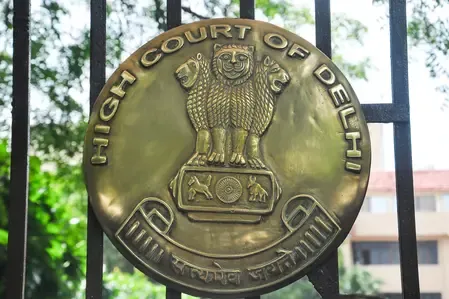
New Delhi, March 11 (NationPress) The Delhi High Court has cleared three men of their 20-year rigorous imprisonment sentence for gang-rape, stating that the prosecutrix's testimony was inconsistent on critical details and that the prosecution failed to establish the case beyond a reasonable doubt. A single-judge bench, led by Justice Chandrasekharan Sudha, ruled in favor of Anwar, Sandeep, and Anish Kumar, overturning a 2017 trial court decision that convicted them under Section 376D (gang-rape) of the Indian Penal Code (IPC).
Justice Sudha emphasized, "In criminal law, if multiple interpretations exist, the one favoring the accused should prevail. Here, the evidence does not rule out the possibility of consensual intercourse. The prosecution has not convincingly demonstrated the crime as defined under Section 376D IPC." The prosecution alleged that on May 31, 2013, the victim was abducted from her home to an external washroom, then forced into a vehicle and taken to a warehouse where she was sexually assaulted.
In July 2017, the Additional Sessions Judge at Tis Hazari found the three men guilty under Section 376D IPC, sentencing them to 20 years of rigorous imprisonment and imposing a fine of Rs 25,000 each. They were acquitted of charges under Section 366 IPC.
Responding to their conviction, the accused appealed to the Delhi High Court under Section 374 of the Code of Criminal Procedure (CrPC). In its comprehensive ruling, the High Court observed that the prosecutrix provided multiple, contradictory accounts throughout various stages, including the FIR, her Section 164 CrPC statement, and her testimonies in court.
Justice Sudha pointed out, "An analysis of the statements from PW11, starting from the initial FIR to her court testimony, reveals significant and material inconsistencies. These are not trivial discrepancies but crucial variations that impact the witness's credibility, particularly regarding the essential issue of consent."
During cross-examination, the victim acknowledged her friendship with one of the accused and admitted to having previously engaged in consensual relations with him, expressing that her complaint was motivated by concerns about her father.
The Delhi High Court also scrutinized the medical and forensic evidence associated with the case. While the forensic analysis confirmed the presence of the accused's DNA on the victim's underwear, Justice Sudha ruled that expert testimony alone cannot definitively establish guilt.
"Expert evidence is inherently opinion-based and cannot serve as conclusive proof, especially since scientific evidence cannot replace the need for proof of consent when the victim is an adult," the Court stated. The medical examination noted no signs of external or internal injuries indicative of force, a critical factor in a case of alleged gang rape when the victim's testimony is inconsistent.
In overturning the conviction and sentence, the Delhi High Court acquitted all three defendants of the charge under Section 376D IPC and ordered their immediate release. "The appeals are granted, and the contested conviction and sentence are nullified. The appellants are exonerated under Section 235(1) Cr.P.C. for the charge under Section 376D IPC," the ruling concluded.
Point of View
As the Delhi High Court's decision reveals potential flaws in the prosecution's approach. It serves as a reminder of the delicate balance between justice for victims and the rights of the accused, emphasizing the need for thorough investigations.
NationPress
16 Oct 2026
Frequently Asked Questions
What was the basis of the Delhi High Court's ruling?
The Delhi High Court acquitted the three men due to inconsistencies in the victim's testimony and the prosecution's failure to prove the charges beyond a reasonable doubt.
What were the charges against the accused?
The accused were charged under Section 376D IPC for gang-rape but were acquitted due to lack of credible evidence.
When did the incident occur?
The incident took place on May 31, 2013.
What did the Court say about expert evidence?
The Court noted that expert evidence, including forensic reports, cannot solely determine guilt as it is opinion-based and must be supported by other evidence.
What happened to the original sentence?
The original sentence of 20 years' rigorous imprisonment was overturned, and the accused were released.