Did the Delhi HC Dismiss the Plea Against CSAT Questions in the Civil Services Exam 2023?
Synopsis
In a recent ruling, the Delhi High Court upheld the validity of the Civil Services (Preliminary) Examination, 2023, after dismissing a plea from unsuccessful candidates regarding the CSAT questions. This decision emphasizes the court's stance on academic matters and the authority of subject experts.
Key Takeaways
Delhi High Court dismissed a writ petition challenging CSAT questions.
The court ruled that it cannot override expert opinions.
Judicial review is limited in matters of competitive examinations.
Selected candidates were not included in the petition.
UPSC's Expert Committee confirmed all questions were within the syllabus.
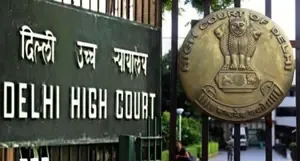
New Delhi, Feb 5 (NationPress) The Delhi High Court has rejected a writ petition submitted by unsuccessful candidates of the civil services contest, who challenged specific questions in the Civil Services (Preliminary) Examination, 2023, particularly in Paper-II (CSAT). The court ruled that it cannot intervene in academic matters or question the decisions of subject experts in the absence of clear evidence of arbitrariness or illegality.
A bench consisting of Justices Amit Mahajan and Anil Kshetarpal upheld the Central Administrative Tribunal's (CAT) previous ruling, which denied the candidates’ claims that approximately 11 questions in the Civil Service Aptitude Test (CSAT) were outside the defined syllabus.
Justice Mahajan stated, "Judicial review in competitive examination matters is limited. The court does not have the authority to override the decisions of examining bodies or replace expert opinions with its own."
The petitioners, who did not succeed in the Civil Services (Preliminary) Examination 2023, argued that the contested questions were sourced from Class XI and XII NCERT syllabi, despite the examination guidelines indicating that CSAT questions should be at a Class X level.
They claimed that the presence of such questions created an unfair competitive environment, jeopardizing the integrity of the selection process.
The Delhi High Court dismissed this argument, highlighting that the Union Public Service Commission (UPSC) had presented a report from an Expert Committee that confirmed all questioned items were compliant with the syllabus and that the mathematical questions adhered to the Class X standard.
"When experts, who possess the requisite expertise, assert that the questions comply with the syllabus and find no merit in the objections, the foundation for any compensatory or corrective measures is non-existent," the bench remarked, indicating its inability to reassess the nature or quality of the questions.
Furthermore, the court asserted that mere disagreement with expert evaluations, "in the absence of proven errors or inconsistencies, does not justify judicial intervention."
Besides the substantive issues, the Delhi High Court acknowledged the preliminary objection regarding the non-inclusion of necessary parties, emphasizing that the requested reliefs, such as the creation of a revised merit list or new examinations, would impact candidates who had already been selected and were not part of the case.
"None of the successful candidates were included in the proceedings. It is established that no adverse decision can be made affecting an individual's rights without offering them an opportunity to be heard," it noted.
Given that the entire Civil Services Examination 2023 process is concluded and subsequent examinations have already taken place, the Delhi High Court determined that it would not utilize its writ jurisdiction to provide "irrelevant relief" in large-scale public examinations. As a result, the court dismissed the writ petition and resolved all pending applications.
Point of View
The dismissal of the writ petition by the Delhi High Court underscores the importance of respecting academic integrity and the expertise of subject specialists. This ruling not only reaffirms the authority of examination bodies but also highlights the need for candidates to align their preparations with established syllabi.
NationPress
28 Aug 2026
Frequently Asked Questions
What was the main issue in the Delhi High Court's ruling?
The main issue was the challenge to certain questions in the Civil Services (Preliminary) Examination, 2023, specifically in Paper-II (CSAT), which candidates claimed were beyond the prescribed syllabus.
What did the Delhi High Court conclude regarding the CSAT questions?
The Delhi High Court concluded that the questioned items were within the prescribed syllabus and upheld the findings of the Expert Committee appointed by the UPSC.
What was the court's stance on judicial intervention in academic matters?
The court maintained that it cannot intervene in academic matters or question the decisions of subject matter experts unless clear evidence of arbitrariness or illegality is presented.
Why were selected candidates not included in the writ petition?
The court noted that none of the selected candidates were impleaded in the case, which could affect their rights without giving them a chance to be heard.
What implications does this ruling have for future exams?
This ruling sets a precedent that reinforces the authority of examination bodies and emphasizes the importance of adhering to official syllabi.