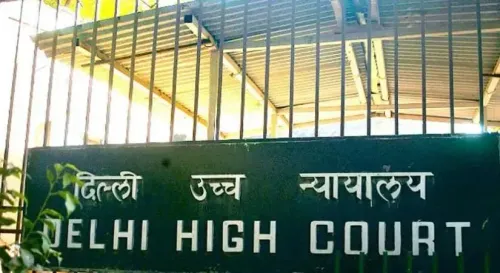
Delhi High Court Denies Age Relaxation for EWS Candidates in Civil Services Exam
Synopsis
The Delhi High Court has ruled against a plea from EWS candidates seeking age relaxation and extra attempts in the Civil Services Examination, affirming the distinct status of EWS compared to SC/ST/OBC categories.
Key Takeaways
Delhi High Court rejects EWS candidates' plea for age relaxation.
Policy decisions regarding age concessions lie within the executive's domain.
EWS category established through the 103rd Constitutional Amendment is distinct.
Economic disadvantage differs fundamentally from caste-based discrimination.
Similar petitions have faced dismissal in the past.
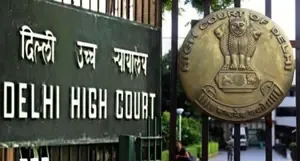
New Delhi, April 17 (NationPress) The Delhi High Court has rejected a petition from candidates in the Economically Weaker Sections (EWS) who sought age relaxation and extra attempts in the Civil Services Examination, similar to the privileges granted to Scheduled Castes (SC), Scheduled Tribes (ST), and Other Backward Classes (OBC).
A Division Bench comprising Justices Anil Kshetrapal and Amit Mahajan affirmed that the government's decision not to provide such relaxations to EWS candidates does not reflect arbitrariness or violate constitutional norms, thus remaining beyond judicial scrutiny.
The petitioners contested the Department of Personnel and Training (DoPT) Office Memorandum from January 31, 2019, the 2022 FAQs, and the Civil Services Examination (CSE) 2024 notification released by the Union Public Service Commission (UPSC). They argued that the lack of age and attempt relaxations for EWS candidates infringes upon Articles 14 and 16 of the Constitution.
They requested that EWS candidates receive the same benefits as SC/ST/OBC candidates for direct recruitment to government positions.
In dismissing the petition, the Delhi High Court stated that decisions regarding age and attempt relaxations are matters of policy, which fall under the purview of the executive and legislature.
“It is crucial to understand that while exercising jurisdiction under Article 226 of the Constitution, courts do not create laws or formulate policies, which is the responsibility of the legislature and executive,” observed the Justice Kshetrapal-led Bench.
It further clarified that judicial review in these cases is restricted to determining whether a policy infringes upon fundamental rights or is blatantly arbitrary, rather than assessing its wisdom or fairness. “The Executive is tasked with the formulation and execution of policies. Subjecting such policy choices to judicial substitution simply because a different perspective appears more sensible or just would violate the principle of separation of powers,” the Delhi High Court remarked.
On the issue of equality, the Justice Kshetrapal-led Bench pointed out that the EWS category, established by the 103rd Constitutional Amendment in 2019, exists on a different basis compared to SC/ST/OBC categories. “The difficulties faced by individuals in this category stem from insufficient financial resources, not from social stigma or historical exclusion,” it stated.
Conversely, the Delhi High Court noted that SC, ST, and OBC categories are grounded in “deep-rooted social and educational backwardness” stemming from caste-based discrimination.
The ruling highlighted that economic disadvantage is inherently changeable over time, in contrast to caste, which is ascribed at birth and carries enduring social implications. “Since the challenges encountered by socially backward and economically disadvantaged classes differ, varying ancillary concessions and relaxations can be extended to both categories,” asserted the Justice Kshetrapal-led Bench.
It also indicated that EWS candidates cannot automatically demand equal treatment with SC/ST/OBC candidates regarding age relaxation or number of attempts. The Delhi High Court further dismissed the argument that certain states and Union Territories, including Jammu and Kashmir, have extended such relaxations to EWS candidates.
“No parity claim can be upheld between policies established by the Union and those adopted by individual States or Union Territories,” stated the Justice Kshetrapal-led Bench, adding that service conditions lie within the exclusive jurisdiction of the respective recruiting bodies.
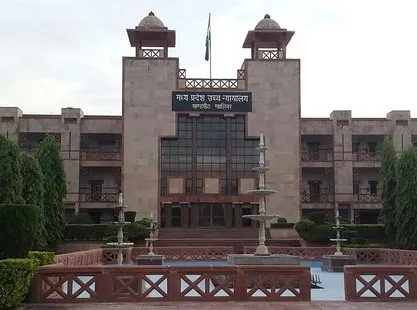
The court acknowledged that similar petitions had been previously dismissed by both the Delhi High Court and the Madhya Pradesh High Court.
Concluding that the petitioners did not prove any violation of constitutional or statutory provisions, the Delhi HC refrained from intervening in the current policy framework.
“Under these circumstances, the challenged policy decision lies entirely outside the permissible scope of judicial review and requires no intervention,” the Justice Kshetrapal-led Bench stated, dismissing the petition.
Point of View
It's crucial to recognize the nuanced legal landscape surrounding age relaxations in civil services. The court's decision is a pivotal moment that underscores the distinction between economic disadvantage and caste-based discrimination, shaping future policy discussions.
NationPress
23 Sept 2026
Frequently Asked Questions
What was the Delhi High Court's ruling regarding EWS candidates?
The court dismissed the plea for age relaxation and additional attempts in the Civil Services Examination for EWS candidates, affirming that such decisions fall under executive policy.
Why were the age relaxations denied to EWS candidates?
The court stated that the EWS category, established by the 103rd Constitutional Amendment, stands on a different footing compared to SC/ST/OBC categories, which are rooted in historical discrimination.
Can EWS candidates claim the same benefits as SC/ST/OBC candidates?
The court ruled that EWS candidates cannot automatically claim parity with SC/ST/OBC candidates regarding age relaxation or number of attempts.
What are the implications of this ruling?
The ruling reinforces the distinction between economic and social disadvantages, affecting future policy formulations regarding recruitment in government services.
Have similar pleas been rejected before?
Yes, similar petitions have been dismissed by both the Delhi High Court and the Madhya Pradesh High Court.