Delhi HC dismisses plea to raise GREF, BRO doctors' retirement age to 65
Synopsis
The Delhi High Court has refused to raise the retirement age of GREF and BRO doctors to 65, ruling it is purely an executive policy call. The verdict highlights a persistent disparity — doctors in CAPFs and Railways already retire at 65, while BRO medical officers remain capped at 60, with the Centre citing high-altitude operational constraints as justification.
Key Takeaways
The Delhi High Court dismissed a petition on 6 May seeking to raise the retirement age of GREF/BRO doctors from 60 to 65 years .
The division bench of Justice V.
Kameswar Rao and Justice Manmeet Pritam Singh Arora held that superannuation age is a policy matter within the executive domain.
The petition was filed by Dr R.D.
Thakur , challenging the Ministry of Defence's 3 July 2023 order rejecting the demand.
Doctors in CAPFs and Indian Railways already retire at 65 years , creating a parity gap the petitioner cited as unconstitutional.
The Centre argued that BRO's high-altitude, remote postings require physical fitness standards incompatible with an extended retirement age.
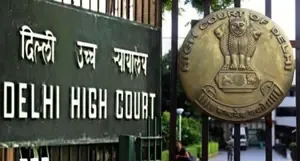
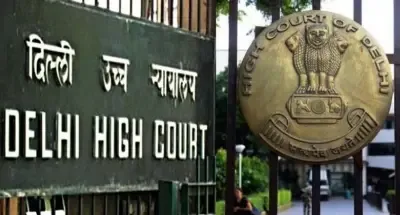
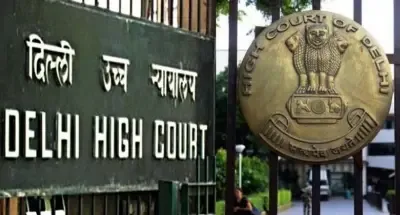
The Delhi High Court on 6 May dismissed a petition seeking to raise the retirement age of doctors and medical officers serving in the General Reserve Engineering Force (GREF) and Border Roads Organisation (BRO) from 60 years to 65 years, ruling that the fixation of superannuation age is a policy matter squarely within the executive domain and not subject to judicial override.
What the Court Ruled
A division bench comprising Justice V. Kameswar Rao and Justice Manmeet Pritam Singh Arora declined to interfere with the Ministry of Defence's 3 July 2023 order rejecting the demand for retirement age enhancement. The bench held that it must be presumed the executive had "weighed all the pros and cons" before declining the extension, and that courts should be "slow and circumspect" in granting relief relating to continuation in service.
"The age of retirement is purely a policy matter which lies within the domain of the executive and it is not for the Courts to prescribe a different age of retirement from one applicable to government employees under relevant rules and regulations," the bench stated.
Background and the Petition
The plea was filed by Dr R.D. Thakur, a Medical Officer in GREF/BRO, challenging the Ministry of Defence's refusal to extend the superannuation age. Petitioner's counsel Ankur Chhibber argued that doctors across nearly all other Central government organisations — including Central Armed Police Forces (CAPFs) and Indian Railways — have already been granted retirement up to 65 years, and that denying similar treatment to GREF/BRO doctors amounted to a violation of the right to equality under the Constitution.
The petitioner further contended that the reasons cited by the authorities for rejecting the proposal were "totally frivolous" and did not withstand scrutiny. It was also argued that even low medical category officers are considered fit for service below certain altitudes, and that no Medical Officer in BRO is posted above 10,000 feet.
Centre's Defence
The Union government defended its decision, asserting that BRO projects are largely situated in remote and high-altitude areas where physical fitness and operational readiness are critical. It argued that personnel with higher age profiles or low medical categories cannot be deployed in high-altitude and hard areas owing to geographical and environmental constraints.
The Centre further contended that raising the retirement age to 65 years would create difficulties in postings across remote operational zones and would delay promotional avenues for younger Medical Officers, resulting in cadre stagnation.
Court's Final Observations
Citing a Supreme Court precedent, the Delhi HC reiterated that the age of superannuation is governed by statutory rules and service conditions. The bench noted that the respondents had furnished reasons for not enhancing the retirement age and that those reasons were not "ex facie arbitrary or perverse", leaving no ground for judicial interference.
Finding no merit in the petition, the court dismissed it. The ruling underscores the judiciary's consistent position that service conditions, including retirement age, remain the prerogative of the executive unless they are demonstrably arbitrary — a threshold the petitioner could not meet in this case.
Point of View
Despite serving in arguably more demanding conditions. The Centre's high-altitude argument is operationally coherent, but it sidesteps the question of whether doctors who are never posted above 10,000 feet — as the petitioner claimed — should be treated identically to those who are. Until the executive draws a more granular policy distinction, the disparity will continue to generate litigation, and the court's deference to executive wisdom, while constitutionally sound, offers little comfort to the affected cadre.
NationPress
25 Sept 2026
Frequently Asked Questions
Why did the Delhi High Court dismiss the GREF/BRO doctors' retirement age plea?
The Delhi High Court dismissed the plea because it held that fixing the age of superannuation is a policy matter within the executive domain and not subject to judicial interference unless the decision is demonstrably arbitrary or perverse. The court found the Ministry of Defence's reasons for rejecting the demand were neither arbitrary nor perverse.
What was the retirement age enhancement sought by GREF/BRO doctors?
The petitioners sought an increase in the retirement age of doctors and medical officers in GREF and BRO from 60 years to 65 years, bringing them on par with doctors serving in CAPFs and Indian Railways, where the retirement age has already been raised to 65 years.
Why did the Ministry of Defence reject the demand to raise the retirement age?
The Ministry of Defence rejected the demand citing that BRO projects are largely in remote and high-altitude areas requiring physical fitness and operational readiness. It also argued that raising the retirement age to 65 would hinder postings in hard areas and delay promotions for younger Medical Officers, causing cadre stagnation.
Who filed the petition challenging the retirement age decision?
The petition was filed by Dr R.D. Thakur, a Medical Officer serving in GREF/BRO, challenging a 3 July 2023 speaking order by the Ministry of Defence that rejected the proposal to enhance the superannuation age from 60 to 65 years.
Do doctors in other Central government organisations retire at 65?
Yes, doctors serving in Central Armed Police Forces (CAPFs) and Indian Railways have already been granted a retirement age of 65 years. The petitioner argued this disparity with GREF/BRO doctors violated the constitutional right to equality.