Delhi HC notice on PIL for 50% women quota in DUSU elections
Synopsis
A PIL seeking 50 per cent rotational reservation for women in DUSU and college elections has cleared its first legal hurdle — the Delhi High Court has issued notice and listed it for November. With women making up 53 per cent of Delhi University's student population but holding marginal representation in elected bodies, the case puts student democracy and gender equity on a collision course.
Key Takeaways
The Delhi High Court issued notice on 2 September on a PIL seeking 50 per cent reservation for women in DUSU and college students' union elections.
The bench of Chief Justice Devendra Kumar Upadhyaya and Justice Tejas Karia has posted the matter for hearing in November .
Petitioner Shabana Hussain argues women constitute around 53 per cent of Delhi University's student population but remain significantly under-represented in elected bodies.
The PIL invokes the Nari Shakti Vandan Adhiniyam , Uttarakhand's 50% women quota in state university elections, and Lyngdoh Committee recommendations as precedents.
In September 2024 , the High Court had declined a similar plea, directing Delhi University to act on Hussain's representation instead.
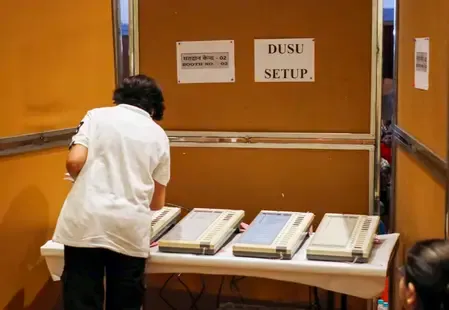
The present PIL was filed after Delhi University issued its DUSU election notification on 13 August 2026 .
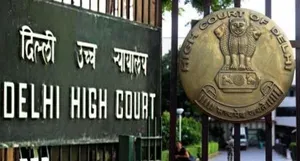
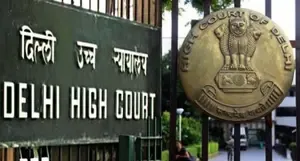
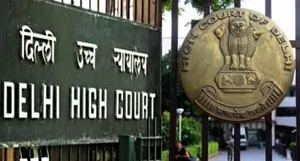
The Delhi High Court on Wednesday, 2 September issued notice on a Public Interest Litigation (PIL) seeking 50 per cent reservation for female students in the Delhi University Students' Union (DUSU) and college students' union elections. The bench has posted the matter for hearing in November.
The Bench and the Petition
A Division Bench of Chief Justice Devendra Kumar Upadhyaya and Justice Tejas Karia issued the notice in the petition filed by Shabana Hussain, a former Vice President of the student union at Deshbandhu College, Delhi University, who held the post in 2017. The petition, filed through advocate Ashu Bidhuri, seeks directions to the Union government, the University Grants Commission (UGC), Delhi University, and the Chief Election Officer for DUSU elections to reserve half of all seats for women on a rotational basis.
Core Arguments of the PIL
The petition contends that despite women constituting a substantial proportion — reportedly around 53 per cent — of Delhi University's student population, their representation in elected student bodies remains disproportionately low. It argues that the prevailing electoral environment, including the alleged influence of money and muscle power, violence, and other irregularities, has actively discouraged women from contesting and participating meaningfully.
The plea further raises concerns over the under-representation of issues directly affecting female students — including sexual harassment, campus safety, and hostel curfew timings — in student union politics. It contends that 'merely permitting women to contest elections without ensuring adequate representation does not result in substantive equality.'
Legal and Policy Precedents Cited
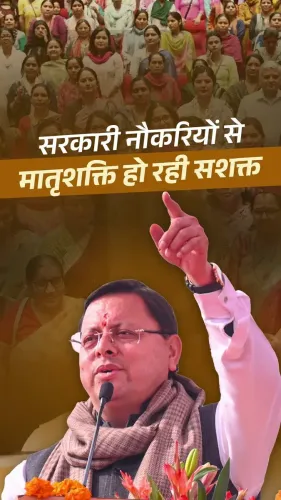
The petitioner has drawn on multiple precedents to build her case. She invokes the Nari Shakti Vandan Adhiniyam, which provides for reservation for women in the Lok Sabha and state legislative assemblies, arguing that the same principle of greater political representation should extend to student governance. The plea also references the Uttarakhand government's decision mandating 50 per cent reservation for female candidates in student union elections in state universities, and notes that several colleges affiliated with Delhi University have already adopted similar provisions.
Additionally, the petition invokes the recommendations of the Lyngdoh Committee — introduced to reform student elections and curb the influence of money and muscle power — alleging that continued violations of those norms have undermined the fairness and inclusiveness of the electoral process.
Previous Court History
This is not the first time the issue has come before the Delhi High Court. In September 2024, the court declined to judicially examine a similar plea, instead directing Delhi University to decide within three weeks on a representation submitted by Hussain, who was then an MA (Buddhist Studies) student at the university's Arts Faculty. A bench headed by then Acting Chief Justice Manmohan had orally directed the university to ensure the safety and security of women students during the election process.
Hussain had submitted representations to Delhi University authorities in October 2023 and subsequently to the Union government and university authorities in 2024, before approaching the court again. The present PIL was filed after Delhi University issued its notification for the DUSU elections on 13 August 2026.
What Happens Next
With the matter now listed for hearing in November, respondents — including the Union government, UGC, and Delhi University — will be required to file their replies. The outcome could have implications not just for DUSU but for student union electoral frameworks across centrally funded universities in India.
Point of View
Now in 2026 — reflects a structural gap that Delhi University has chosen not to close administratively, forcing the issue back into litigation. The invocation of the Nari Shakti Vandan Adhiniyam is strategically significant: it attempts to anchor a student-governance demand in a constitutional principle that Parliament itself has endorsed for legislatures. Yet the real test will be whether the court is willing to mandate electoral design for autonomous university bodies, or whether it will once again redirect the petitioner to the university's own administration — which has so far declined to act. With DUSU elections historically dominated by national party affiliates, the resistance to gender quotas is as much political as it is procedural.
NationPress
2 Sept 2026
Frequently Asked Questions
What does the PIL filed in the Delhi High Court seek for DUSU elections?
The PIL seeks 50 per cent reservation for female students in DUSU and college students' union elections on a rotational basis. It was filed by Shabana Hussain and has been issued notice by a Division Bench of Chief Justice Devendra Kumar Upadhyaya and Justice Tejas Karia, with the next hearing scheduled for November.
Why does the petitioner argue women need reserved seats in DUSU?
The petition contends that despite women making up around 53 per cent of Delhi University's student population, their representation in elected student bodies is disproportionately low. It argues that the alleged influence of money and muscle power, violence, and electoral irregularities have discouraged women from contesting, and that issues like sexual harassment and hostel safety are neglected in student politics as a result.
What legal precedents does the PIL rely on?
The PIL invokes the Nari Shakti Vandan Adhiniyam — which provides for women's reservation in the Lok Sabha and state assemblies — the Uttarakhand government's mandate of 50 per cent reservation for women in state university student elections, and the Lyngdoh Committee's recommendations on electoral reform in student bodies.
Has this issue come before the Delhi High Court before?
Yes. In September 2024, the High Court declined to examine a similar plea and instead directed Delhi University to decide within three weeks on a representation by Hussain. The university did not implement a reservation, prompting Hussain to file the present PIL after Delhi University issued its DUSU election notification on 13 August 2026.
Who are the respondents named in the PIL?
The petition seeks directions against the Union government, the University Grants Commission (UGC), Delhi University, and the Chief Election Officer for DUSU elections. All respondents are expected to file replies before the November hearing.