Delhi HC limits personality rights, bars edtech firms from using CLAT topper's identity
Synopsis
The Delhi High Court has drawn a firm line: not every exam topper can claim personality rights. In a dispute where rival edtech firms weaponised a minor CLAT 2026 topper's identity against each other, Justice Tushar Rao Gedela warned that extending such rights to isolated academic milestones would lead to 'absurdity' — and ordered Google and Meta to pull the offending content within 72 hours.
Key Takeaways
Delhi High Court cautioned against over-expansion of personality rights on 5 May 2025 , ruling isolated academic achievements cannot qualify for such protection.
Justice Tushar Rao Gedela said extending personality rights to every exam topper would lead to "absurdity and incongruity" .
The dispute involved rival edtech platforms and the unauthorised use of a minor student who secured All India Rank 1 in CLAT 2026 .
The court described the student's position as "that of a pawn" in a commercial rivalry and noted she had asked not to be involved.
An ex parte ad-interim injunction was granted; Google and Meta were directed to remove identified defamatory content within 72 hours .
Defendants were barred from using the student's name, images, or AI-generated representations .
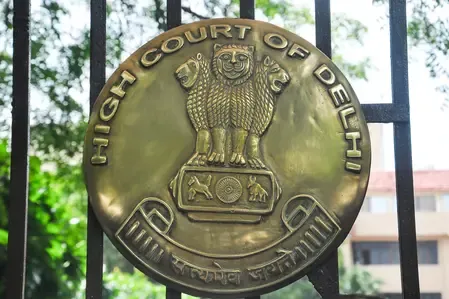
The Delhi High Court has cautioned against an over-expansive interpretation of "personality rights", ruling that not every academic achievement or individual milestone can be elevated to such legal protection. The observation came on 5 May 2025 while the court dealt with a commercial dispute between rival edtech platforms over defamation, disparagement, trademark infringement, and the unauthorised use of a CLAT 2026 topper's identity.
What the Court Said on Personality Rights
A single-judge Bench of Justice Tushar Rao Gedela held that expanding personality rights to cover every instance of academic success — such as securing a top rank in a competitive examination — would set an unworkable and incongruous precedent.
"In case any and every success, or a milestone achieved, is held to be sufficient to be raised to the level of a 'personality right', it would lead to absurdity and incongruity," Justice Gedela said in the order.
He further noted: "If such interpretation is carried forward, then every aspirant, candidate, student, citizen of this country, who achieves or is declared as a top ranker in every stage of examination, would be entitled to protection of their 'personality rights'."
The court acknowledged that personality rights have been recognised in cases involving individuals with sustained public recognition and commercial value attached to their persona — but stressed that the threshold cannot be diluted to cover isolated academic accomplishments.
The Dispute: Rival Edtech Platforms and a Minor Student
The case arose from an "acrimonious professional rivalry" between competing edtech entities, including allegations of misleading publicity and defamatory campaigns. At the centre of the controversy was a minor student who secured All India Rank 1 in CLAT 2026, with rival coaching institutes reportedly leveraging her achievement to score points against each other.
The court remarked that the student's position appeared to be "that of a pawn" in a larger commercial rivalry. Notably, the student had already clarified her position and reportedly requested that her name not be dragged into the dispute.
"It was not appropriate for the defendant nos. 1 and 2 to carry out any campaign, whether defamatory or otherwise, in the name of plaintiff no.3," Justice Gedela observed.
Prima Facie Findings Against the Defendants
On a prima facie assessment, the court found that posts, blogs, and videos published by the defendants appeared to be disparaging and intended to tarnish the reputation and goodwill of the plaintiffs, including through the unauthorised use of their registered trademark "LegalEdge". The court held that attempts to lower the image of a competitor through such content "cannot be countenanced".
Injunction and Directions Issued
Accordingly, the Delhi High Court granted an ex parte ad-interim injunction restraining the defendants from publishing or circulating defamatory, disparaging, or infringing content against the plaintiffs across digital platforms. The court also directed defendants to refrain from using the minor student's name, images, or AI-generated representations, and barred them from tampering with any material related to the alleged campaign.
Intermediaries, including Google and Meta, were directed to take down or disable access to the identified defamatory content within 72 hours. The matter will be heard next after the completion of pleadings.
What Comes Next
While the court refrained from conclusively adjudicating the issue of personality rights at this stage, its observations signal a significant guardrail against the over-expansion of the doctrine in India. As edtech rivalries intensify and competitive exam results become marketing battlegrounds, this ruling could shape how courts approach identity, reputation, and commercial exploitation of student achievements going forward.
Point of View
And this case exposes how commercial actors can exploit that ambiguity — using a minor student's achievement as a marketing weapon while hiding behind legal doctrine. Justice Gedela's restraint in not expanding personality rights is sound, but the deeper problem is structural: India still lacks a codified framework for personality and publicity rights, leaving courts to draw lines case by case. As AI-generated likenesses become easier to produce and competitive exam results become advertising fodder, that gap will only widen.
NationPress
5 Oct 2026
Frequently Asked Questions
What did the Delhi High Court rule about personality rights?
The Delhi High Court ruled that personality rights cannot be extended to cover every individual academic achievement, such as topping a competitive exam. Justice Tushar Rao Gedela held that such an expansion would lead to 'absurdity and incongruity' and set an unworkable precedent.
What is the CLAT 2026 edtech dispute about?
The dispute involves rival edtech coaching platforms accused of defamation, disparagement, and unauthorised use of a minor student's identity — she had secured All India Rank 1 in CLAT 2026. The court found the student was effectively being used as a pawn in a commercial rivalry between competing institutes.
What injunction did the Delhi High Court grant?
The court granted an ex parte ad-interim injunction barring the defendants from publishing defamatory or disparaging content against the plaintiffs and from using the minor student's name, images, or AI-generated representations. Google and Meta were directed to take down the identified content within 72 hours.
Who is Justice Tushar Rao Gedela?
Justice Tushar Rao Gedela is a single-judge of the Delhi High Court who presided over this commercial suit involving defamation, trademark infringement, and personality rights claims between rival edtech platforms.
What happens next in this case?
The Delhi High Court will hear the matter next after the completion of pleadings. The court has not conclusively adjudicated the personality rights issue at this stage, leaving the substantive question open for a fuller hearing.